Good luck, babe; stars don’t owe their fans a thing

Advertisement
Read this article for free:
or
Already have an account? Log in here »
To continue reading, please subscribe:

Digital Subscription
One year of digital access for only $205*
- Enjoy unlimited reading on winnipegfreepress.com
- Read the E-Edition, our digital replica newspaper
- Access News Break, our award-winning app
- Play interactive puzzles
*First annual payment billed as $205.00 + GST for one year. This annual subscription will automatically renew at $233.00 + GST every 52 weeks (10% off the regular annual price of $259.35). Offer available to new and qualified returning subscribers only. Cancel any time.
To continue reading, please subscribe:
Add Free Press access to your Brandon Sun subscription for only an additional
$1 for the first 4 weeks*
- Enjoy unlimited reading on winnipegfreepress.com
- Read the E-Edition, our digital replica newspaper
- Access News Break, our award-winning app
- Play interactive puzzles
*Your next Brandon Sun subscription payment will increase by $1.00 and you will be charged $17.95 plus GST for four weeks. After four weeks, your payment will increase to $24.95 plus GST every four weeks.
Read unlimited articles for free today:
or
Already have an account? Log in here »
Hey there, time traveller!
This article was published 07/09/2024 (767 days ago), so information in it may no longer be current.
In August, rising American pop sensation Chappell Roan took to TikTok to call out the normalization of troubling “superfan” behaviour, including abuse, harassment and stalking.
“I don’t give a f— if you think it’s selfish of me to say no for a photo or for your time or for a hug. That’s not normal. That’s weird,” she said in a video that now has 16 million views.
“It’s weird how people think you know a person just ’cause you see them online or listen to the art they make. I’m allowed to say no to creepy behaviour.”
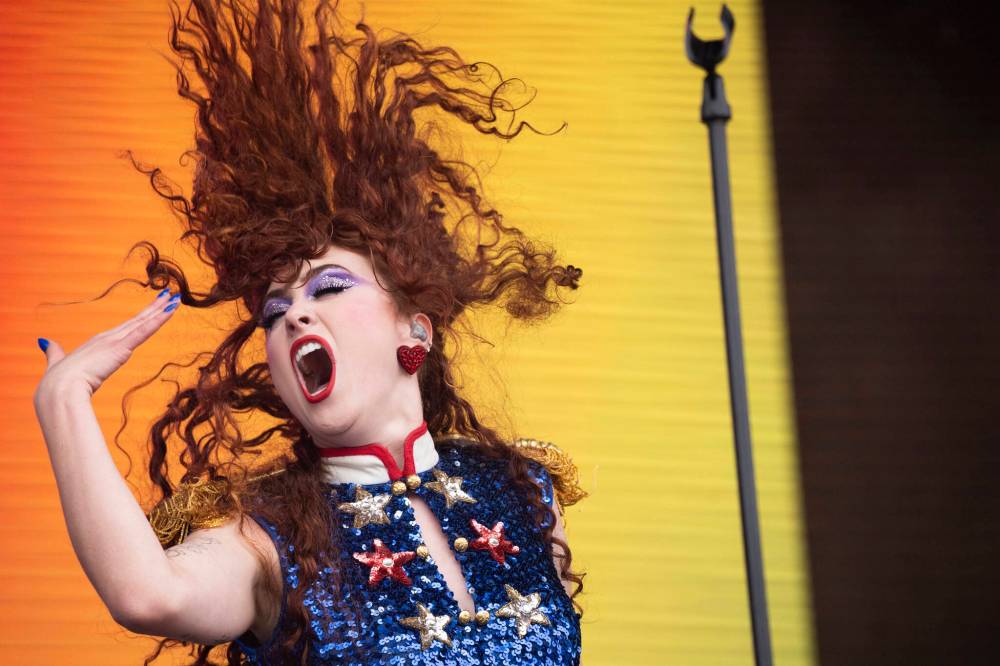
She added further on Instagram that when she is onstage performing or doing press, she is working.
“Any other circumstance, I am not in work mode. I am clocked out.”
This is completely and utterly reasonable. As she says, “Women don’t owe you s—-”— not our time, not our bodies, nothing. And yet, the responses that rolled in before the comments were shut off only served to underline the premise of the posts.
Obviously, some fans are not used to an artist asserting — or even establishing — boundaries, which is perhaps why they chafe against them.
A decade ago, Canadian pop-punk singer-songwriter Avril Lavgine had a proviso about not wanting to be touched in fan photos taken during paid meet-and-greets, and people freaked.
“Avril Lavigne Charges Fans $400 To Stand Next To Her,” read one headline.
Yikes. What do you think $400 should be able to get you?
This kind of obsessive behaviour has always been endemic among people who consider themselves “stans” — a portmanteau of “stalker and fan.” But social media has made artists so much more accessible, creating a confusing space where posts by your favourite actors, musicians, comedians, authors, etc. exist in the same feed as posts by your actual IRL friends.
You can watch a chatty, front-facing video by a celebrity immediately followed by a chatty, front-facing video by a colleague, and the whole thing becomes a disquieting blur in which “people you follow” becomes indistinguishable from “people you know.”
It’s easy to understand how parasocial relationships — simply, intense one-sided relationships with people who don’t know you exist — thrive in this kind of environment. And when superfans put time, energy and money into loving someone, they can begin to have warped expectations about what they are “owed” in return. What they are entitled to.
This entitlement is often justified via the argument that artists such as Chappell Roan don’t exist without their fans. Except, of course, that isn’t true. Her job might not exist without her fans, but she is not her job. And what she does is, indeed, a job.

Roan’s rise has been meteoric, but she’s also not an overnight success, having toiled in the music industry for the better part of a decade. Her 2023 debut album, The Rise and Fall of a Midwest Princess, blew up this year owing to a constellation of factors, including Hot To Go! and Good Luck, Babe! becoming popular TikTok songs.
Her current tour dates are booked in venues that are already too small for her; her appearance at the Lollapalooza music festival in Chicago this summer drew the biggest daytime crowd festival organizers have ever seen. All of this has required work.
Some people don’t like it when you call being an artist at this level a job, though. It’s supposed to be a dream or a calling or an identity or some other word that makes one easier to exploit. And some people don’t like it when people who are successful or rich or adored or talented or beautiful or famous or anything else we were promised were shortcuts to happiness express the desire for spheres of their life to be private.
No, some people like that think artists such as Chappell Roan exist only for them, because of them, because they created her. Which implies they can destroy her, too.
jen.zoratti@winnipegfreepress.com
Jen Zoratti is a columnist and feature writer working in the Arts & Life department, as well as the author of the weekly newsletter NEXT. A National Newspaper Award finalist for arts and entertainment writing, Jen is a graduate of the Creative Communications program at RRC Polytech and was a music writer before joining the Free Press in 2013. Read more about Jen.
Every piece of reporting Jen produces is reviewed by an editing team before it is posted online or published in print – part of the Free Press‘s tradition, since 1872, of producing reliable independent journalism. Read more about Free Press’s history and mandate, and learn how our newsroom operates.
Our newsroom depends on a growing audience of readers to power our journalism. If you are not a paid reader, please consider becoming a subscriber.
Our newsroom depends on its audience of readers to power our journalism. Thank you for your support.
Jen Zoratti is a columnist and feature writer working in the Arts & Life department, as well as the author of the weekly newsletter NEXT. A National Newspaper Award finalist for arts and entertainment writing, Jen is a graduate of the Creative Communications program at RRC Polytech and was a music writer before joining the Free Press in 2013. Read more about Jen.
Every piece of reporting Jen produces is reviewed by an editing team before it is posted online or published in print – part of the Free Press‘s tradition, since 1872, of producing reliable independent journalism. Read more about Free Press’s history and mandate, and learn how our newsroom operates.
Our newsroom depends on a growing audience of readers to power our journalism. If you are not a paid reader, please consider becoming a subscriber.
Our newsroom depends on its audience of readers to power our journalism. Thank you for your support.
Related Articles
Pop goes the world: Looking back at moments that helped define 2024
Advertisement Advertise With Us
Advertisement Advertise With Us