

For Tarana Burke, the Sean ‘Diddy’ Combs legal case is one more sign of #MeToo’s lasting impact
Advertisement
Read this article for free:
or
Already have an account? Log in here »
To continue reading, please subscribe:
Monthly Digital Subscription
$0 for the first 4 weeks*
- Enjoy unlimited reading on winnipegfreepress.com
- Read the E-Edition, our digital replica newspaper
- Access News Break, our award-winning app
- Play interactive puzzles
*No charge for 4 weeks then price increases to the regular rate of $19.00 plus GST every four weeks. Offer available to new and qualified returning subscribers only. Cancel any time.
Monthly Digital Subscription
$4.75/week*
- Enjoy unlimited reading on winnipegfreepress.com
- Read the E-Edition, our digital replica newspaper
- Access News Break, our award-winning app
- Play interactive puzzles
*Billed as $19 plus GST every four weeks. Cancel any time.
To continue reading, please subscribe:
Add Free Press access to your Brandon Sun subscription for only an additional
$1 for the first 4 weeks*
*Your next subscription payment will increase by $1.00 and you will be charged $16.99 plus GST for four weeks. After four weeks, your payment will increase to $23.99 plus GST every four weeks.
Read unlimited articles for free today:
or
Already have an account? Log in here »
Hey there, time traveller!
This article was published 18/09/2024 (444 days ago), so information in it may no longer be current.
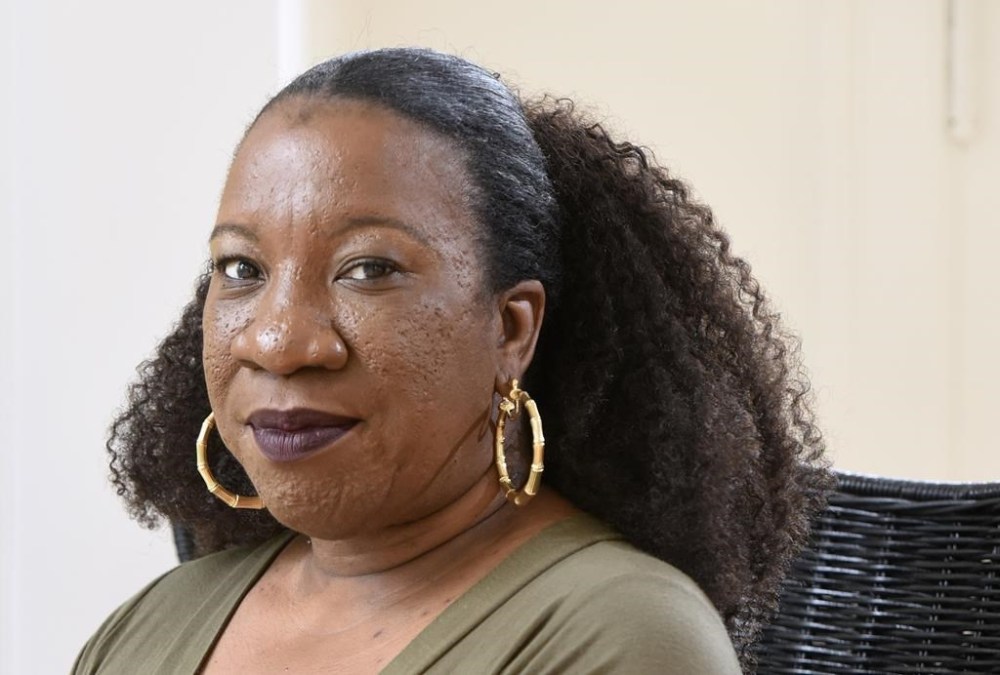
NEW YORK (AP) — Tarana Burke says people are always asking “what’s next?” for the #MeToo movement, the broad reckoning against sexual misconduct and abuse that she helped launch seven years ago.
This week, Burke, who coined the phrase “me too” decades ago in work with survivors of sexual violence and saw it go viral in 2017 with the Harvey Weinstein case, has two ready answers.
On Tuesday, the organization she leads, called ‘me too.’ International, announced an initiative to become truly international in scope — a so-called global network to partner with groups in 33 countries across the globe to combat sexual violence.
On the same day in a New York courtroom, the latest high-profile case was unfolding involving an influential man accused of abusing his power and privilege to inflict sexual harm: mogul Sean “Diddy” Combs, who was headed to jail to await trial in his federal sex trafficking case.
In an interview, Burke said the emerging details, in which Combs is accused of a sordid array of sexual crimes, were “horrific.” But she took comfort, she said, in the knowledge that it was the cultural shift resulting from #MeToo that helped bring the case to light in the first place.
Burke noted that the original lawsuit filed last November against Combs, by his former girlfriend Cassie, whose legal name is Casandra Ventura, was made possible by a New York “lookback” law, the Adult Survivors Act, enabling people alleging sexual abuse to file civil suits after the statute of limitations had expired.
“The lookback law … was a direct result of survivors organizing as part of the #MeToo movement,” Burke said. “All these things are connected. Survivors pushed hard that we need this law. This is directly related to the power of the movement.”
Another, broader effect of the movement, she says, is that victims now feel emboldened to come forward because they have more trust that they’ll be believed.
“This new case is no different than so many that we’ve seen,” Burke said, mentioning the Weinstein and Bill Cosby cases, “where you have an incredibly powerful and privileged person who decides to abuse it. The wonderful thing, though …. is that because of the shift we’ve seen after #MeToo went viral, now these things are public. And now, when a person comes forward and says, ‘This person harmed me,’ people take it more seriously.”
“Power and privilege are no longer a complete cover for people who decide to abuse and harm,” Burke said. “And to the question of what’s next (for #MeToo) — this IS what’s next, the exposing of so much corruption and abuse of power and harming, What’s next is all of these laws and (other) things that have happened, and we just need to keep building and building.”
Burke was in New York on Tuesday to announce, at the Ford Foundation’s Free Future conference, her organization’s new Global Network to combat sexual and gender-based violence. The foundation has committed the initial $1 million of $5 million that ’me too.’ International is trying to raise, Burke said.
“After #MeToo went viral, I had tons of people who were reaching out from all across the world,” she said. “They were starting their own work or they were building on what they were already doing.”
And they wanted to know how they could join forces. “On the one hand, I don’t have ownership — nobody can have ownership of a social justice movement,” Burke said. “But on the other hand, there’s a particular ideology and perspective that we work under.”
Nearly five years of meetings and discussion have yielded a plan for ‘metoo.’ International’ and the Global Fund for Women to unite with 134 groups in 33 countries — in Latin America, North America, the Caribbean and Africa, chiefly — for collective action against sexual violence. The organization defines sexual violence as “a sexual act committed or attempted by a person without freely given consent.”
Burke said her initial goal is “to take the cachet of #MeToo and make sure that we can expand that in a way that’s meant to bring light to the work that’s happening, but also resources, and collective action. What does it look like when not just the women across Latin America organize around (certain) issues, but women in Southeast Asia and women in Africa are also organizing for Guatemala, or vice versa?
“We we not just coming together to talk,” she said. “We’re coming together to build community, but also to take action together.”
Related Articles
Sean 'Diddy' Combs will stay in jail after bail is denied for a second time


Advertisement Advertise With Us
Advertisement Advertise With Us