

New music: The Weather Station, Sarah Klang, Satoko Fujii GEN, Mozart and Bruch
Advertisement
Read this article for free:
or
Already have an account? Log in here »
To continue reading, please subscribe:
Monthly Digital Subscription
$1 per week for 24 weeks*
- Enjoy unlimited reading on winnipegfreepress.com
- Read the E-Edition, our digital replica newspaper
- Access News Break, our award-winning app
- Play interactive puzzles
*Billed as $4.00 plus GST every four weeks. After 24 weeks, price increases to the regular rate of $19.95 plus GST every four weeks. Offer available to new and qualified returning subscribers only. Cancel any time.
Monthly Digital Subscription
$4.99/week*
- Enjoy unlimited reading on winnipegfreepress.com
- Read the E-Edition, our digital replica newspaper
- Access News Break, our award-winning app
- Play interactive puzzles
*Billed as $19.95 plus GST every four weeks. Cancel any time.
To continue reading, please subscribe:
Add Free Press access to your Brandon Sun subscription for only an additional
$1 for the first 4 weeks*
*Your next subscription payment will increase by $1.00 and you will be charged $16.99 plus GST for four weeks. After four weeks, your payment will increase to $23.99 plus GST every four weeks.
Read unlimited articles for free today:
or
Already have an account? Log in here »
Hey there, time traveller!
This article was published 07/02/2025 (412 days ago), so information in it may no longer be current.
POP/ROCK
The Weather Station
Humanhood (Next Door)
The Weather Station’s 2021 album, Ignorance, was Toronto songwriter and musician Tamara Lindeman’s lush, jazz-inflected, art-pop expression of the grievous anxiety created by our destruction of the planet.

It also marked her arrival as a creator of rich, multi-layered musical and lyrical tapestries — far removed from the willowy folk of her youth. Ignorance made the Weather Station a household name, but Lindeman has said her mental health suffered in its wake, to the point that she was unable to enjoy what she’d worked so hard to achieve.
Four years on, Humanhood is Lindeman’s reconciliation with the contradictions of modern life.
Fittingly, it opens with a brief, almost orchestral tuning snippet called Descent and, as the album’s first proper song, Neon Signs, begins, she sings “I’ve gotten used to feeling like I’m crazy… Why can’t I get off this floor? Think straight anymore?”
The song then outlines the dissociative, hard-sell nature of the typical urban landscape, setting it against our basic desires for love and trust and honesty.
Neon Signs also fleshes out the album’s soundscape, a pulsing, dynamic blend of electric and acoustic instruments, big piano chords and spare melodies, airy synthesizer and sprightly woodwinds that create a heady mix. Much of it was improvised in-studio, over two sessions in 2023, and it’s stitched together here as a nine-song cycle, interspersed with three instrumental interludes.
By album’s end, on Sewing, Lindeman sings of her realization that life is a quilt of all our experiences – “This undulating thing/Whatever it is that I’m making with you, a life /I’ll sew in tonight too” – and her journey sounds complete. For now. ★★★★ out of five
Stream: Neon Signs, Body Moves, Humanhood
— John Kendle
FOLK
Sarah Klang
Beautiful Woman (Nettwerk)
On her fifth album, Beautiful Woman, Swedish indie folk singer Sarah Klang worked for the first time with American producer Eric D. Johnson, known for his work with Bonny Light Horseman, the Fruit Bats and the Shins.

It’s a winning partnership that lands somewhere between folksy Americana and ’90s jangle-pop, set apart not only by Klang’s voice but also by her honesty.
“Practising every night / How to dance in slow motion,” she sings on the title cut. “Writing in my diary, goals for the new year / 16 and alone in my room.”
Klang leans into the song’s chorus with characteristic directness. “When I grow up,” she sings, “I want to be a beautiful woman.”
If wistfulness had its own voice, it might sound like her. Klang manages to convey pain even when she is singing about finding happiness, as she does on several cuts. Few singers blend hope and sadness into such a rare mix of intensity: Billie Holiday, Hank Williams, Judy Garland, Patsy Cline and Amy Winehouse. The list isn’t long.
That may sound like hyperbole for a singer who has gained a following in Europe but hasn’t made her mark across the ocean yet. Still, it seems inevitable that she will.
On this album, Klang details body-shaming, motherhood and her own arduous journey in a world that holds women to impossible standards.
My path to Klang’s music started with my 20-something daughter, who included some of Klang’s earlier work on a couple of Spotify playlists. The first few times her songs came up, I inevitably asked: “Who is that? Where is she from?”
The answers are all right here.
Her name is Sarah Klang. She comes from Sweden. And she has arrived. ★★★★ out of five
Stream: Beautiful Woman; Last Forever
— Scott Stroud, The Associated Press
JAZZ
Satoko Fujii GEN
Altitude 1100 Meters (Libra)
Artists find inspiration wherever they are. Pianist/composer Satoko Fujii was holidaying with her family in the highlands above Nagano Japan when she became enthralled with the changing quality of the high mountain air.
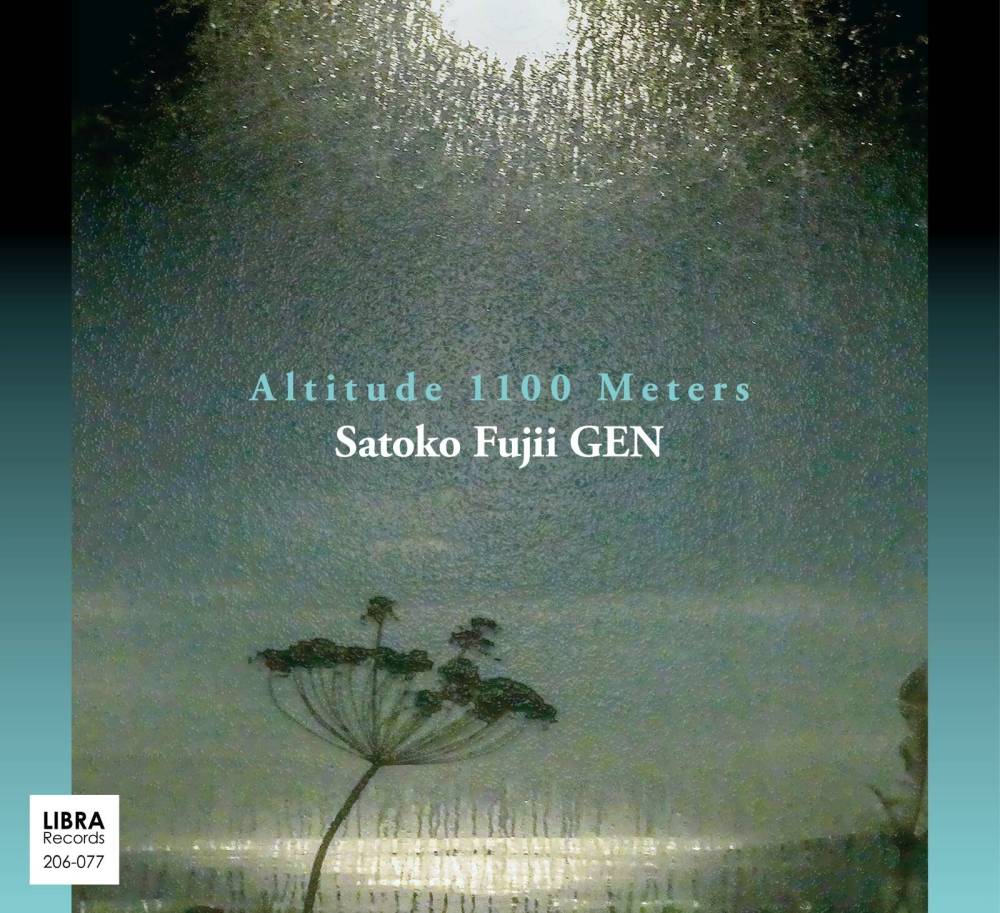
It inspired her to write this five-part suite to reflect the quality of the breezes and air movement through the day. It also inspired her to do so using a string ensemble (for the first time) along with her piano, bassist Hiroshi Yoshino and drummer Akira Horikoshi.
It is a beautiful and evocative session. The tracks move from Morning Haze, Morning Sun, Early Afternoon, Light Rain, to Twilight.
Morning Haze begins with a simple bass continuo by Yoshino before slowly adding quietly swirling strings and gentle drumbeat. The effect not only reflects the breathless feel of a morning mist but the awakening of the day itself.
The drum solo is muted and reflective of the title mood. Like Fujii’s writing, the music is complex, surprising and full of subtlety and a degree of challenge. Morning Sun continues the growing complexity of the day, with stunning early bass work by Yoshino and Fujii’s increasingly intense piano.
The dissonance and chord clusters grow to a wild peak at the end of the track.
Early Afternoon opens into a swinging up-beat groove with Fujii once more building a mood throughout the track. Along with the wonderful string ensemble, bass and drum are critical here.
The 20-minute track Light Rain is a standout. It begins with sonic “rainfall,” if you will, before moving to a series of segments anchored by strings while allowing wonderful solos.
Twilight ends the album perfectly. Complex, melodic, adventurous — it’s all here. Highly recommended. ★★★★½ out of five
Stream: Morning Haze; Light Rain
— Keith Black
CLASSICAL
Mozart and Bruch
Patrick Messina, Lise Berthaud & Fabrizio Chiovetta (Aparté)
The trio of Patrick Messina, Lise Berthaud and Fabrizio Chiovettap performs two intimate chamber works for their respective instruments — clarinet, viola and piano — in this new release.

The first piece, Mozart’s Trio for Clarinet, Viola, and Piano in E-flat Major, K. 498, a.k.a. the Kegelstatt (Skittle alley) penned in 1786 for a circle of the composer’s close friends, immediately displays the three players’ simpatico artistry, as each takes their turn rendering the opening movement Andante’s lyrical theme.
The following Menuetto is likewise well balanced throughout, also featuring Berthaud’s more forceful viola interpolations before ultimately leading to the Trio that launches with its chromatic, four-note motive.
The virtuosic finale Rondeux brings the charming piece to a close, from its opening “cantabile” theme first delivered by Messina’s clarinet before being taken up by Chiovetta’s piano, with the ensemble’s overall performance satisfying.
Composed nearly 120 years later, Max Bruch’s 8 Pieces for Clarinet, Viola and Piano, Op. 83 (1909), eight movements steeped in late Romanticism, pays homage to Mozart’s prior work. Highlights include its plaintive opener, I. Andante, as well as the more fiery IV. Allegro agitato.
Messina infuses pure lyricism into his theme during III. Andante con moto, while the darkly hewn V. Rumanische melodie: Andante summons the heart and soul of the Old Country, inviting listeners into its deeply introspective, modal climes. ★★★★½ out of five
Stream: 8 Pieces for Clarinet, Viola and Piano, Op. 83; I. Andante; V. Rumanische melodie: Andante
— Holly Harris