Norwegian maestro leads WSO on icy-hot musical journey
Read this article for free:
or
Already have an account? Log in here »
To continue reading, please subscribe:

Digital Subscription
One year of digital access for only $205*
- Enjoy unlimited reading on winnipegfreepress.com
- Read the E-Edition, our digital replica newspaper
- Access News Break, our award-winning app
- Play interactive puzzles
*First annual payment billed as $205.00 + GST for one year. This annual subscription will automatically renew at $233.00 + GST every 52 weeks (10% off the regular annual price of $259.35). Offer available to new and qualified returning subscribers only. Cancel any time.
To continue reading, please subscribe:
Add Free Press access to your Brandon Sun subscription for only an additional
$1 for the first 4 weeks*
- Enjoy unlimited reading on winnipegfreepress.com
- Read the E-Edition, our digital replica newspaper
- Access News Break, our award-winning app
- Play interactive puzzles
*Your next Brandon Sun subscription payment will increase by $1.00 and you will be charged $17.95 plus GST for four weeks. After four weeks, your payment will increase to $24.95 plus GST every four weeks.
Read unlimited articles for free today:
or
Already have an account? Log in here »
Hey there, time traveller!
This article was published 08/03/2026 (218 days ago), so information in it may no longer be current.
The Winnipeg Symphony Orchestra whisked its audience to distant climes this weekend as it presented the penultimate offering in its Saturday Classics series, Nordic Horizons.
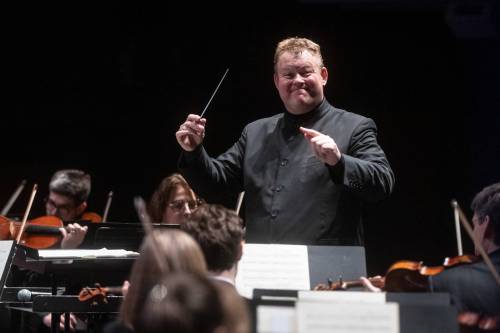
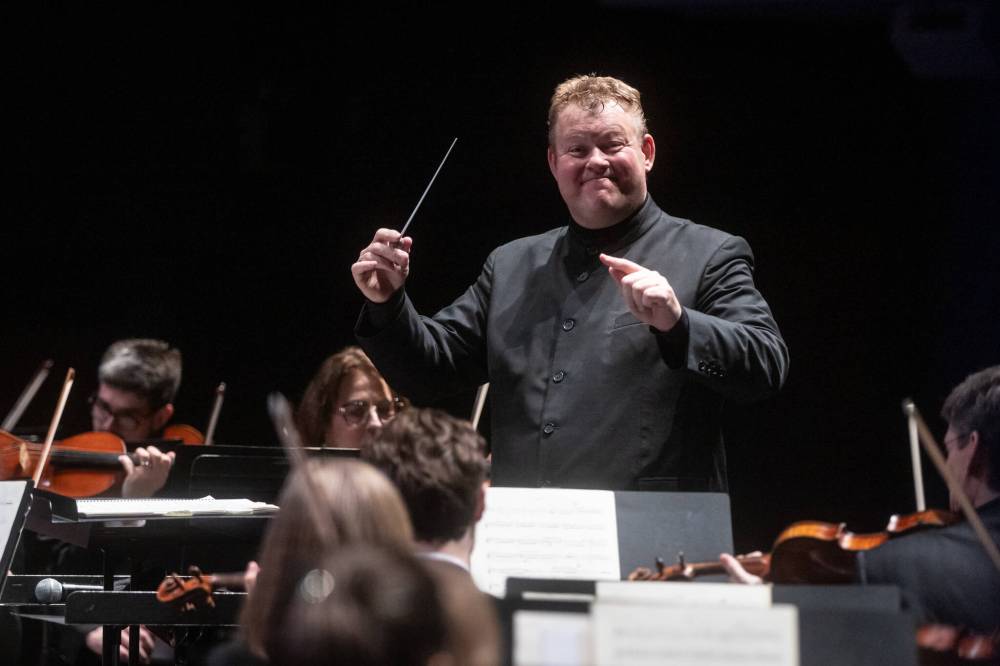
The 109-minute (including intermission) program marked the local debut of Norwegian guest conductor Rune Bergmann, whose innate warmth and energy could melt a glacier.
The internationally renowned maestro, who also helms Switzerland’s Argovia Philharmonic and Wisconsin’s Peninsula Music Festival, seemed genuinely delighted to be appearing in “Winterpeg” for the first time, quipping that his personal highlight of the week was discovering that everyone’s favourite stuffed bear, Winnie the Pooh, originally hails from our fair city.
Matt Duboff/Winnipeg Symphony Orchestra
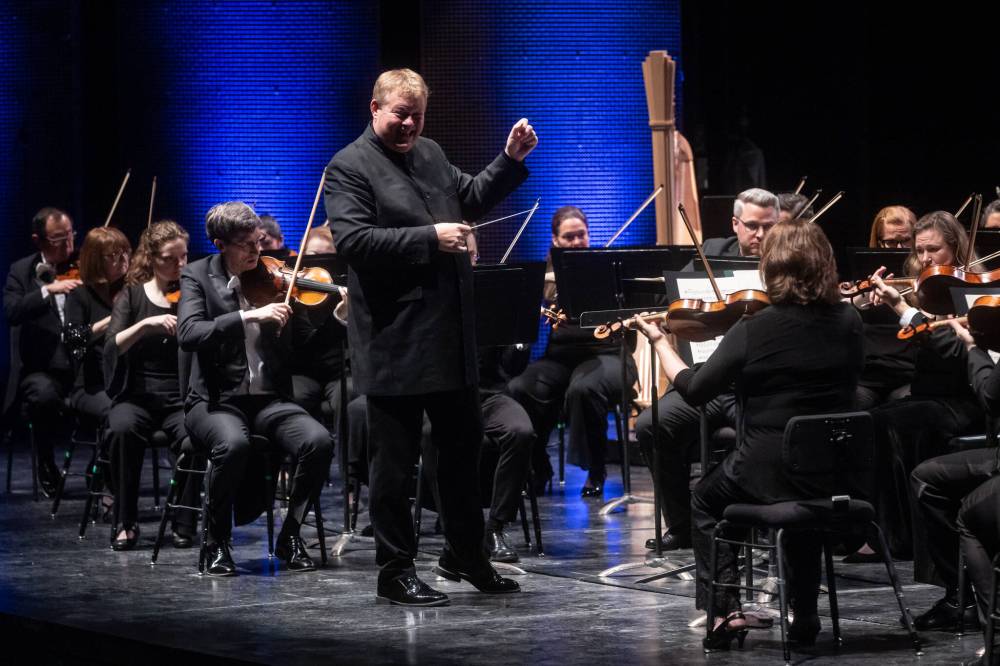
Guest conductor Rune Bergmann leads the WSO in a program of Nordic music Saturday night.
The evening immediately heated up with the first of four works: Sibelius’s noble tone poem Finlandia, Op. 26. The work is steeped in nationalistic pride and majesty from its opening bold bars through to the immortal Finlandia Hymn, which caps the stirring piece penned in 1899.
Concert review
Winnipeg Symphony Orchestra: Nordic Horizons
Centennial Concert Hall
Saturday, March 7, 7:30 p.m.
Attendance: 1,167
Four stars out of five
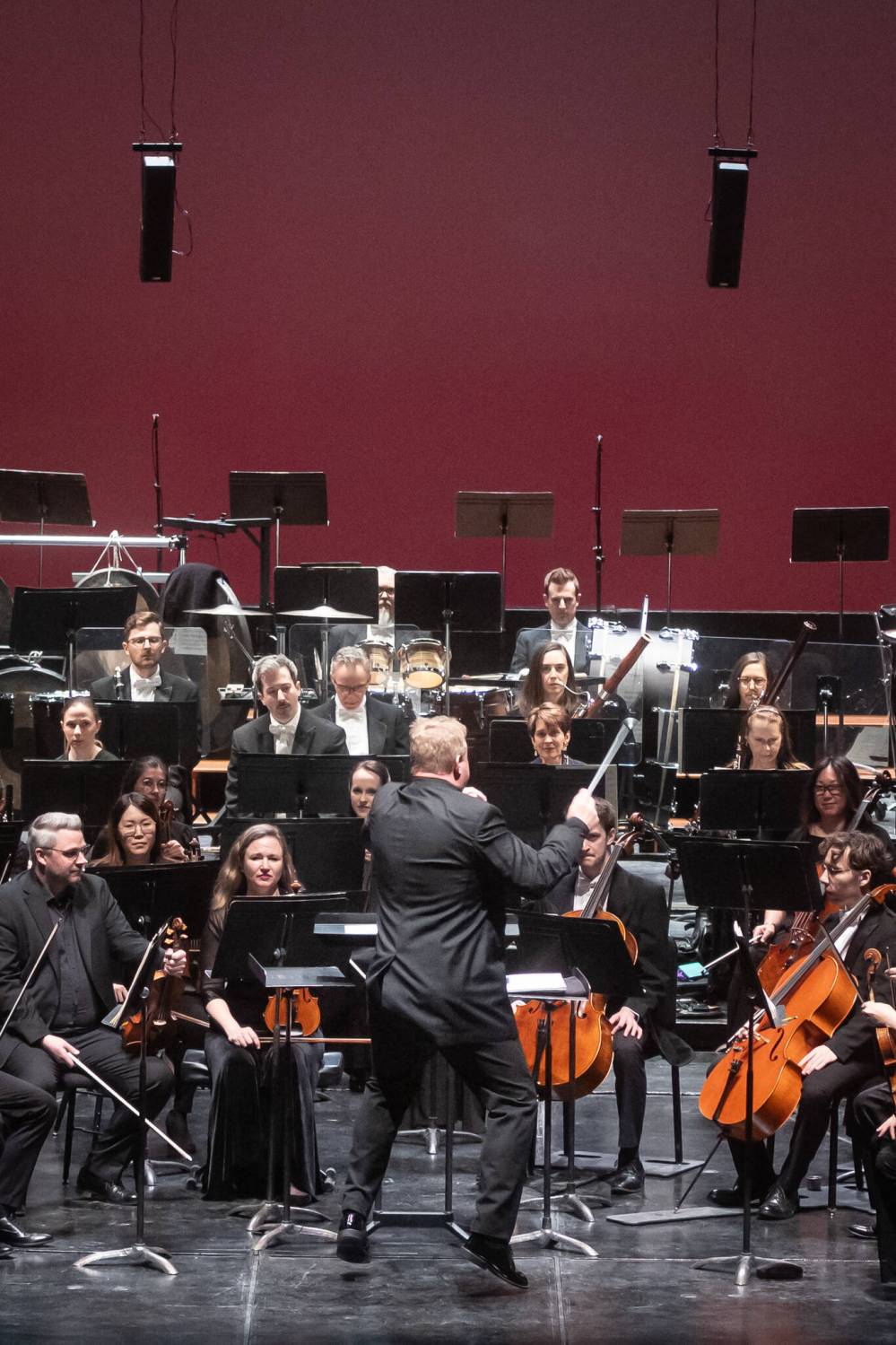
In 20-plus years of reviewing concerts, this writer has never seen an orchestral conductor lead an program sans podium, with Bergmann unusually cuing entries from the stage floor.
In doing so, he became more fully immersed into the orchestra’s fabric, each widely sweeping gesture creating an egalitarian family of music-makers and clearly in tune with each individual player.
The night’s sleeper hit and program interloper proved to be the WSO première of Canadian composer Vincent Ho’s Earthbeat.
The former WSO composer-in-residence took the stage to introduce his roughly 11-minute work commissioned by the Calgary Philharmonic Orchestra to celebrate Canada’s 150th anniversary in 2017. The piece originally served as the final movement of a larger True North: Symphonic Ballet, penned by an additional three composers and “inspired by the powwow traditions of Canada’s First Nations community.”
Matt Duboff/Winnipeg Symphony Orchestra
Unusually, Norway’s Rune Bergmann does not use a podium when he conducts.
The white-hot performance — propelled by pounding drums evoking the world’s “heartbeat” — was a potent reminder that we need to hear more of the now Calgary-based Ho’s dramatic compositions.
Bergmann — formerly the music director of the Calgary Philharmonic — held taut rein throughout, with the piece quickly morphing into a roiling cauldron of well-crafted textural effects, from swooping glissandi in the low strings to repeated violin motifs punctuated by a ringing gong.
It’s always enthralling to hear percussionists let loose on their respective battery of instruments, with three now off-leash drummers underscoring the entire performance with visceral punch.
The piece culminated with a nine-member ensemble culled from the Winnipeg Youth Orchestra rising from their backbench to perform iconic fiddle tune Red River Jig, a signature part of Métis culture.
While these things often boil down to a matter of taste, and despite the young fiddlers’s undeniable gusto, the lack of a wider context made this musical choice feel disjointed, and thwarted the otherwise locomotive energy of the piece. (It was also unsettling when their jig became engulfed by the more European-rooted orchestral forces.)
Still, after an extended silence as their final notes slipped into the ether, the entire house erupted into a rousing standing ovation as Bergmann, his merry band of musicians and Ho took a well-deserved bow.
Grieg’s charmingly folkloric Norwegian Dances, Op. 35 is a selection we don’t hear nearly enough. Introduced by the maestro as “all about having a good time,” it conjures rustic “hallings” with its four tri-part movements inspired by the village dance form, in turn (mostly) balanced by serene interludes.
The second movement, Allegretto tranquillo e grazioso, was a highlight, with its jaunty, light-hearted theme that has also fuelled plenty of ice cream trucks in the land of ice and snow, rendered by Elaine Douvas’s spot-on oboe solo.
As with several other predominantly Romantic composers (Bruckner and even, for some, Mahler), Denmark’s Carl Nielsen is arguably an acquired taste, his music teeming with whipsaw shifts in themes, mood and tempi that can leave listeners spinning.
Nevertheless, after first passionately singing the praises of the WSO as a “world-class orchestra,” Bergmann — a natural raconteur, easily connecting with musicians and audience alike in a way that recalls the orchestra’s late former music director Bramwell Tovey — launched into the first of four movements performed “attacca” in Nielsen’s Symphony No. 4, Op. 29.
Kudos to principal cellist Elie Boissinot for his lyrical solo during the opening Allegro, which bleeds into waves of strings, matched equally by crisply balanced winds, particularly displayed in the subsequent Poco allegretto movement.
Matt Duboff/Winnipeg Symphony Orchestra
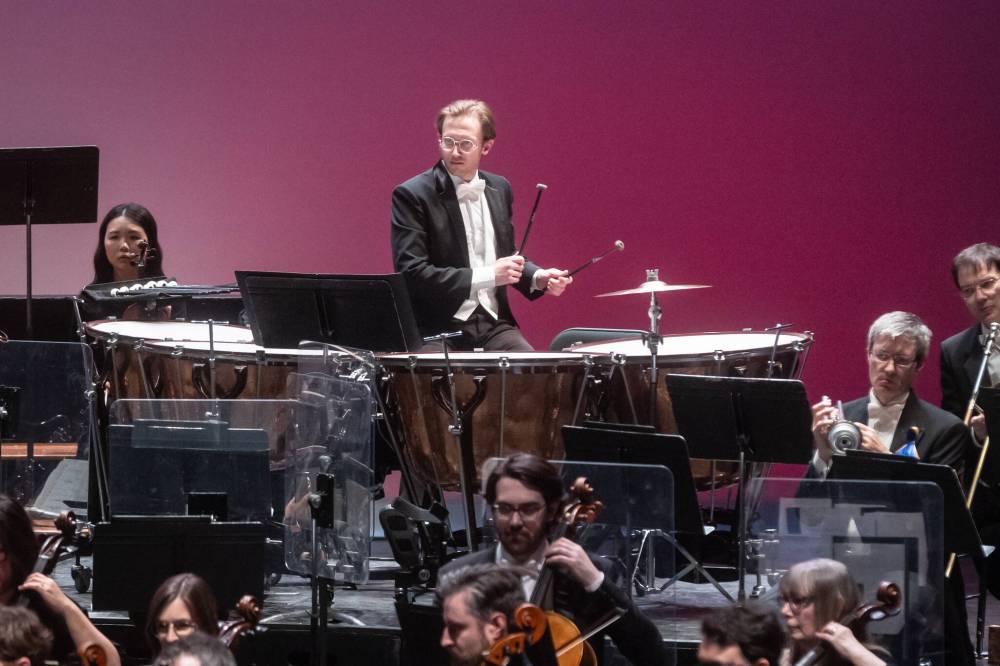
WSO timpanist Justin Gingrich takes the spotlight during Neilson’s Symphony No. 4.
However, the best is saved for last, with principal timpani player Justin Gingrich, joined by guest percussionist Micah Harrow, pulling out all the stops during the finale Allegro. Their extended, “duelling timpani” section, with their two sets of kettledrums spaced across the back stage, thundered as an explosion of stereophonic sound, leading to the night’s final standing ovation by the enthusiastic, now fully warmed-up crowd.
winnipegfreepress.com/hollyharris
Holly Harris writes about music for the Free Press Arts & Life department.
Our newsroom depends on a growing audience of readers to power our journalism. If you are not a paid reader, please consider becoming a subscriber.
Our newsroom depends on its audience of readers to power our journalism. Thank you for your support.
Related Articles
Norwegian conductor looks to past to find hope for future
History
Updated on Tuesday, March 10, 2026 7:12 AM CDT: Corrects oboe player's name to Elaine Douvas