Long view
Norwegian conductor looks to past to find hope for future

Advertisement
Read this article for free:
or
Already have an account? Log in here »
To continue reading, please subscribe:

Digital Subscription
One year of digital access for only $205*
- Enjoy unlimited reading on winnipegfreepress.com
- Read the E-Edition, our digital replica newspaper
- Access News Break, our award-winning app
- Play interactive puzzles
*First annual payment billed as $205.00 + GST for one year. This annual subscription will automatically renew at $233.00 + GST every 52 weeks (10% off the regular annual price of $259.35). Offer available to new and qualified returning subscribers only. Cancel any time.
To continue reading, please subscribe:
Add Free Press access to your Brandon Sun subscription for only an additional
$1 for the first 4 weeks*
- Enjoy unlimited reading on winnipegfreepress.com
- Read the E-Edition, our digital replica newspaper
- Access News Break, our award-winning app
- Play interactive puzzles
*Your next Brandon Sun subscription payment will increase by $1.00 and you will be charged $17.95 plus GST for four weeks. After four weeks, your payment will increase to $24.95 plus GST every four weeks.
Read unlimited articles for free today:
or
Already have an account? Log in here »
Hey there, time traveller!
This article was published 05/03/2026 (221 days ago), so information in it may no longer be current.
Rune Bergmann lives in Oslo, but on any given day of the week might find himself in Switzerland, Calgary or Wisconsin, where he’s the music director for three separate organizations.
The Norwegian conductor appears all over North America and Europe as a guest conductor and is in the ‘Peg this weekend for Nordic Horizons with the Winnipeg Symphony Orchestra.
But he observes there is a certain patriotic flavour to this concert, which he programmed and conducts.
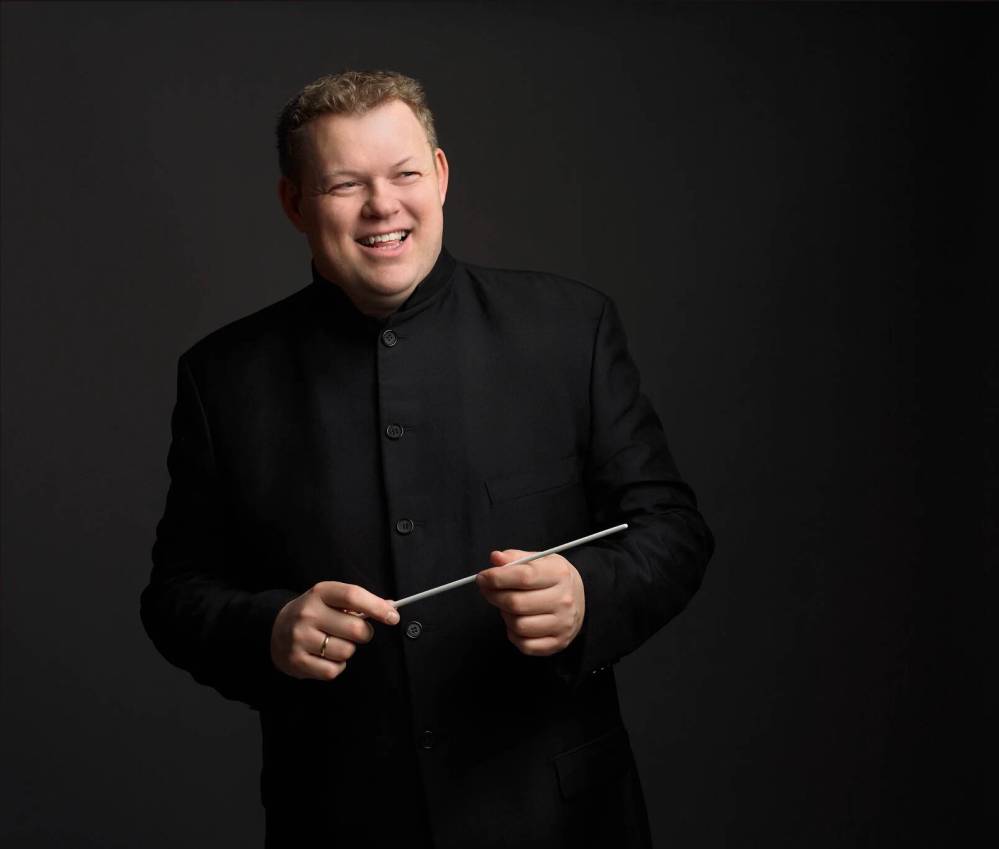
Kristen Hoebermann photo
Rune Bergmann is music director for three separate organizations in Switzerland, Calgary and Wisconsin.
“It’s a Nordic buffet. A theme that goes through everything is survival, nationalism and the importance of sticking together and being there for each other,” he says.
On the Nordic side, the concert features Jean Sibelius’s Finlandia, Edward Grieg’s rollicking, folk-inspired Norwegian Dances and the Danish Carl Nielsen’s grand Symphony No. 4.
All of the pieces are examples of romanticism or post-romanticism, the 19th- and early 20th-century movement that did away with the arid classicism — the 18th century’s obsession with taut, “rational” forms — to embrace something stormier and more regional.
The Industrial Revolution’s nightmarish factories, their exploitation of labour and the environment, had shown that rationality, urbanization and scientific organization weren’t all that. The Enlightenment and its consequences suddenly looked more dubious.
Instead, artists, philosophers and political upstarts looked to “the people” — their elemental passions, rural landscapes, traditional culture and folk styles — as a bulwark against changes that were happening too quickly, too violently.
If this sounds conservative, it could be. But romanticism is also connected with the fight for democratic and national self-determination against monarchy and foreign domination.
Such is the case for Finlandia (1899), Sibelius’s tone poem and protest against imperial Russia’s censorship and control over Finland, a theme of resilience Bergmann suggests is still relevant today.
“I mean, this is one of the greatest pieces ever written, and it’s kind of, I would say, Finland’s unofficial national anthem,” he says.
Things get more thematically complex for Nielson’s folk-adjacent Symphony No. 4. (1916). Nicknamed “The Inextinguishable,” it’s an ode to humanity’s “will to life” amid the First World War, but also feels like a critique of the jingoism that animated that supremely destructive period.
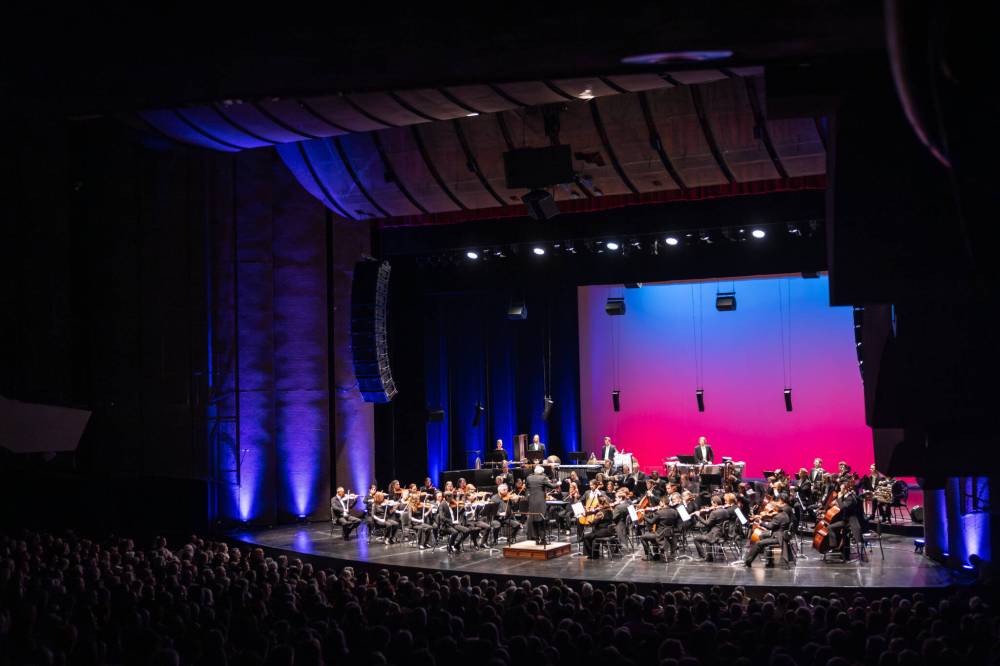
Matt Duboff
This weekend, the Winnipeg Symphony Orchestra performs works by three Scandinavian composers and its former composer-in-residence, Vincent Ho.
“From the first moment, this music just explodes. I always tell the orchestra, ‘We need to play this like we have a panic attack,’” says Bergmann.
“Then, of course, we have Grieg’s Dances. They contain everything from Norway: the waterfalls, the mountains, rivers, the forest, the animals. So, it’s based on people living and surviving on the countryside of Norway through hundreds of years.”
If there’s one piece less like the others, it’s former Winnipeg Symphony Orchestra composer-in-residence Vincent Ho’s Earthside. This is last movement of his True North: Symphonic Ballet, which was commissioned by the Calgary Philharmonic Orchestra, where Bergmann is music director, for Canadian’s 150th anniversary celebrations.
But in typically Canadian musical fashion, there’s not much nationalist grandstanding in this piece: it’s inspired by pow-wow traditions of Canada’s First Nations and Red River Métis fiddle music.
Bergmann thinks a lot these days about the similarities between Canada and Norway, despite their very different musical legacies.
“I found, in my years in Calgary, that there is a lot of similar thinking, both politically, but also on education and (culture) that’s very different from the other side of the border,” he says.
But, while historically both countries, compared with America, have lavished government funding on culture, recent federal Norwegian and Canadian budgets have been more tepid for this sector.
Bergmann suggests that this because today Norway is in a similar situation as Canada, with NATO commitments driving national spending priorities towards defence.
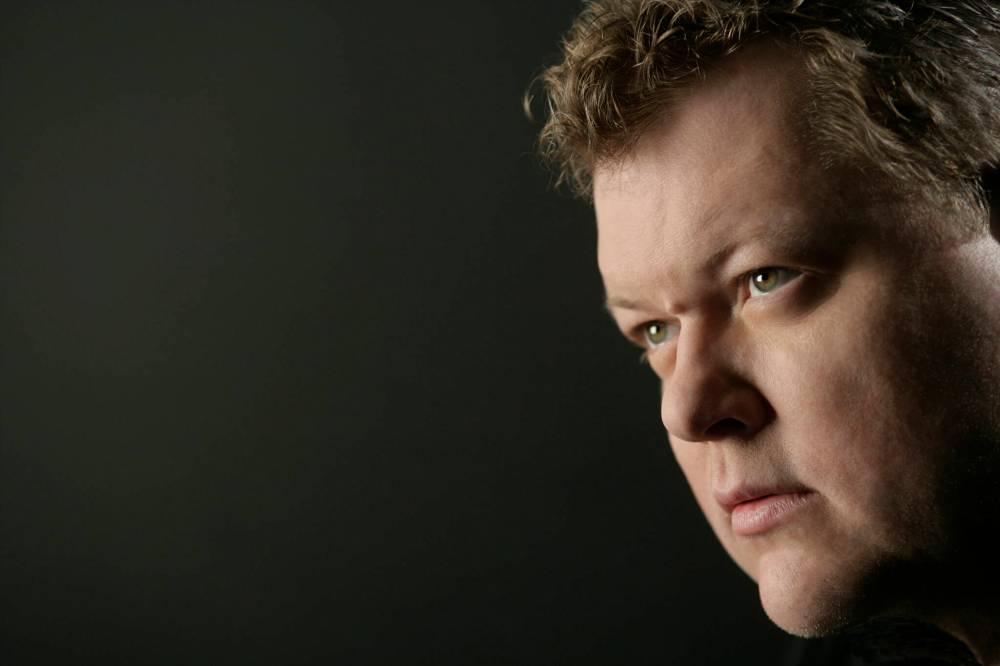
Kristen Hoebermann photo
Rune Bergmann calls Jean Sibelius’s Finlandia one of the greatest pieces ever written.

“I would honestly say that Norway, right now, is probably not sure if it’s possible to avoid the (Ukraine-Russia) war because we share the border with Russia. So, military is going up, and orchestra and culture goes down. I do not recognize the world from 10 years ago.” he says.
He wouldn’t put it quite the same words, but he echoes Nielson’s view that in a world plunged into conflict: “Music is life, and like it, inextinguishable.”
“I think it’s just a perfect time for all of us to sit down and just take this music in because even though it’s all beautiful, it’s also challenging,” he says.
“When I play the Nielson and Sibelius, in our times right now, it makes the audience feel something they might not expect to feel. But they leave very excited and hopefully uplifted. There’s still hope.”
winnipegfreepress.com/conradsweatman
Conrad Sweatman is an arts reporter and feature writer. Before joining the Free Press full-time in 2024, he worked in the U.K. and Canadian cultural sectors and freelanced for outlets including The Walrus, VICE and Prairie Fire. Read more about Conrad.
Our newsroom depends on a growing audience of readers to power our journalism. If you are not a paid reader, please consider becoming a subscriber.
Our newsroom depends on its audience of readers to power our journalism. Thank you for your support.
Concert preview
Nordic Horizons
Winnipeg Symphony Orchestra
- Centennial Concert Hall, 555 Main St.
- Saturday, 7 p.m.; Sunday, 2 p.m.
- Tickets $16-$94 at my.wso.ca
Conrad Sweatman is an arts reporter and feature writer. Before joining the Free Press full-time in 2024, he worked in the U.K. and Canadian cultural sectors and freelanced for outlets including The Walrus, VICE and Prairie Fire. Read more about Conrad.
Our newsroom depends on a growing audience of readers to power our journalism. If you are not a paid reader, please consider becoming a subscriber.
Our newsroom depends on its audience of readers to power our journalism. Thank you for your support.
Related Articles
Norwegian maestro leads WSO on icy-hot musical journey
Advertisement Advertise With Us
Advertisement Advertise With Us
History
Updated on Thursday, March 5, 2026 7:33 AM CST: Adds preview text
Updated on Thursday, March 5, 2026 11:12 AM CST: Corrects reference to “The Inextinguishable”