

Guest clarinetist part of dramatic end to wildly varied WSO season
Advertisement
Read this article for free:
or
Already have an account? Log in here »
To continue reading, please subscribe:
Digital Subscription
One year of digital access for only $1.44 a week*
- Enjoy unlimited reading on winnipegfreepress.com
- Read the E-Edition, our digital replica newspaper
- Access News Break, our award-winning app
- Play interactive puzzles
*Billed as $5.77 plus GST every four weeks. After 52 weeks, price increases to the regular rate of $19.95 plus GST every four weeks. Offer available to new and qualified returning subscribers only. Cancel any time.
To continue reading, please subscribe:
Add Free Press access to your Brandon Sun subscription for only an additional
$1 for the first 4 weeks*
- Enjoy unlimited reading on winnipegfreepress.com
- Read the E-Edition, our digital replica newspaper
- Access News Break, our award-winning app
- Play interactive puzzles
*Your next Brandon Sun subscription payment will increase by $1.00 and you will be charged $17.95 plus GST for four weeks. After four weeks, your payment will increase to $24.95 plus GST every four weeks.
Read unlimited articles for free today:
or
Already have an account? Log in here »
The Winnipeg Symphony Orchestra presented three distinct works in the key of passion Saturday night, as it wrapped up its Saturday Classics series with Mozart and Shostakovich.
The 120-minute (including intermission) program, led by Daniel Raiskin, featured guest clarinetist Boris Allakhverdyan. The Armenian-American artist — who has served as principal clarinet for the Los Angeles Philharmonic since 2016, following four years as principal clarinet for the Metropolitan Opera Orchestra — treated the mostly older audience of 1,789 to Mozart’s sublime Clarinet Concerto in A major, K.622
Fans of the Wunderkind have long adored the composer’s penultimate work, penned shortly before his untimely death in 1791. It’s taken 11 years to hear this gem on this stage again; it was last performed in 2015.
Winnipeg Symphony Orchestra photo Guest clarinetist Boris Allakhverdyan performs Saturday night with the Winnipeg Symphony Orchestra led by Daniel Raiskin.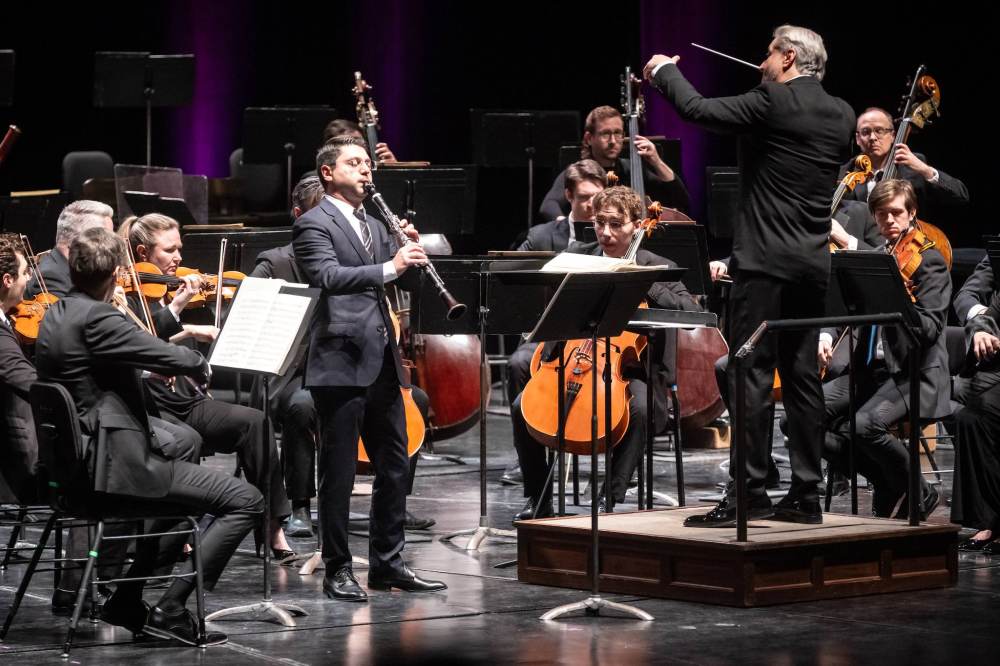
After Raiskin set an elegant tempo for the Allegro, the soloist launched into his opening theme, immediately showcasing his bravura as he skipped through a rollercoaster of lightly tongued runs, crafting buttery-smooth phrases while navigating daringly wide leaps across registers.
At times, his clarinet risked becoming subsumed by the first violins, something stronger projection, or even performing without the tricky, inherent barrier of a music stand, would have alleviated.
However, the dynamo proved his knack for convincing listeners (or at least this one) that an unusually slow tempo for the ever-gorgeous subsequent Adagio is the right one, dispelling initial fears that the good ship Mozart would sink to the depths.
Allakhverdyan held the spellbound audience in the palm of his hands with his lyrical sweeps of sound, infusing the performance with a dream-like quality, delivered with utmost sensitivity throughout.
His hushed reiteration of the theme, barely a whisper, stirred the soul, filled with expressive longing.
Then it was time for the rollicking finale, Rondo: Allegro, which returned us to sunnier climes, once more showcasing the clarinetist’s singing tone in his uppermost, clarion range, contrasted by his more darkly hewn, throatier chalumeau register fully exploited by the composer.
Winnipeg Symphony Orchestra photo Guest clarinetist Boris Allakhverdyan held the spellbound audience in the palm of his hands, while Raiskin matched him note for note, bringing out a full palette of timbral colours and textures from the orchestra.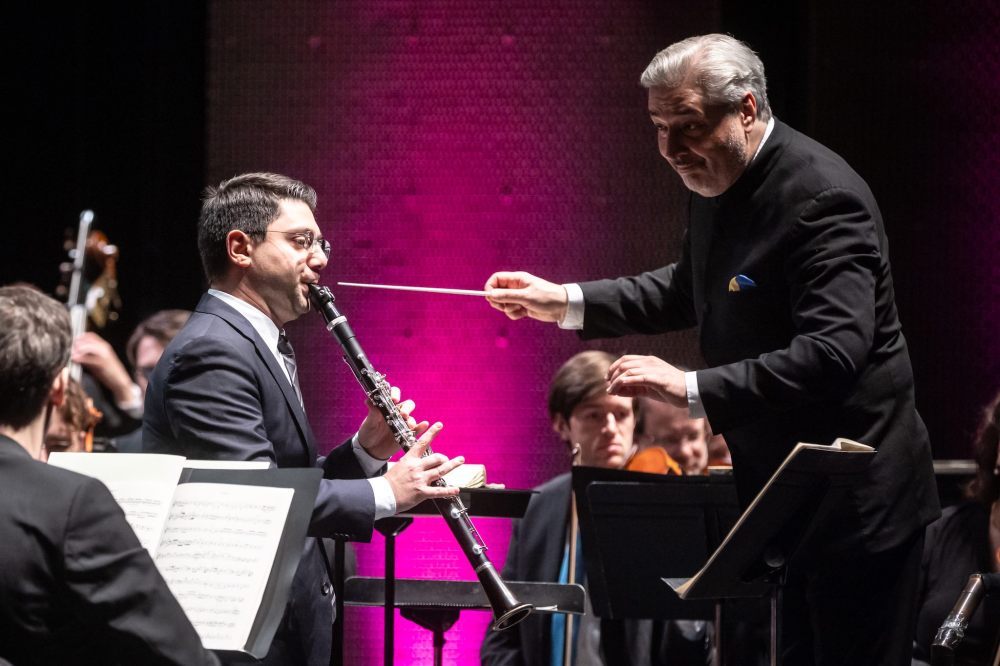
Raiskin matched him note for note, bringing out a full palette of timbral colours and textures from the orchestra, ultimately leading to a rousing standing ovation for the now beaming soloist.
The evening opened with Mahler’s Blumine, a stand-alone serenade originally included with the late-Romantic composer’s Symphony No. 1, excised after only three performances owing to harsh criticism at the time that planted seeds of doubt.
Last performed here in 1997, then led by the immortal Bramwell Tovey, it’s a piece that should be heard again — and soon. Kudos to principal trumpet Chris Fensom for his spot-on, muted opening “cantilena” theme alternating with the oboe, with the roughly seven-minute “flower piece” becoming an ode to the tenets of sentimentality.
However all bets were off with what might have been the capper to this year’s entire, wildly eclectic WSO season, which has ranged from world-class soloists performing beloved masterworks to professional wrestlers tossing off pins and headlocks while underscored by intrepid orchestra members.
Shostakovich’s Symphony No. 5 is an intriguing programming choice (note: the concert repeated as the final offering in the Shirley Loewen Sunday Classics series), composed in 1937 at the height of Stalinism, when the Soviet dictator’s relentless grip on artistic freedom knew no bounds.
Winnipeg Symphony Orchestra photo The Winnipeg Symphony Orchestra presented three distinct works as it wrapped up its Saturday Classics series with Mozart and Shostakovich.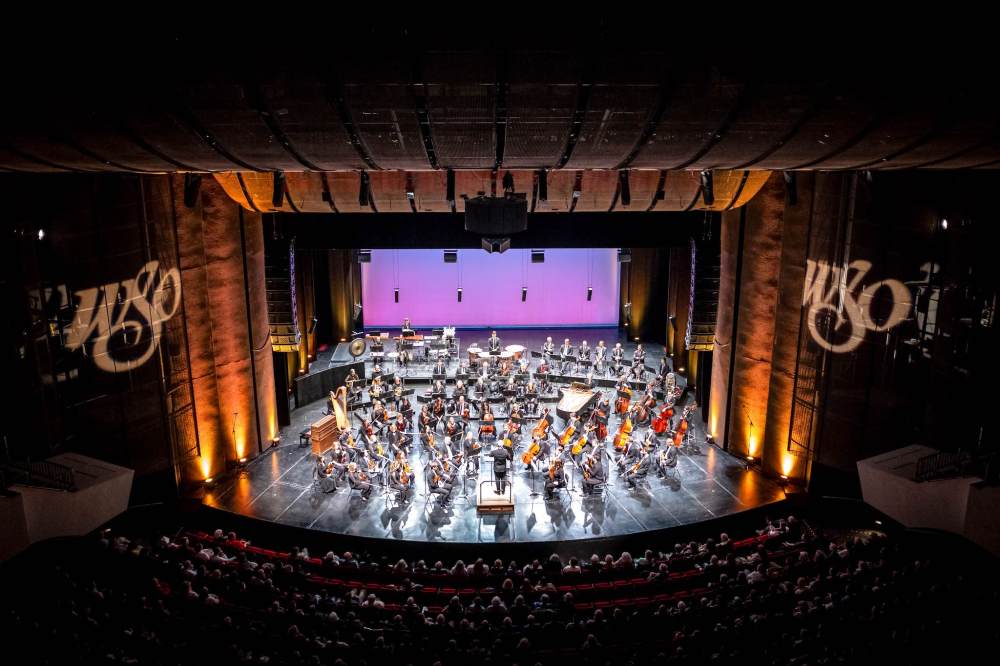
The nearly one-hour work demands a resolute, clear-eyed focus, matched with ironclad conviction. The maestro and his musicians delivered on both counts, despite the lower strings’s slightly tentative, dotted rhythm motif that launches the exposition.
Nonetheless, Raiskin infused this dynamic performance with taut dramatic tension, driving his players hard over the score’s angular leaps and ascerbic, pungent dissonances.
A special nod goes to the violas, led by principal viola Elise Lavallée, for plunging listeners into the first of many deeply felt, highly introspective depths. Another is owed to principal flute Christian Paquette for his wholly exposed canon with principal horn Patricia Evans, their enmeshed duet leading to the first entry of the ghostly celesta.
A highlight was the second movement, Allegretto, a.k.a. the scherzo, which morphs into an increasingly grotesque series of Landlers, with only concertmaster Karl Stobbe seemingly waving a white flag with his brief, albeit effective, lyrical solo.
The Largo once more began in the lugubrious depths, its hushed, sparse orchestration infused with seamlessly overlapping phrases. Principal harp Charlene Chin shone during each of her highlighted passages, with Raiskin wringing out every ounce of bleak despair from this section until its welcome (and by now, badly needed), final major chord.
Last but not least, the finale, Allegro non troppo, once more drove toward the finish line, propelled by Benjamin Blaesing’s pounding timpani strikes, further punctuated by Ben Reimer’s militaristic, crackling snare rolls.
Its final, triumphant eruption into a major tonality affirmed the power of the creative spirit and victories hard-won against the dark forces of tyranny.
As expected, the crowd members leapt to their feet one last time with cries of bravo and enthusiastic, prolonged applause.
Kudos to maestro Raiskin and the entire orchestra for a compelling 2025/26 season, which has truly offered something for everyone, from cherished classics to time in the wrestling ring.
winnipegfreepress.com/hollyharris
Holly Harris writes about music for the Free Press Arts & Life department.
Our newsroom depends on a growing audience of readers to power our journalism. If you are not a paid reader, please consider becoming a subscriber.
Our newsroom depends on its audience of readers to power our journalism. Thank you for your support.
History
Updated on Sunday, May 10, 2026 10:53 PM CDT: Corrects typo by writer