Regaining her talk
National orchestra puts residential school abuses in a musical spotlight

Advertisement
Read this article for free:
or
Already have an account? Log in here »
To continue reading, please subscribe:

Digital Subscription
One year of digital access for only $205*
- Enjoy unlimited reading on winnipegfreepress.com
- Read the E-Edition, our digital replica newspaper
- Access News Break, our award-winning app
- Play interactive puzzles
*First annual payment billed as $205.00 + GST for one year. This annual subscription will automatically renew at $233.00 + GST every 52 weeks (10% off the regular annual price of $259.35). Offer available to new and qualified returning subscribers only. Cancel any time.
To continue reading, please subscribe:
Add Free Press access to your Brandon Sun subscription for only an additional
$1 for the first 4 weeks*
- Enjoy unlimited reading on winnipegfreepress.com
- Read the E-Edition, our digital replica newspaper
- Access News Break, our award-winning app
- Play interactive puzzles
*Your next Brandon Sun subscription payment will increase by $1.00 and you will be charged $17.95 plus GST for four weeks. After four weeks, your payment will increase to $24.95 plus GST every four weeks.
Read unlimited articles for free today:
or
Already have an account? Log in here »
Hey there, time traveller!
This article was published 14/10/2017 (3268 days ago), so information in it may no longer be current.
A poetic plea that jabs at the heart of Canada’s residential school history is the inspiration behind an upcoming performance by the country’s national symphony.
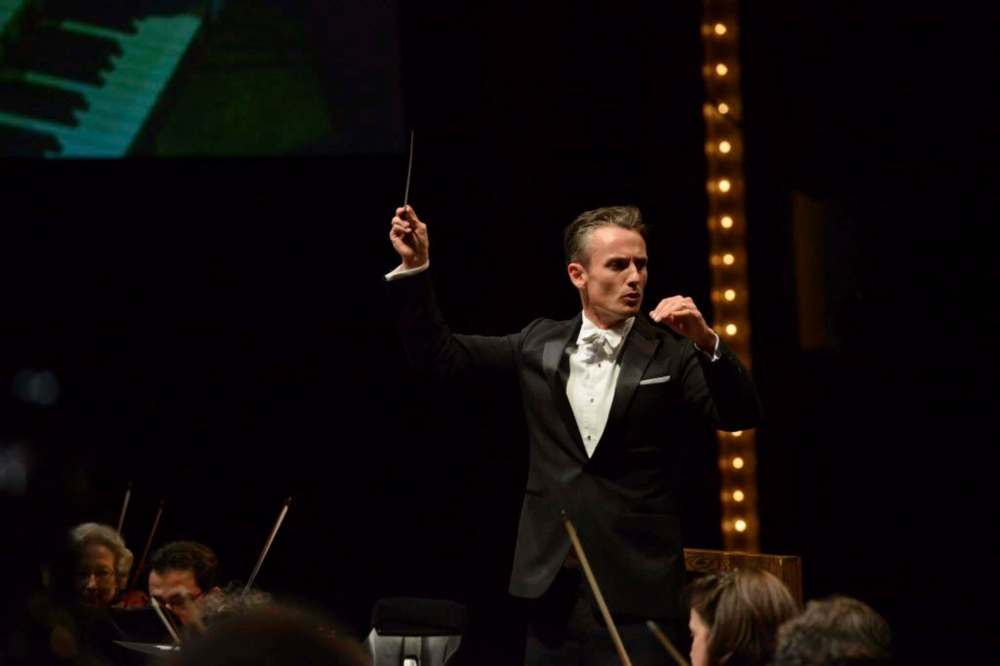
Canada’s National Arts Centre Orchestra, based in Ottawa and led by Alexander Shelley, will be in Winnipeg for four days beginning Tuesday. The visit, which marks the 150th anniversary of Confederation, culminates with a Thursday-night performance with Calgary pianist Jan Lisiecki at the Centennial Concert Hall. Lisiecki and the 54-member orchestra will perform the Schumann Piano Concerto and the New World Symphony.
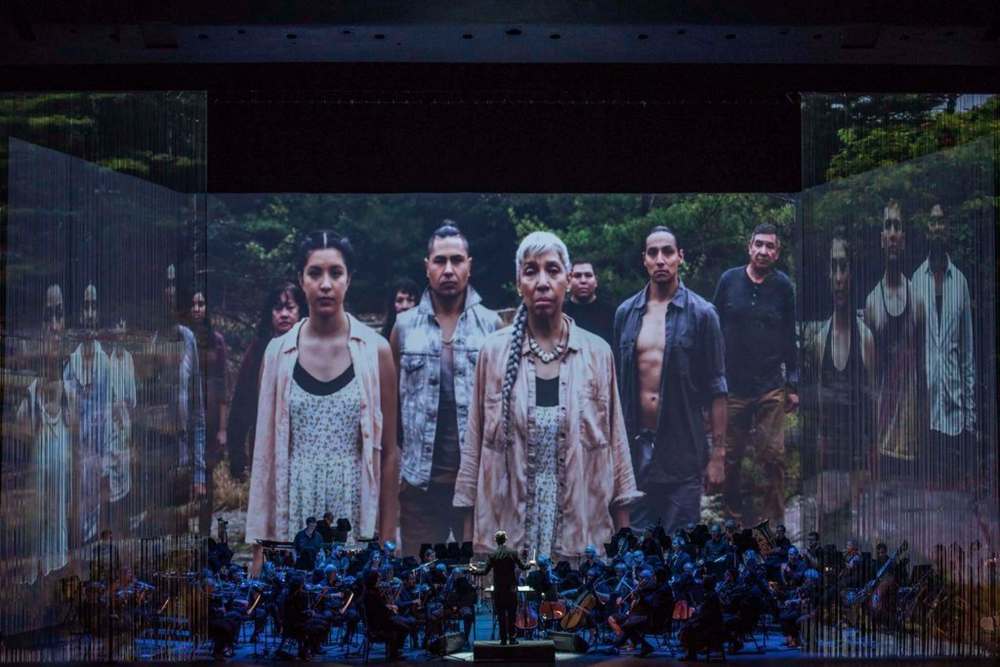
But it’s the final piece on the program, I Lost My Talk, a 22-minute movement composed by Edmonton’s John Estacio, which is based on the poem by Rita Joe, one of Canada’s most honoured Indigenous authors, that should prove to be the most memorable.
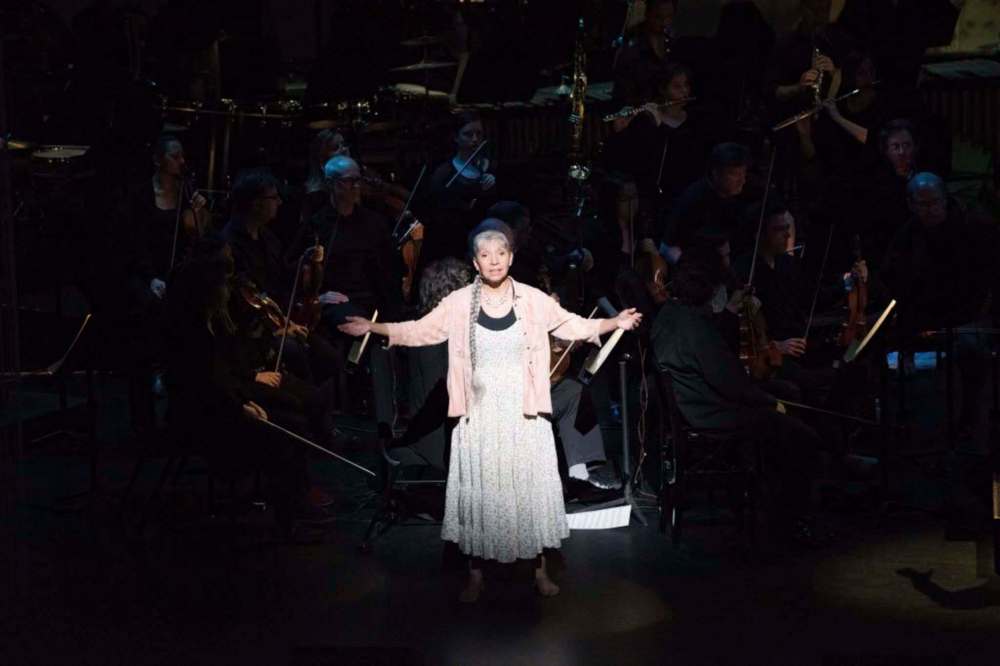
Shelley and the orchestra will perform the piece — originally commissioned to commemorate former prime minister Joe Clark’s 75th birthday — in front of a video projection of Indigenous dancers from Parry Sound, Ont., who will be interpreting Joe’s poem with choreography. An Indigenous actress, Monique Mojica, will narrate the performance, which will include a reading of I Lost My Talk.
For Shelley, an Englishman who first came to Canada to guest-conduct the orchestra in 2008, and later moved to Ottawa when the NAC named him its music director in 2015, reading Joe’s words and then learning about Canada’s residential school history proved to be an eye-opener.
“At the time I didn’t know anything about Rita Joe and knew very little about the residential school system. The Truth and Reconciliation Commission was a term I heard, but I was not very knowledgeable about it,” he tells the Free Press. “But this poem struck me for its simplicity, its direct message, its beauty, so I started to find out more about Rita Joe and her experiences (at the residential school). I realized it would be a beautiful story to engage with as an orchestra.”
Joe was born in Nova Scotia in 1932, and published seven books prior to her death in 2007, including The Poems of Rita Joe in 1978 and Song of Rita Joe, a 1996 memoir in which she described her experiences at the Shubenacadie Indian Residential School in Nova Scotia. She was made a member of the Order of Canada in 1989 and was named to the Queen’s Privy Council of Canada in 1992 by former governor general Ramon Hnatyshyn. A Mi’kmaq elder, she also was named the poet laureate of the Mi’kmaq people.
“We got in touch with her family. We checked if they felt it would be OK to work with her words. They were behind it from the very beginning,” Shelley says. “It turned into this amazing mixture of film, music and text. I’m very proud of what all the creative artists did — it’s a great joy, and it’s very special for audiences as well.”

I Lost My Talk mirrors the experiences of many Indigenous people at Canada’s residential schools, where teachers tried to assimilate students into Canadian society by forcing them to speak English, prohibiting communication in their native languages. Generations of residential school students were also abused at the schools. The federal government, through former prime minister Stephen Harper, issued an apology for residential school abuses in 2008.
Performing the piece on Canada’s 150th anniversary allows for some reflection, Shelley says.
“Something like I Lost My Talk felt true to the moment. There is a celebration, but now more than ever there’s an awareness through the Truth and Reconciliation Commission, of what could have been done better and what needs to be done going forward.”
In May, the orchestra debuted the piece at the Eskasoni First Nation in Nova Scotia, where Joe called home, and the community embraced the piece and the musicians, he says.
“It was an absolutely amazing day there,” he says. “The entire community put on a feast and they performed for us. And they prepared the hockey rink, drained it of ice and set up a stage and the whole community was there and we performed the piece. Her family was there (along with Assembly of First Nations national chief) Perry Bellegarde and the chief of the Eskasoni people, as well.
“It was an extraordinary moment.”
The orchestra is touring the country and the Winnipeg concert is the beginning of the tour’s western leg, which also takes Shelley and company to Canada’s northern territories for concerts in Whitehorse, Iqaluit and Yellowknife.
“I’ve come to know the country well,” he says. “By the end of the year, both (his wife) and I will have been to every province and territory in Canada, and that’s an interesting cross-section of the community, all those provinces and territories… It’s something very special, considering this is the second-biggest country on Earth, to travel its length and breadth.
“Yes, we’re relative newcomers, but I think we’ve been spoiled by the number of people we’ve come to meet.”
Besides Thursday’s concert, members of the NAC Orchestra make several appearances across the city beginning Tuesday. They include master classes at the Desautels Faculty of Music at the University of Manitoba; a panel discussion at the Winnipeg Art Gallery, held in conjunction with its Insurgence/Resurgence exhibition, Wednesday at 12:15 p.m.; a performance by the orchestra’s woodwinds at the U of M’s Eva Clare Hall Wednesday at 12:20 p.m.; and an Indigenous music summit at Thunderbird House Wednesday at 7 p.m.
alan.small@freepress.mb.ca Twitter:@AlanDSmall
Alan Small
Reporter
Alan Small was a journalist at the Free Press for more than 22 years in a variety of roles, the last being a reporter in the Arts and Life section.
Our newsroom depends on a growing audience of readers to power our journalism. If you are not a paid reader, please consider becoming a subscriber.
Our newsroom depends on its audience of readers to power our journalism. Thank you for your support.
CONCERT PREVIEW
Canada’s NAC Orchestra, conducted by Alexander Shelley
● With pianist Jan Lisiecki
● Thursday, Oct. 19, 7:30 p.m.
● Centennial Concert Hall
● Tickets: $20-$96 at wso.ca
I lost my talk, by Rita Joe
I lost my talk
The talk you took away.
When I was a little girl
At Shubenacadie school.
You snatched it away:
I speak like you
I think like you
I create like you
The scrambled ballad, about my world.
Two ways I talk
Both ways I say,
Your way is more powerful.
So gently I offer my hand and ask,
Let me find my talk
So I can teach you about me.
Alan Small
Reporter
Alan Small was a journalist at the Free Press for more than 22 years in a variety of roles, the last being a reporter in the Arts and Life section.
Our newsroom depends on a growing audience of readers to power our journalism. If you are not a paid reader, please consider becoming a subscriber.
Our newsroom depends on its audience of readers to power our journalism. Thank you for your support.
Advertisement Advertise With Us
Advertisement Advertise With Us