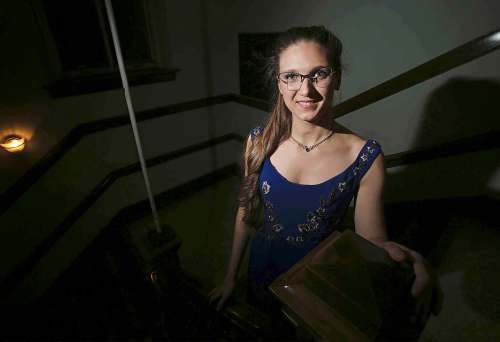
Symphony performance at church leaves listeners ‘in the lap of the divine’
Advertisement
Read this article for free:
or
Already have an account? Log in here »
To continue reading, please subscribe:

Digital Subscription
One year of digital access for only $205*
- Enjoy unlimited reading on winnipegfreepress.com
- Read the E-Edition, our digital replica newspaper
- Access News Break, our award-winning app
- Play interactive puzzles
*First annual payment billed as $205.00 + GST for one year. This annual subscription will automatically renew at $233.00 + GST every 52 weeks (10% off the regular annual price of $259.35). Offer available to new and qualified returning subscribers only. Cancel any time.
To continue reading, please subscribe:
Add Free Press access to your Brandon Sun subscription for only an additional
$1 for the first 4 weeks*
- Enjoy unlimited reading on winnipegfreepress.com
- Read the E-Edition, our digital replica newspaper
- Access News Break, our award-winning app
- Play interactive puzzles
*Your next Brandon Sun subscription payment will increase by $1.00 and you will be charged $17.95 plus GST for four weeks. After four weeks, your payment will increase to $24.95 plus GST every four weeks.
Read unlimited articles for free today:
or
Already have an account? Log in here »
Hey there, time traveller!
This article was published 16/11/2019 (2515 days ago), so information in it may no longer be current.
The Winnipeg Symphony Orchestra lifted listeners to heaven and back with its latest “(B)eyond Classics” concert, “Mendelssohn and Pärt” featuring a program of soulful works including two WSO premieres.
The two weekend performances led by Julian Pellicano and held at Westminster United Church also featured the welcomed return of Canadian pipe organist Sarah Svendsen in Poulenc’s “Concerto for Organ, String Orchestra and Timpani in G minor.” The Toronto-based musician and co-founder of cheeky organ duo Organized Crime also marked her symphonic debut on this very same stage with the WSO in September 2016.
Composed in 1938, the French composer’s one-movement work divided into seven internal sections of contrasting textures and tempos barrels forward as an often wild ‘n’ wooly ride on a runaway rollercoaster, ranging from shocking outbursts of thundering organ chords that would gain a nod of approval from Bela Lugosi himself, to the soloist’s more subtle harmonic underpinnings and tightly knit musical dialogue with the orchestra.

With no place to hide when you’re playing the “king of instruments,” Svendsen confidently attacked each of her entries with aplomb and requisite vigor, pulling out all the stops – literally – while adding her own dramatic flourishes heightened further by principal timpanist Mike Kemp’s drum strikes resonating like heartbeats.
Highlights of the roughly 25-minute work included its drivingly furtive “Allegro giocoso” second section that further showcased Svendsen’s bravura, contrasted by its antepenultimate “Très calme – Lent” with Pellicano keeping all forces firm in hand, cueing Svendsen through her strategically placed mirror on Westminster’s always magnificent Casavant Frères organ, and awarded a standing ovation with cheers of bravo for the beaming soloist.
Italian-born Canadian composer Marjan Mozetich’s “Postcards from the Sky” for string orchestra is among the finest works penned in this country, with its three luminous movements titled: “Unfolding Sky;” “Weeping Clouds;” and “A Messenger” inspired by heaven itself. It also quickly became apparent that many in the mostly older crowd of 535 might only have heard this 1996 work for their first time Friday night, with the eagerly awaited WSO debut eliciting audible gasps as it drew to its own hushed close.
Not to be outdone, Estonian composer Arvo Pärt’s “Trisagion,” also for string orchestra, provided further spiritual counterpoint to the Mozetich piece that opened the program – translated for “Thrice Holy” in Greek, referring to the “thrice holy” call frequently heard in the opening prayers of the Eastern Church. As another crowd-pleaser, the one-movement, 15-minute work calls for utmost sensitivity by the players as its sparse orchestration blossoms into lusher textures, with a few ragtag fiddle slips invariably creeping in during the earlier, halting pauses.
The program wrapped up with Mendelssohn’s mighty “Symphony No. 5 in D minor, Op. 107,” also known as the “Reformation.” After the opening “Andante” movement’s solemn introduction, Pellicano set a brisk tempo for its more fiery outpourings – and indeed, throughout the entire work, including its lighter-spirited “Allegro vivace” – with additional WSO musicians now joining their string compatriots onstage. The overall sound proved surprisingly balanced in the more intimate venue. It also provided viewers with a relatively rare opportunity to experience these thoroughbred musicians up close and personal, despite at times some occasional overzealous brass, mitigated during a wholly lyrical, and more relaxed “Andante” section.
But any earlier transgressions of overly quick tempi were quickly forgiven during the finale based on Martin Luther’s famous hymn, “Ein feste Burg ist unser Gott,” (“A Mighty Fortress is our Guide”) its eternal theme sensitively introduced by principal flute Jan Kocman that gradually builds to a majestic chorale by the entire orchestra – leaving listeners that night, as it were, in the lap of the divine.

The concert repeats Nov. 16, 7:30 p.m. at Westminster United Church.
Holly.harris@shaw.ca
Holly Harris writes about music for the Free Press Arts & Life department.
Our newsroom depends on a growing audience of readers to power our journalism. If you are not a paid reader, please consider becoming a subscriber.
Our newsroom depends on its audience of readers to power our journalism. Thank you for your support.