Who wrote the book of rock? NO. 7: James Brown
Known as the Godfather of Soul, Brown was a major influence on music with his rhythm- is-everything principle
Advertisement
Read this article for free:
or
Already have an account? Log in here »
To continue reading, please subscribe:

Digital Subscription
One year of digital access for only $205*
- Enjoy unlimited reading on winnipegfreepress.com
- Read the E-Edition, our digital replica newspaper
- Access News Break, our award-winning app
- Play interactive puzzles
*First annual payment billed as $205.00 + GST for one year. This annual subscription will automatically renew at $233.00 + GST every 52 weeks (10% off the regular annual price of $259.35). Offer available to new and qualified returning subscribers only. Cancel any time.
To continue reading, please subscribe:
Add Free Press access to your Brandon Sun subscription for only an additional
$1 for the first 4 weeks*
- Enjoy unlimited reading on winnipegfreepress.com
- Read the E-Edition, our digital replica newspaper
- Access News Break, our award-winning app
- Play interactive puzzles
*Your next Brandon Sun subscription payment will increase by $1.00 and you will be charged $17.95 plus GST for four weeks. After four weeks, your payment will increase to $24.95 plus GST every four weeks.
Read unlimited articles for free today:
or
Already have an account? Log in here »
Hey there, time traveller!
This article was published 17/06/2012 (5165 days ago), so information in it may no longer be current.
In this 10-part series, we pay tribute to the rock ‘n’ roll-era visionaries who came up with the musical vocabulary we’re still hearing today — the ones without whom the language of rock ‘n’ roll would not sound the same.
MONTREAL — How fitting that Papa’s Got a Brand New Bag, James Brown’s 1965 revelation, opens full strength with a bullish blast of brass that leaves the listener gasping for air.
The effect of hearing that presciently titled manifesto in all its newness can only be imagined by a younger generation.
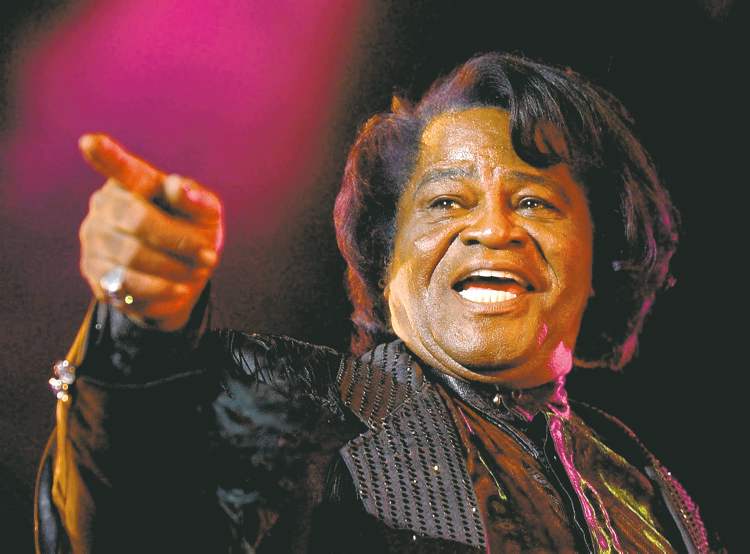
Even people now in their 50s can barely remember it first-hand. But history still speaks loudly: with that small piece of wax, Brown was cancelling the old rules and drawing up a new plan. It would be only a few years before the Godfather of Soul’s syncopated, interlocking rhythms, voice-as-percussion, turned-around beat and staccato guitar chords would be codified as the funk we still hear in today’s rock and rhythm and blues.
That 45-rpm turning point didn’t exactly come out of the blue. The previous year, Out of Sight had cleared a daring path for it, while a whole new audience — young white kids — got a chance to see Brown, in all his live glory, make the mighty Rolling Stones look a bit silly by preceding them in the concert film The T.A.M.I. Show. (To this day, it’s impossible to watch that Brown performance on DVD without carrying a grin on your face for about three days.)
The Augusta, Ga., native’s incendiary live act, honed to perfection as he became the Hardest-Working Man in Show Business, was almost as influential as his music.
His 1963 Live at the Apollo album still places highly on many lists of all-time greatest live recordings.
Michael Jackson took notice. When the pint-sized singer auditioned for Motown’s Berry Gordy Jr. at the age of 9 as part of the Jackson 5, he performed Brown’s I Got the Feeling and lifted Soul Brother No. 1’s moves lock, stock and barrel. Jacko would later add his own, effective but never better.
“Nobody has influenced me more than this man right here,” Jackson said tearily before giving Brown a lifetime achievement award at a Black Entertainment Television ceremony in 2003.
Brown’s disciples who weren’t practising splits and slides in front of a mirror were studying the records. It was a learning process that extended through the next three decades as soul singers, funk-rockers, rappers and contemporary R&B artists worried less about songcraft and melody to embrace the rhythm-is-everything principle posited by Brown, who sometimes based astonishing tracks like Cold Sweat on only one chord. Sly and the Family Stone, Parliament-Funkadelic, Prince and Public Enemy all kissed their Godfather’s ring.
And while hip hop is outside the purview of this list, it’s still worth noting that Brown is considered by many to be the most sampled artist of all time, with his 1970 record Funky Drummer alone providing a hugely influential drum break on recordings by other artists that were released well after Brown’s own career went into decline in the 1980s.
Like all great bandleaders, Brown was surrounded by brilliant musicians such as Bobby Byrd, Maceo Parker and Clyde Stubblefield, who made serious contributions to the sound that changed it all. These men must have their due.
But it’s the man at the microphone that even today’s hottest artists still revere. Check out Janelle Monáe’s opening moves – and some of her others – in the Tightrope video.
At an Experience Music conference in 2010, Monáe, 26, said she wasn’t inspired by the music of her youth, so she went back and studied the masters. “To me, James Brown was funk, was rock, was soul, all those genres,” Monáe said. “I got everything I needed from him.”
A planet full of other rhythm-obsessed disciples can nod vigorously in agreement.
— The Montreal Gazette
Trevor Payne
on James Brown:
IN the mid-’60s, dancing was all the rage. When records like I Got You (I Feel Good) came out, this was a brand new sound to dance to. Like the big-band era of the ’40s, the focus was again on the beat and the danceable aspects of the song.
When I think of James Brown, I think of a dancer first, an entertainer second. He knew he was a brilliant dancer. And he had the ability to write the type of lyric that best showcased his dancing.
He was able to take his position and the level of acceptance he had achieved and use it as one part of his career to focus on trying to influence not only blacks, but just about any teenager or preteen who had thoughts about the fast life and the easy life. He focused on the importance of an education. Songs like I Don’t Want Nobody to Give Me Nothing (Open Up the Door, I’ll Get It Myself) and songs about staying in school, I think that was very honourable.
The message rang through anywhere his music was popular, which was worldwide. We have many, many artists — not only musicians, but in all the arts — and people in education and in the ministry and even in politics that were pleading with kids to get an education, so I wouldn’t want to give him credit for being the originator of that. But he wore it very well.
— Trevor Payne is the director of the Montreal Jubilation Gospel Choir.
KEY TRACKS:
1. I Got You (I Feel Good)
2. Papa’s Got a Brand New Bag
3. Cold Sweat Part 1 and Part 2
4. Say It Loud – I’m Black and I’m Proud
5. Get Up (I Feel Like Being a) Sex Machine
Related Articles
Who wrote the book of rock? No. 1 -- The Beatles
Advertisement Advertise With Us
Advertisement Advertise With Us