Autistic scientist hopes biopic will inspire
Advertisement
Read this article for free:
or
Already have an account? Log in here »
To continue reading, please subscribe:

Digital Subscription
One year of digital access for only $205*
- Enjoy unlimited reading on winnipegfreepress.com
- Read the E-Edition, our digital replica newspaper
- Access News Break, our award-winning app
- Play interactive puzzles
*First annual payment billed as $205.00 + GST for one year. This annual subscription will automatically renew at $233.00 + GST every 52 weeks (10% off the regular annual price of $259.35). Offer available to new and qualified returning subscribers only. Cancel any time.
To continue reading, please subscribe:
Add Free Press access to your Brandon Sun subscription for only an additional
$1 for the first 4 weeks*
- Enjoy unlimited reading on winnipegfreepress.com
- Read the E-Edition, our digital replica newspaper
- Access News Break, our award-winning app
- Play interactive puzzles
*Your next Brandon Sun subscription payment will increase by $1.00 and you will be charged $17.95 plus GST for four weeks. After four weeks, your payment will increase to $24.95 plus GST every four weeks.
Read unlimited articles for free today:
or
Already have an account? Log in here »
Hey there, time traveller!
This article was published 06/02/2010 (6064 days ago), so information in it may no longer be current.
It isn’t a movie about religion. Or, for that matter, architecture.
Temple Grandin is actually the name of a person, and the HBO movie that bears her name as its title is a story about an extraordinary woman’s triumph over autism.
And no, this isn’t one of those run-of-the-mill, disease-of-the-week, made-for-TV movies, either.
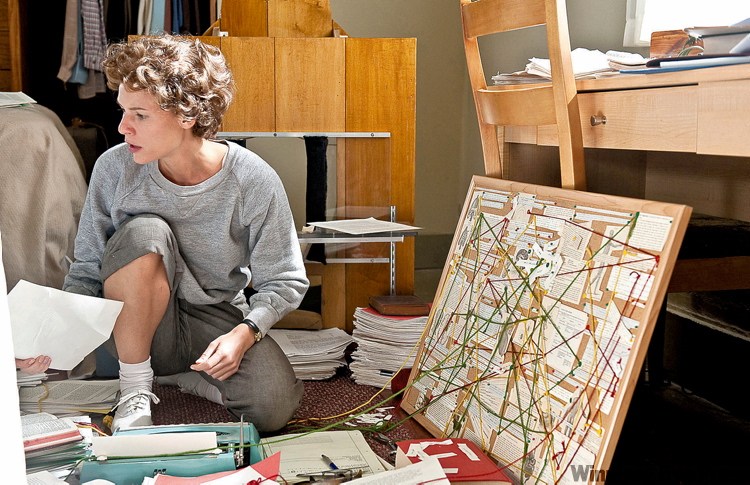
Instead, Temple Grandin, which airs tonight at 9 on HBO Canada, is a fascinating and meticulously acted profile of a person who faced her challenges head on, focused her unique abilities in a positive direction and eventually became a world-renowned scientist and activist.
Claire Danes delivers an emphatic performance as Grandin, who was diagnosed as autistic as a young child but whose mother refused to follow doctors’ advice (circa 1954) to simply accept her limitations and have her institutionalized.
Instead, Grandin’s mother, Eustacia (Julia Ormond), steered her autistic daughter into a routine filled with activity and intellectual stimulation. And the more she learned, the more "normally" she was able to function.
"The thing about autism is that as you learn more and more and more, you keep getting less autistic-like," the real Dr. Temple Grandin said recently during HBO’s portion of the U.S. networks’ semi-annual press tour in Los Angeles. "It’s like filling up the Internet inside my head. I have more experiences to draw on.
"My mother made sure I had my first job when I was 13, working for a seamstress. When I was in college, I had internships at a research lab and at a school for autistic kids. She arranged for me to go out to the ranch when I was 15. I was scared to go to the ranch; she said, ‘You have a choice — two weeks, or all summer.’ I’m really glad she made me go."
The film opens with Grandin’s arrival at the aforementioned ranch, a cattle operation in Arizona owned by her Aunt Ann (Catherine O’Hara). At first, she’s overwhelmed by the heat and the dust and the noise, but before long Temple is fascinated by the machinery and the movements of the livestock within the ranch’s various holding pens.
Everywhere she looks, she sees things in terms of the angles and numbers and calculations involved — a byproduct of her autism that allows her to "think in pictures" rather than in words.
Grandin’s fascination with the logistics of cattle ranching inspires her to design a new way of warehousing and moving livestock from ranch to barn to slaughterhouse. Her ideas aren’t immediately welcomed by the old-school cowboy set — she’s a woman, after all, and a weirdo-ish one, at that.
But Grandin won’t quit, and eventually, she finds men in top management who see the merit in her designs. These days, fully half the cattle in the U.S. are housed and handled in the efficient and humane systems designed by her.
Temple Grandin is a wonderfully inspiring story in which director Mick Jackson uses simple but clever graphic effects to illustrate the unique manner in which the film’s title subject views the world.
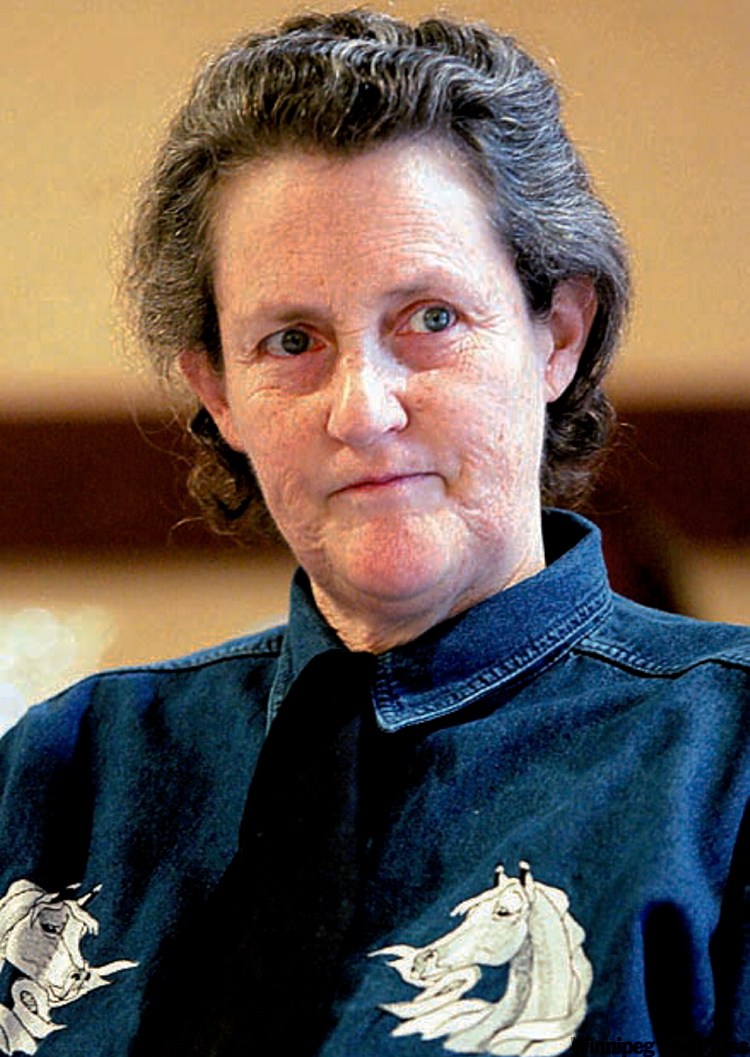
Danes’s portrayal is masterful in its realism and intensity. "She played me really, really accurate," said Dr. Grandin, a full professor of animal science at Colorado State University who lectures around the world on the subjects of autism and animal handling. "It’s like going in sort of a weird time machine; just watching the trailer, I got choked up."

She added that she hopes her story will inspire parents of other autistic children, because there’s much that those youngsters might someday contribute to the world.
"It’s important to get autistic kids out doing different things," she said. "I want to emphasize, autism is a wide spectrum, ranging from somebody who is going to remain nonverbal all the way up to famous scientists.
"You would have no technical equipment… if you didn’t have people who were interested in things. After all, who do you think made the first stone spear? It wasn’t the yackety-yaks around the campfire, that’s for sure."
brad.oswald@freepress.mb.ca