Information commissioner casts doubt on CBC’s claims of better access to information
Advertisement
Read this article for free:
or
Already have an account? Log in here »
To continue reading, please subscribe:

Digital Subscription
One year of digital access for only $205*
- Enjoy unlimited reading on winnipegfreepress.com
- Read the E-Edition, our digital replica newspaper
- Access News Break, our award-winning app
- Play interactive puzzles
*First annual payment billed as $205.00 + GST for one year. This annual subscription will automatically renew at $233.00 + GST every 52 weeks (10% off the regular annual price of $259.35). Offer available to new and qualified returning subscribers only. Cancel any time.
To continue reading, please subscribe:
Add Free Press access to your Brandon Sun subscription for only an additional
$1 for the first 4 weeks*
- Enjoy unlimited reading on winnipegfreepress.com
- Read the E-Edition, our digital replica newspaper
- Access News Break, our award-winning app
- Play interactive puzzles
*Your next Brandon Sun subscription payment will increase by $1.00 and you will be charged $17.95 plus GST for four weeks. After four weeks, your payment will increase to $24.95 plus GST every four weeks.
Read unlimited articles for free today:
or
Already have an account? Log in here »
Hey there, time traveller!
This article was published 25/10/2011 (5441 days ago), so information in it may no longer be current.
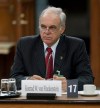
OTTAWA – The CBC is trumpeting quicker turnarounds on releasing documents to the public, but Canada’s access-to-information watchdog isn’t completely buying it.
Suzanne Legault told a Commons committee Tuesday that she believes the public broadcaster might be using new internal guidelines to quickly dismiss some access requests, thereby making it easier to claim faster response times.
“If the reason for the improvements in response rates to requests is that the CBC is not collecting and treating documents under the Act, as these guidelines would have us believe, then the reduction in the response rates perhaps doesn’t reflect an improvement in service,” Legault told MPs at the access-to-information committee.

The Conservatives initiated a study last month of the CBC’s ongoing court battle with Legault over who gets to scrutinize documents it has withheld from release. The MPs are also hearing from witnesses on their frustrations over getting responses to access-to-information requests.
The CBC recently put out statistics saying that it has drastically reduced the response times to requests and to the number of complaints since 2007. At the same time, it released internal guidelines that said that CBC access co-ordinators could simply read a request for information and reject it on face value if it seemed to fall under the legally exempted categories of journalistic, creative or programming activities.
Legault acknowledges that the CBC has steadily reduced the number of complaints relative to the number of responses. But she notes that she still has 180 ongoing investigations with the CBC over access, in addition to 196 that are on hold pending the result of the Federal Court of Appeal case.
The CBC might not be equipped to deal properly with the backlog, she said.
Both Legault and the chairman of the Canadian Radio-television and Telecommunications Commission (CRTC), are calling on parliamentarians to change the Access to Information Act to make it clearer. Legault said more onus should be placed on the CBC to demonstrate that it could actually be harmed by releasing certain exempted documents, and the public interest should be weighed in each decision.
She also addressed the central issue of the current court battle — the CBC’s contention that she does not have the jurisdiction to review documents the Crown Corporation had withheld from release. She said Australia, Ireland and the United Kingdom all allow independent bodies to review documents held by their public broadcasters.
“I’m also not a former general that worked in Afghanistan, I’m also not somebody that worked in a Crown Corporation before, I’m also not somebody who was a trade lawyer or a patent lawyer, and yet my office has been trusted since 1983 to make decisions about these cases,” Legault said.
But Legault also underlined her contention that all records in ministerial offices should also be subject to the Act and to her review — something successive Liberal and Conservative governments fought against all the way to the Supreme Court and ultimately won.
NDP MP Charlie Angus pointed out during the proceedings that it was the current Conservative government that insisted against the information commissioner being able to see the records in the first place, rejecting recommendations by Legault’s predecessor on how best to word changes to the Act in 2006.

“I was somewhat surprised when I found out that the implications of the Information Commissioner’s recommendation would be that CBC journalists … would have to disclose their sources and that it would be the Information Commissioner who would then determine whether or not that source should remain confidential,” former Justice Minister Vic Toews told the same committee in June 2006. “I found that, quite frankly, shocking.”
The committee also heard from Marc-Fran�ois Bernier, a journalistic ethics specialist at the University of Ottawa, who said the MPs must take into consideration the commercial and ideological “crusade” media conglomerate Quebecor had undertaken against the CBC.
Legault said that between 2008-9, 90 per cent of all access requests launched with the CBC were made by six individuals representing business interests. Although their identities have not been revealed, the courts have heard that one law clerk working on behalf of Quebecor’s Sun Media newspaper chain submitted nearly 400 requests in late 2007.
“I believe this journalistic strategy raises a lot of questions of the ethics and integrity of journalists…,” Bernier said.
Quebecor president Pierre Karl Peladeau rejected the notion during a committee appearance last week that journalists working within his chain were being directed by the corporation to write negative stories about the CBC.