We Were Children docudrama lays bare residential school horrors

Producers discuss film at breakfast panel at News Café

Advertisement

Advertise with us

"IT hurt. I felt they were taking something away from me. They were stripping away my humanness, my sense of who I was.”

Read this article for free:


or

Already have an account? Log in here »

To continue reading, please subscribe:

Subscribe and receive a limited-edition Free Press branded hat or tote.

Digital Subscription

One year of digital access for only $205*

  • Enjoy unlimited reading on winnipegfreepress.com
  • Read the E-Edition, our digital replica newspaper
  • Access News Break, our award-winning app
  • Play interactive puzzles

*First annual payment billed as $205.00 + GST for one year. This annual subscription will automatically renew at $233.00 + GST every 52 weeks (10% off the regular annual price of $259.35). Offer available to new and qualified returning subscribers only. Cancel any time.

To continue reading, please subscribe:

Add Free Press access to your Brandon Sun subscription for only an additional

$1 for the first 4 weeks*

  • Enjoy unlimited reading on winnipegfreepress.com
  • Read the E-Edition, our digital replica newspaper
  • Access News Break, our award-winning app
  • Play interactive puzzles
Start now

*Your next Brandon Sun subscription payment will increase by $1.00 and you will be charged $17.95 plus GST for four weeks. After four weeks, your payment will increase to $24.95 plus GST every four weeks.

Opinion

Hey there, time traveller!
This article was published 19/03/2013 (4932 days ago), so information in it may no longer be current.

“IT hurt. I felt they were taking something away from me. They were stripping away my humanness, my sense of who I was.”

The haunting words of residential school survivor Lyna Hart refer specifically to the memory of what she felt, as a four-year-old, when a nun cut off her long, black hair on the day of her arrival at a Manitoba school, but they could easily be used to described the entirety of the residential school ordeal.

Hart is one of two survivors whose stories are told in We Were Children, a powerful docudrama that premieres tonight on APTN West at 10 p.m. or on APTN HD at 8 p.m. Written by Jason Sherman and directed by Tim Wolochatiuk, the film pulls no punches as it draws upon the first-person accounts of Hart and Saskatchewan survivor Glen Anaquod (who died in 2011 before completion of the film) to recall a shameful chapter in Canada’s history.

Rebecca Sandulak
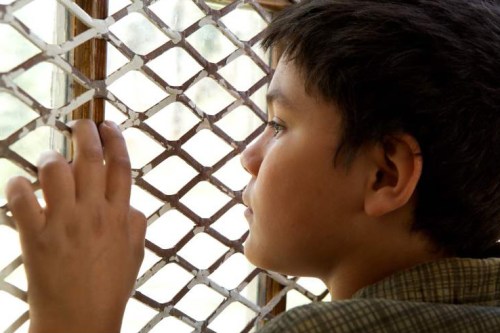
Rene Batson as Glen at the age of seven.
Rebecca Sandulak Rene Batson as Glen at the age of seven.

We Were Children — a co-production of Winnipeg-based Eagle Vision Inc., Toronto’s Entertainment One and the National Film Board — opens with an idyllic scene set on a rural Manitoba landscape, circa 1958, with a young mother calling her daughter in from the horse corral. The four-year-old, Lyna, is smiling, but there are tears in the mother’s eyes as she awaits the arrival of a truck that will transport the girl to the residential school that will be her home for the next decade.

“Listen to what they tell you; remember to be good,” the mother implores.

In an interview clip that follows the young girl’s departure from home, the adult Hart reflects on her mother’s words.

“They had no expectations,” she offers. “I don’t think they could fathom what would happen.”

Indeed, what follows is a harrowing compilation of dramatizations based on the recollections of Hart and Anaquod, whose residential-school experiences both began in the late 1950s. Hart was four, Anaquod six. Each experienced and witnessed humiliation, dehumanizing treatment and various types of abuse at the hands of the nuns and priests who ran the Christian schools. The Canadian government gave the schools a mandate to erase all traces of aboriginal identity from their “students” in order to transform them into productive members of society.

“The savage and carefree ways you are accustomed to are over,” Lyna’s class is told. “Your old world is dying, but we in the civilized world want to save you from certain death.”

“Saving,” as it turns out, consists of physical punishment for speaking native languages, forced isolation and, in many cases, serial sexual abuse. The pain in the voices of Hart and Anaquod as they speak with an off-screen interviewer about what they endured is obvious.

From left, Maggie Nagle as Sister Theresa, Alicia Hamelin as Lyna and Rebecca Gibson as Sister Mary.

Director Wolochatiuk’s chosen mix of dramatizations and first-person interviews is generally effective; if there’s a weakness in the scripted segments, it’s that some of the more abusive nuns and priests are portrayed as so over-the-top evil that they lapse into caricatured, Disney-movie-style villainy.

But it’s the survivors’ stories that give We Were Children its emotional heft, and the impact of what Hart and Anaquod experienced — which represents the ordeals of untold thousands in the residential school system — cannot and should not be ignored.

Wolochatiuk, producer Lisa Meeches of Winnipeg-based Eagle Vision Inc., and National Film Board chairman Tom Perlmutter are taking part in an early-morning breakfast panel today at 7:30 a.m. at the Winnipeg Free Press News Café, during which clips from the film will be screened and the panelists will answer questions about the making of We Were Children.

brad.oswald@freepress.mb.ca Twitter: @BradOswald

History

Updated on Tuesday, March 19, 2013 9:06 AM CDT: replaces photo

Updated on Tuesday, March 19, 2013 10:15 AM CDT: Clarifies premiere times and channels.

Report Error Submit a Tip

More Stories

Jets vets weigh in on franchise goalie Hellebuyck not reporting to training camp

Mike McIntyre 7 minute read Preview

Jets vets weigh in on franchise goalie Hellebuyck not reporting to training camp

Mike McIntyre 7 minute read Thursday, Sep. 17, 2026

Hockey is the ultimate team sport, where it’s supposed to be about the crest on your chest rather than the name on your back.

So how is Connor Hellebuyck’s trade request and subsequent training camp strike playing out inside the Winnipeg Jets locker room — particularly among other core players he’s gone to battle with over the years?

“Obviously the news is heartbreaking,” Jets forward Kyle Connor said Thursday.

“It feels like we had such a special group here and for whatever reason — I can’t speak to the reason until we hear from the man, I’m not going to speculate on what it is but I know that a lot of guys in that room that are heartbroken.”

Read
Thursday, Sep. 17, 2026

Around the NSL: Keilty-Dilling’s hot hands; Rise rumble standings; Tides in must-win territory

Grace Anne Paizen 5 minute read Preview

Around the NSL: Keilty-Dilling’s hot hands; Rise rumble standings; Tides in must-win territory

Grace Anne Paizen 5 minute read Yesterday at 9:13 PM CDT

Let’s start off this week’s edition with the Week 21 matchup between the Montreal Roses and AFC Toronto that had already taken place before last week’s column was written.

It was, arguably, the heavyweight matchup of that week, with the Roses attempting to place a three-game buffer between itself and the surging Mighty Maroons while Toronto was trying to gain some breathing room between itself and the Ottawa Rapid.

Instead? A 2-2 draw thwarted any progress from either team.

Making way for the Rapid to leapfrog back into second place over Toronto… right? Well, buckle up for the riveting answer to that question and the jostling for fourth place in this column’s latest edition.

Read
Yesterday at 9:13 PM CDT

Siloam Mission, WFPS discussing on-site paramedic to reduce staggering number of emergency calls

Scott Billeck 4 minute read Preview

Siloam Mission, WFPS discussing on-site paramedic to reduce staggering number of emergency calls

Scott Billeck 4 minute read Yesterday at 2:00 AM CDT

Winnipeg’s fire-paramedic service and its largest homeless-serving organization are discussing what it would look like to station at least one paramedic at Siloam Mission, as emergency calls to the downtown facility surge.

The ongoing discussions come as Winnipeg Fire Paramedic Service crews were dispatched 1,771 times during the first eight months of the year to the two adjacent Siloam properties at 303 Stanley St. and 300 Princess St.

WFPS said most of the calls were related to overdoses or other consequences of substance use, with the total nearly double the 854 calls recorded over the same period last year. By comparison, there were 831 calls during the same span in 2024, and 591 in 2023.

“The number of emergency calls isn’t sustainable for us as a service, but it’s certainly not sustainable for them as an agency trying to provide services,” WFPS chief Ryan Sneath told the Free Press. “And they recognize that they’re impacting emergency services, not them specifically, but the site in a significant way.”

Read
Yesterday at 2:00 AM CDT

‘One of a kind’: CEO, philanthropist Doug Harvey dies at 72

Morgan Modjeski 5 minute read Preview

‘One of a kind’: CEO, philanthropist Doug Harvey dies at 72

Morgan Modjeski 5 minute read Thursday, Sep. 17, 2026

Doug Harvey, a Winnipeg business titan and philanthropist, has died after battling cancer for more than a decade.

Harvey gave millions of dollars to Winnipeg organizations while he was CEO of DLH Group, a nationwide network of businesses that support heavy duty truck and trailer users.

Loren Remillard, CEO and president of the Winnipeg Chamber of Commerce, said the business community is mourning the loss of the influential businessman who helped shape Winnipeg.

“We are a transportation and logistics hub in Winnipeg and it was partly the result of geography, and a big part because of leaders and visionaries like Doug Harvey,” he said.

Read
Thursday, Sep. 17, 2026

Day 1 of Jets training camp in the books with pairings essentially cemented

Ken Wiebe 7 minute read Preview

Day 1 of Jets training camp in the books with pairings essentially cemented

Ken Wiebe 7 minute read Thursday, Sep. 17, 2026

Nearly six minutes into his question-and-answer session, Scott Arniel took a welcome detour from the news of the day.

After exhausting the discussion around the goalie who wasn’t in training camp, the head coach of the Winnipeg Jets finally got a query about the line combinations and defensive pairings that were unveiled in training camp.

And unlike past years, when exhibition games were more frequent and the training camp wasn’t this condensed, Arniel conceded these groupings were intentional and were likely staying together for some time.

The expansion to an 84-game regular season brings with it a reduction to four pre-season games and a much shorter training camp, which could limit the amount of experimentation that Arniel can do during the next two weeks.

Read
Thursday, Sep. 17, 2026

We Were Children docudrama lays bare residential school horrors

By Brad Oswald / Watching TV 4 minute read Preview

We Were Children docudrama lays bare residential school horrors

By Brad Oswald / Watching TV 4 minute read Tuesday, Mar. 19, 2013

"IT hurt. I felt they were taking something away from me. They were stripping away my humanness, my sense of who I was.”

The haunting words of residential school survivor Lyna Hart refer specifically to the memory of what she felt, as a four-year-old, when a nun cut off her long, black hair on the day of her arrival at a Manitoba school, but they could easily be used to described the entirety of the residential school ordeal.

Hart is one of two survivors whose stories are told in We Were Children, a powerful docudrama that premieres tonight on APTN West at 10 p.m. or on APTN HD at 8 p.m. Written by Jason Sherman and directed by Tim Wolochatiuk, the film pulls no punches as it draws upon the first-person accounts of Hart and Saskatchewan survivor Glen Anaquod (who died in 2011 before completion of the film) to recall a shameful chapter in Canada's history.

We Were Children -- a co-production of Winnipeg-based Eagle Vision Inc., Toronto's Entertainment One and the National Film Board -- opens with an idyllic scene set on a rural Manitoba landscape, circa 1958, with a young mother calling her daughter in from the horse corral. The four-year-old, Lyna, is smiling, but there are tears in the mother's eyes as she awaits the arrival of a truck that will transport the girl to the residential school that will be her home for the next decade.

Read
Tuesday, Mar. 19, 2013