

Muhammad Ali court battle goes the distance
Movie focuses on dramatic fight against U.S. outside the boxing ring

Advertisement
Read this article for free:
or
Already have an account? Log in here »
To continue reading, please subscribe:
Monthly Digital Subscription
$0 for the first 4 weeks*
- Enjoy unlimited reading on winnipegfreepress.com
- Read the E-Edition, our digital replica newspaper
- Access News Break, our award-winning app
- Play interactive puzzles
*No charge for 4 weeks then price increases to the regular rate of $19.00 plus GST every four weeks. Offer available to new and qualified returning subscribers only. Cancel any time.
Monthly Digital Subscription
$4.75/week*
- Enjoy unlimited reading on winnipegfreepress.com
- Read the E-Edition, our digital replica newspaper
- Access News Break, our award-winning app
- Play interactive puzzles
*Billed as $19 plus GST every four weeks. Cancel any time.
To continue reading, please subscribe:
Add Free Press access to your Brandon Sun subscription for only an additional
$1 for the first 4 weeks*
*Your next subscription payment will increase by $1.00 and you will be charged $16.99 plus GST for four weeks. After four weeks, your payment will increase to $23.99 plus GST every four weeks.
Read unlimited articles for free today:
or
Already have an account? Log in here »
Hey there, time traveller!
This article was published 05/10/2013 (4458 days ago), so information in it may no longer be current.
There was Clay vs. Liston, one of the heavyweight fight game’s most shocking upsets. There was Ali vs. Frasier, undoubtedly the most anticipated and heavily hyped bout of its generation. And there was Ali vs. Foreman, the Rumble in the Jungle, the long-odds showdown in which the aging ex-champ’s startling “rope-a-dope” tactic led to the most stunning pugilistic triumph in the history of boxing.
Each, in its own way, is considered to be a great boxing match, but none, according to the makers of a new made-for-cable movie that premieres tonight on HBO Canada (check listings for time), merits the title of Muhammad Ali’s Greatest Fight.
Instead, they propose, that description belongs to a battle that took place outside the squared circle and inside the chambers, conference rooms and courtroom of the U.S. Supreme Court.

Muhammad Ali’s Greatest Fight, directed by Oscar winner Stephen Frears (The Queen), is a quiet but captivating fact-based drama that examines the behind-the-scenes politicking, deliberation, negotiation and heated debate leading up to the court’s decision in the case of “Cassius Marcellus Clay Jr., also known as Muhammad Ali v. United States.”
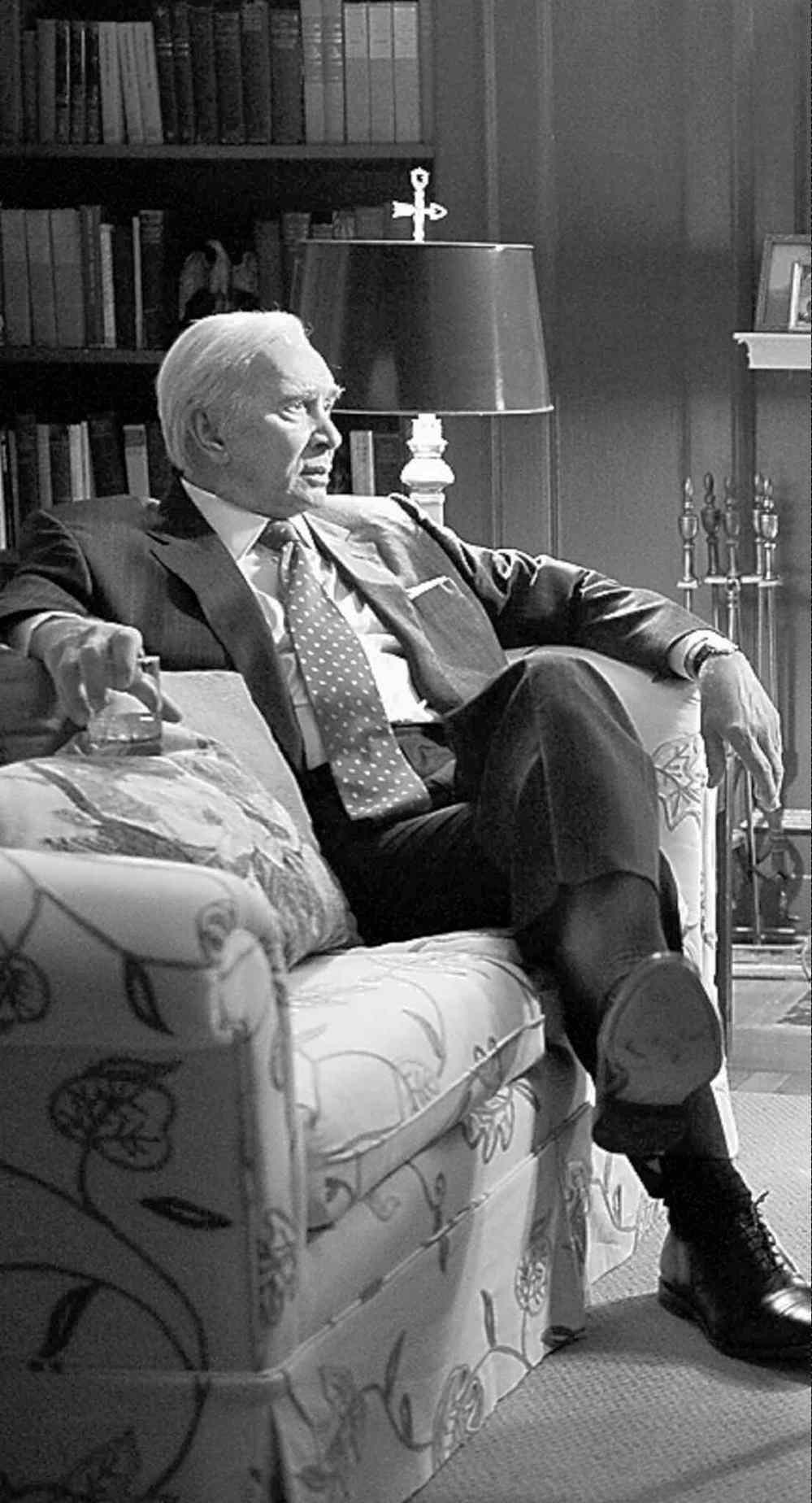
The movie is a clever and seamless blending of scripted scenes and archival news/fight/interview clips from Clay/Ali’s controversial career. Central to the story are Chief Justice Warren E. Burger (Frank Langella) and Justice John Harlan II (Christopher Plummer), two conservative-leaning jurists who agreed on most issues but ultimately found themselves at odds over the Ali case.
Burger is shown as being firmly set in his ways, an old-school thinker who defied the tradition of judicial independence by maintaining a constant dialogue with U.S. President Richard Nixon’s White House. Harlan, while not exactly a progressive thinker, is portrayed as willing, at least occasionally, to consider alternative evidence and opinions that could better inform his decisions.
The film opens with the arrival in Washington of Kevin Connolly (Benjamin Walker), a newly hired clerk joining the other law-school grads in Harlan’s office. A liberal thinker from a less-than-prestigious university in the Midwest, he is largely shunned by the upper-crust Ivy Leaguers who populate the Supreme Court justices’ staffs.

But he’s smart, a hard worker, and quickly earns Harlan’s trust. And when Harlan is given the task of preparing the court’s majority decision in the Ali case (which initially rejected the boxer’s argument that his refusal to be drafted for service in Vietnam was valid on religious, conscientious-objector grounds), he assigns the job of writing the decision to Connolly.
Connolly, however, sees the justices’ position as unjust, and assembles case-law arguments he hopes will convince Harlan to change his perspective and, inevitably, reverse the Supreme Court’s position. While it never achieves boiling-point intensity as a drama, Muhammad Ali’s Greatest Fight does feature some fairly intense judicial sparring and, not surprisingly, impressive performances by Plummer and Langella as allies turned rivals in a case with far-reaching implications.
As it turns out, the choice of including Ali only in archival footage is a shrewd one — having an actor play such a well-known figure would likely have distracted from the efforts of the rest of the cast, and since the fighter’s ring career and courtroom battles really only serve as a foundation for this movie’s story, there’s no reason to dramatize them here. Besides, footage of the real Ali is more compelling than anything a scripted and acted interpretation could offer.
Viewers who equate sports-themed movies with action and flash might be inclined to count Muhammad Ali’s Greatest Fight out because it fails to deliver anything resembling a dramatic knock-out punch, but those willing to accept the idea a sports story and a courtroom drama can coexist will be glad they decided to go the distance with this one.
brad.oswald@freepress.mb.ca Twitter: @BradOswald
Our newsroom depends on a growing audience of readers to power our journalism. If you are not a paid reader, please consider becoming a subscriber.
Our newsroom depends on its audience of readers to power our journalism. Thank you for your support.
TV REVIEW
Muhammad Ali’s Greatest Fight
Starring Christopher Plummer, Frank Langella and Benjamin Walker
Tonight on HBO Canada
Check listings for time
4 stars out of 5
Our newsroom depends on a growing audience of readers to power our journalism. If you are not a paid reader, please consider becoming a subscriber.
Our newsroom depends on its audience of readers to power our journalism. Thank you for your support.
Advertisement Advertise With Us
Advertisement Advertise With Us