

No $#*&, Sherlock
PBS documentary focuses on fictional detective's impact on modern crime investigations
Advertisement
Read this article for free:
or
Already have an account? Log in here »
To continue reading, please subscribe:
Monthly Digital Subscription
$1 per week for 24 weeks*
- Enjoy unlimited reading on winnipegfreepress.com
- Read the E-Edition, our digital replica newspaper
- Access News Break, our award-winning app
- Play interactive puzzles
*Billed as $4.00 plus GST every four weeks. After 24 weeks, price increases to the regular rate of $19.95 plus GST every four weeks. Offer available to new and qualified returning subscribers only. Cancel any time.
Monthly Digital Subscription
$4.99/week*
- Enjoy unlimited reading on winnipegfreepress.com
- Read the E-Edition, our digital replica newspaper
- Access News Break, our award-winning app
- Play interactive puzzles
*Billed as $19.95 plus GST every four weeks. Cancel any time.
To continue reading, please subscribe:
Add Free Press access to your Brandon Sun subscription for only an additional
$1 for the first 4 weeks*
- Enjoy unlimited reading on winnipegfreepress.com
- Read the E-Edition, our digital replica newspaper
- Access News Break, our award-winning app
- Play interactive puzzles
*Your next Brandon Sun subscription payment will increase by $1.00 and you will be charged $17.95 plus GST for four weeks. After four weeks, your payment will increase to $24.95 plus GST every four weeks.
Read unlimited articles for free today:
or
Already have an account? Log in here »
Hey there, time traveller!
This article was published 12/12/2013 (4534 days ago), so information in it may no longer be current.
TV’s favourite fictional C.S.I. crime-solvers are, of course, based on the work of real-life forensic investigators. But a new PBS documentary suggests that much of modern-day police procedure was actually inspired by the investigative techniques of a well-known fictional detective.
How Sherlock Changed the World, which airs Dec. 17 at 8 p.m. on Prairie Public TV, is a mildly entertaining look at how Sir Arthur Conan Doyle’s fictional Victorian-era detective set the template for many of the most important 20th-century advances in crime-solving techniques and technology.
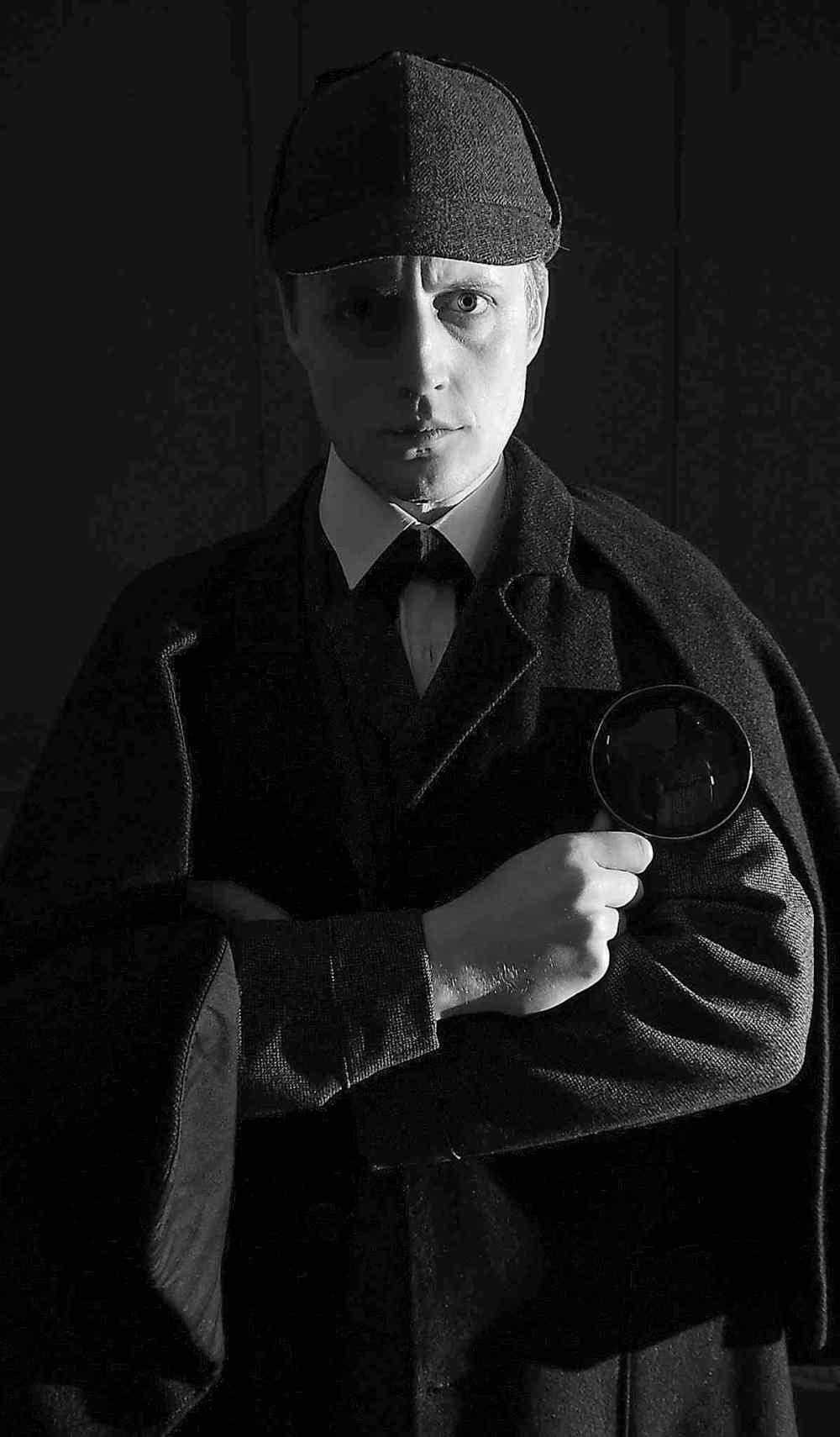
“He was the first CSI,” says real-life crime scene investigator Kimberlee Sue Moran, one of several forensic scientists interviewed in the two-hour film. “We still do what he did in the books.”
In How Sherlock Changed the World, narrator Andrew Lincoln (The Walking Dead) offers up the notion that the exploits of Conan Doyle’s 19th-century fictional creation — inspired by a detail-obsessed professor he came to admire while studying medicine in Edinburgh — forced police investigators of the era to reconsider the way they did their jobs.
With supporting comments from half a dozen modern-day forensic experts, film revisits numerous actual cases and shows how the sort of deductive reasoning first employed by the fictional Sherlock Holmes played a key part in the solving of each case.
“When I go to a crime scene, I use his logic, his way of deduction,” says famed investigator Dr. Henry C. Lee, whose career has included such high-profile cases as the JonBenet Ramsay murder, the O.J. Simpson trial and the post-9/11 forensic investigation. “That’s how we do it today — solving cases based on Sherlock Holmes logic.”
Though fictional, Holmes is credited here as the first detective to protect crime scenes from contamination, to search for evidence in minute traces, to use a magnifying glass to collect information invisible to the naked eye, and to gather and catalogue forensic evidence for laboratory analysis.
The Holmes novels are also presented as a key motivator in the development of the world’s first forensic laboratory, by Frenchman Edmond Locard, nearly a quarter of a century after Conan Doyle created one in Holmes’ flat at 221B Baker St.

A key assertion in the film comes from Conan Doyle’s first Holmes adventure, A Study in Scarlet: “It is a capital mistake to theorize before you have all the evidence. It biases the judgment.” Without exception, the real-life investigators agree.
For all these fascinating strengths, How Sherlock Changed the World does also have some rather off-putting weaknesses. Its use of a collection of anonymous actors in rather low-rent recreations of famous Holmes scenes is less than inspired, and its inevitable lapse into a gushing promotion of PBS’s current series of Sherlock mysteries (starring Benedict Cumberbatch in the title role) is both unnecessary and annoying.
How Sherlock Changed the World is much better when it builds bridges between Conan Doyle’s fiction and the real-life cases that could not have been solved without Holmes-inspired investigative techniques.
In those moments, the popularity and impact of literature’s most enduring crime-solver are anything but a mystery.
brad.oswald@freepress.mb.ca Twitter: @BradOswald