Doc delves into dire straits of flood evacuees

Advertisement

Advertise with us

It isn't an easy story to watch; clearly, it has been a far, far more difficult one to live.

Read this article for free:


or

Already have an account? Log in here »

To continue reading, please subscribe:

Subscribe and receive a limited-edition Free Press branded hat or tote.

Digital Subscription

One year of digital access for only $205*

  • Enjoy unlimited reading on winnipegfreepress.com
  • Read the E-Edition, our digital replica newspaper
  • Access News Break, our award-winning app
  • Play interactive puzzles

*First annual payment billed as $205.00 + GST for one year. This annual subscription will automatically renew at $233.00 + GST every 52 weeks (10% off the regular annual price of $259.35). Offer available to new and qualified returning subscribers only. Cancel any time.

To continue reading, please subscribe:

Add Free Press access to your Brandon Sun subscription for only an additional

$1 for the first 4 weeks*

  • Enjoy unlimited reading on winnipegfreepress.com
  • Read the E-Edition, our digital replica newspaper
  • Access News Break, our award-winning app
  • Play interactive puzzles
Start now

*Your next Brandon Sun subscription payment will increase by $1.00 and you will be charged $17.95 plus GST for four weeks. After four weeks, your payment will increase to $24.95 plus GST every four weeks.

Opinion

Hey there, time traveller!
This article was published 16/08/2014 (4428 days ago), so information in it may no longer be current.

It isn’t an easy story to watch; clearly, it has been a far, far more difficult one to live.

The new locally produced documentary Treading Water: Plight of the Manitoba First Nation Flood Evacuees is the straightforward telling of an intensely frustrating tale. The film, which airs Saturday, Aug. 23, at 7 p.m. on CBC, showcases the raw emotions and beyond-exhausted patience of a group of displaced Manitobans who just want to go home.

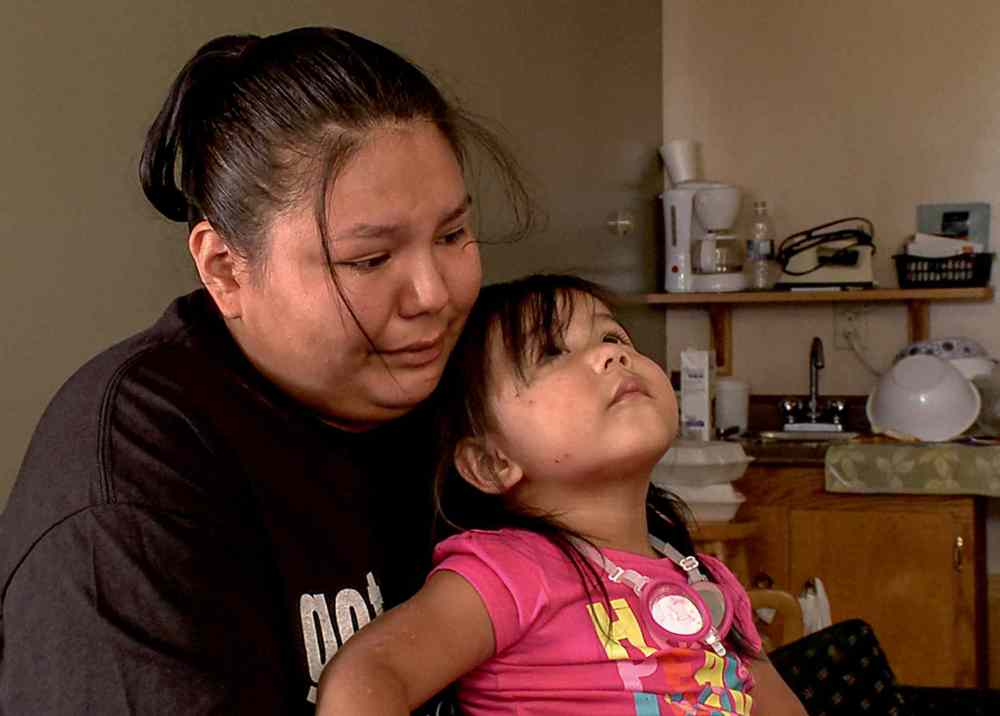
Among the most telling moments in the film is the introduction, by many-times-relocated Lake St. Martin resident Vicky O’Meara, of her youngest child, Julia. When Treading Water’s camera crew captured the moment, in April 2013, the little girl was two years-old; she was born just after the 2011 flood that forced residents to evacuate the Lake St. Martin, Little Saskatchewan, Dauphin River and Pinaymootang First Nation communities and, as such, she has never had a real home.
Photos by Jeremie Wookey
Vicky O'Meara and her daughter Julia in their hotel room at Misty Lake Lodge.
Photos by Jeremie Wookey Vicky O'Meara and her daughter Julia in their hotel room at Misty Lake Lodge.

“We’ve lost a lot more than just houses,” says two-year-old Julia’s grandmother, Edee O’Meara. “Our family structures are being broken down; our community structure is broken down. You take somebody’s home, you bring devastation to their lives. You take their roots. You take their grounding.”

The story explored in the film begins in the spring of 2011, with the once-in-350-years flood that laid waste to much of rural southern Manitoba, but Treading Water takes a few minutes to provide — using rudimentary but effectively drawn animation — some simple background facts about the water-management strategies that set the stage for what occurred.

Created in the late 1960s to protect larger centres in the southern half of the province, the Portage Diversion regulates water levels on the Assiniboine River by redirecting some of its flow into Lake Manitoba.

The Fairford Dam, built in 1961, is used to regulate Lake Manitoba’s level by allowing excess water to flow into Lake St. Martin.

In 2011, with flood waters along the Assiniboine at historic highs, the Portage Diversion was expanded by 56 per cent and the Fairford Dam was opened wide, with the end result being a sudden rise of nearly a metre in the level of Lake St. Martin.

Numerous First Nations communities were ordered to clear out, and most residents obeyed, thinking they’d be out of their homes for a few weeks at most. Years later, as documented by brother/sister Franco-Métis filmmakers Jérémie and Janelle Wookey, a couple of thousand still had no idea when — or even if — they would be able to return to their communities.

“It wasn’t everything,” says a tearful Vicky O’Meara, “but it was a home. We were all together.”
Photos by Jeremie Wookey
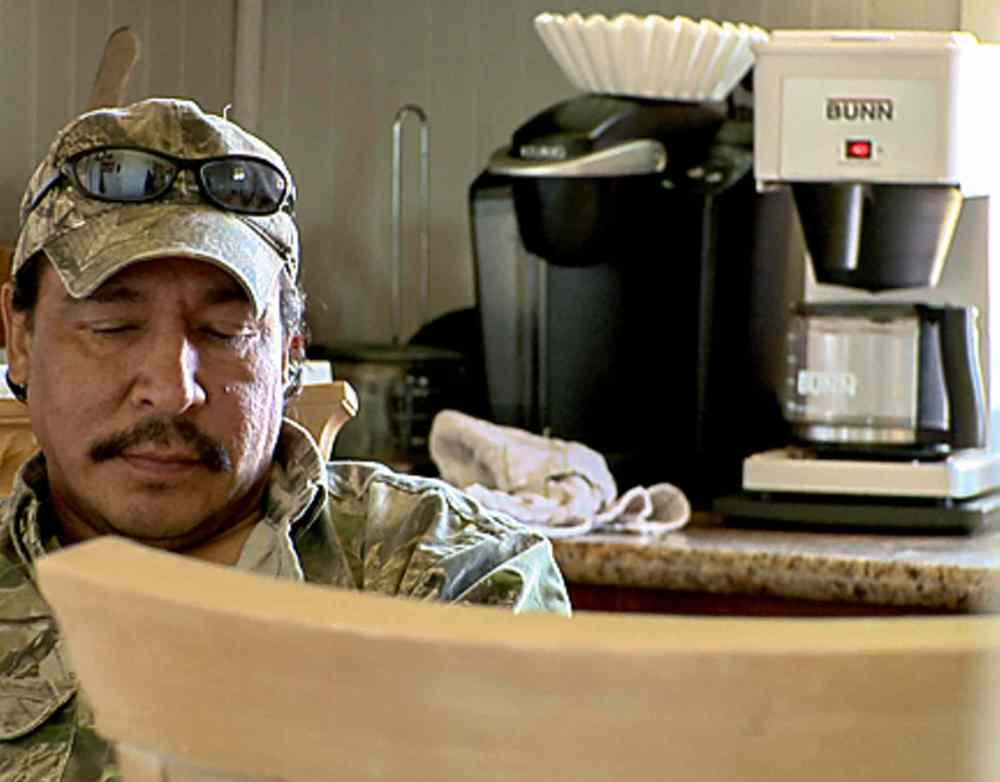
Clint Beardy in his home on Lake St. Martin First Nation.
Photos by Jeremie Wookey Clint Beardy in his home on Lake St. Martin First Nation.

The film, which was co-produced by Wookey Films and Winnipeg-based Nºman Films, takes a largely chronological look at the plight of the evacuees, following its subjects from place to place as residential arrangements change as various levels of government — federal, provincial and First Nations — posture, promise and attempt to score political points while accomplishing basically nothing that materially improves the lot of the Lake St. Martin evacuees.

“It’s bullshit, all,” says hunting and trapping guide Clint Beardy, one of the residents who refused to leave his community. “It’s a mess; it’s all political. There’s a lot that could be done that isn’t being done.”

A significant segment of the film is devoted to the rancorous relationship between Misty Lake Lodge, the Gimli-area hotel that housed many evacuees for an extended period, and the Manitoba Association of Native Fire Fighters (MANFF), which was tasked with overseeing evacuee assistance and eventually faced accusations that money it received had not been spent on assisting displaced residents as contracted.

“I’m so disgusted with them,” Evee O’Meara seethes in the film. “Really, they’ve set us back about 50 years as First Nations people who are trying to become empowered, trying to clean up our communities.”

Former provincial Liberal leader Jon Gerrard figures prominently in Treading Water, offering several passages of rather succinct analysis of the way evacuee-related issues have been handled (or, perhaps, mishandled).

Treading Water follows the evacuees’ story until as recently as last April, when 2,000 were still living in hotels and other temporary housing. Last month, a tentative deal was struck for construction of a new townsite that could allow Lake St. Martin residents to return home. A community-wide vote on the agreement is expected this fall.

For all the political discussion and finger-pointing that Treading Water includes, it’s ultimately a film about people who’d just like, someday soon, to sleep in their own beds.
Photos by Jeremie Wookey
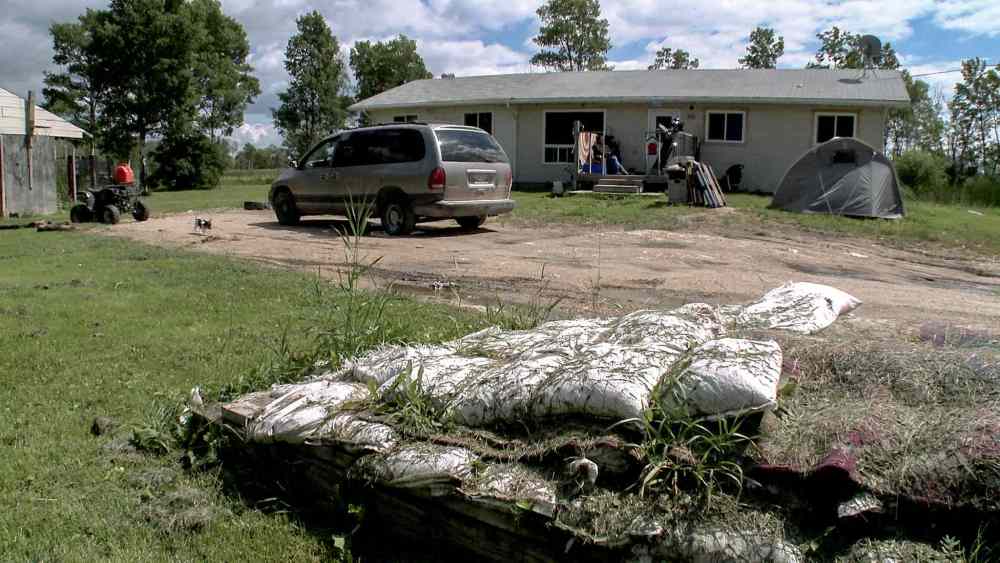
Delma Brass's condemned family home on Little Saskatchewan First Nation
Photos by Jeremie Wookey Delma Brass's condemned family home on Little Saskatchewan First Nation

“These people have every right to feel mistreated,” says local journalist Wab Kinew, “because they have been. They didn’t build the Fairford Dam; they didn’t build the Portage Diversion. And yet it’s cost them years of their lives, and their homes. That’s messed up.”

brad.oswald@freepress.mb.ca

Twitter: @BradOswald

Report Error Submit a Tip

More Stories

Wab Kinew as ‘communicator in chief’

Paul G. Thomas 6 minute read Preview

Wab Kinew as ‘communicator in chief’

Paul G. Thomas 6 minute read Yesterday at 2:00 AM CDT

Premier Wab Kinew and his party have been riding high in the polls longer than normal for a government one year or less away from its first re-election contest. One reason is his ubiquitous, dominating communications presence as NDP leader and premier.

The argument here is that Kinew has supplemented his prerogatives as premier and party leader (such as appointing cabinet ministers and approving party nominations) with the skilful use of communications to advance his policy agenda, boost his personal popularity and maintain the competitive advantage of his party over the opposition Progressive Conservatives.

Communications has always been a significant part of politics and policy making. However, in the contemporary political and media environments, communications considerations have moved from the background to the foreground of decision-making by political parties, including when they are performing in the role of government. Campaigning and governing now overlap in what has been described as a permanent election campaign.

Political parties use communications strategies for several purposes: to establish an image of the leader which makes a positive emotional connection with voters; to promote a coherent message and to keep party members on message; and to gain favourable media coverage for its policies and other actions on almost a daily basis.

Read
Yesterday at 2:00 AM CDT

Perfumer battling city hall to keep his shop open

Gabrielle Piché 5 minute read Preview

Perfumer battling city hall to keep his shop open

Gabrielle Piché 5 minute read Yesterday at 5:45 PM CDT

Michael O’Malley has been here before — fighting the City of Winnipeg to keep his business open.

He usually spends his days concocting scents. He’s owned La Parfumerie, a Wolseley shop, since 1993.

Twenty-seven natural perfumes line shelves on 145 Evanson St.’s bottom floor. O’Malley lives above the space.

Now, he’s required to change the home’s zoning or shut out walk-in customers. Either would kill the company, O’Malley said.

Read
Yesterday at 5:45 PM CDT

Jets pick up netminder as relatively new 23-man roster announced

Mike McIntyre 7 minute read Preview

Jets pick up netminder as relatively new 23-man roster announced

Mike McIntyre 7 minute read Updated: Yesterday at 9:25 PM CDT

Let’s get the caveats out of the way: Nothing is set in stone, nor written in permanent ink, and what you see right now could change in the blink of an eye.

With that being said, allow us to introduce you to the 2026-27 Winnipeg Jets — where change is very much in the air.

The 23-man roster submitted to the NHL offices by Monday’s 4 p.m. deadline includes seven players who were not on the team at this time last year. In fact, there could be as many as 10 new faces in the opening-night lineup on Friday against Boston when you factor in three regulars didn’t start the 2025-26 campaign due to injury.

That’s a lot of turnover, which isn’t surprising for a team that finished 26th overall in the standings and was — to most fans and pundits — too old and too slow.

Read
Updated: Yesterday at 9:25 PM CDT

Billions of dollars spent on health, but scattershot financial reporting leaves decision-makers, Manitobans in the dark, auditor general says

Nicole Buffie 3 minute read Preview

Billions of dollars spent on health, but scattershot financial reporting leaves decision-makers, Manitobans in the dark, auditor general says

Nicole Buffie 3 minute read 5:20 PM CDT

Manitoba’s auditor general says significant gaps in health-sector financial reporting make it difficult to understand how billions of dollars in public funds are spent.

Auditor General Tyson Shtykalo is calling for clearer, more transparent reporting in his latest report, titled Observations on Health Sector Financial Reporting and Accountability in Manitoba.

“Manitoba spends nearly $10 billion annually on health care, but current financial reporting does not provide a clear picture of how that money is spent, what services cost, or the financial pressures facing the system,” Shtykalo said in a news release.

While some financial information is available, the reports do not provide a “complete, consistent, or easily understood” picture of how health-care funds are spent, the report said.

Read
5:20 PM CDT

Manitoba PCs choose Narth as interim leader; ‘deeply hurt’ Khan blasts former caucus colleagues

Carol Sanders 7 minute read Preview

Manitoba PCs choose Narth as interim leader; ‘deeply hurt’ Khan blasts former caucus colleagues

Carol Sanders 7 minute read Updated: 7:31 PM CDT

Manitoba’s Progressive Conservative caucus chose MLA Konrad Narth as interim party leader Tuesday to replace Obby Khan, who quit a day earlier after he said he was stabbed in the back by a small group of caucus members plotting in secret to oust him.

Read
Updated: 7:31 PM CDT

Kinew adds cabinet portfolio to focus on first responders

Carol Sanders and Nicole Buffie 5 minute read Preview

Kinew adds cabinet portfolio to focus on first responders

Carol Sanders and Nicole Buffie 5 minute read Updated: Yesterday at 6:40 PM CDT

Premier Wab Kinew shuffled his cabinet Monday and created a new ministerial position that will oversee first responders in the province.

Kinew appointed David Pankratz, the MLA for Waverley, as minister responsible for first responder initiatives.

Tuxedo MLA Carla Compton was appointed minister responsible for accessibility, taking over the role from Families Minister Nahanni Fontaine.

The new ministers were sworn in at a ceremony at the legislature Monday afternoon.

Read
Updated: Yesterday at 6:40 PM CDT