Look, don’t ask questions; put on AMC… OK, we good?
Advertisement
Read this article for free:
or
Already have an account? Log in here »
To continue reading, please subscribe:

Digital Subscription
One year of digital access for only $205*
- Enjoy unlimited reading on winnipegfreepress.com
- Read the E-Edition, our digital replica newspaper
- Access News Break, our award-winning app
- Play interactive puzzles
*First annual payment billed as $205.00 + GST for one year. This annual subscription will automatically renew at $233.00 + GST every 52 weeks (10% off the regular annual price of $259.35). Offer available to new and qualified returning subscribers only. Cancel any time.
To continue reading, please subscribe:
Add Free Press access to your Brandon Sun subscription for only an additional
$1 for the first 4 weeks*
- Enjoy unlimited reading on winnipegfreepress.com
- Read the E-Edition, our digital replica newspaper
- Access News Break, our award-winning app
- Play interactive puzzles
*Your next Brandon Sun subscription payment will increase by $1.00 and you will be charged $17.95 plus GST for four weeks. After four weeks, your payment will increase to $24.95 plus GST every four weeks.
Read unlimited articles for free today:
or
Already have an account? Log in here »
Hey there, time traveller!
This article was published 13/06/2015 (4115 days ago), so information in it may no longer be current.
America has always loved its bad guys.
From the outlaws of the old west to the mobsters of the Roaring ’30s to the financial-industry pirates who brought the “greed is good” philosophy to Wall Street, U.S. popular culture has long mythologized the misdeeds of its villains in a way that makes them as popular as actual heroes who become famous for doing genuinely good things.
And Hollywood’s love affair with gangster stories has been particularly intense, from Little Caesar and Angels With Dirty Faces back in the 1930s to such modern-day classics as The Godfather, Goodfellas, Casino, Miller’s Crossing and TV’s The Sopranos.
It’s a simple equation: made guys make money for the folks who make movies and television. So it comes as no surprise that AMC is banking heavily on “Mob Mondays” as a major part of its summer schedule.
Anchored by the eight-part miniseries The Making of the Mob: New York (which premières Monday at 9 p.m. on AMC), the mobbed-up Monday lineup will also include such iconic gangster-movie titles as The Godfather (Parts I & II), Donnie Brasco, Goodfellas, Scarface, Carlito’s Way and American Gangster.
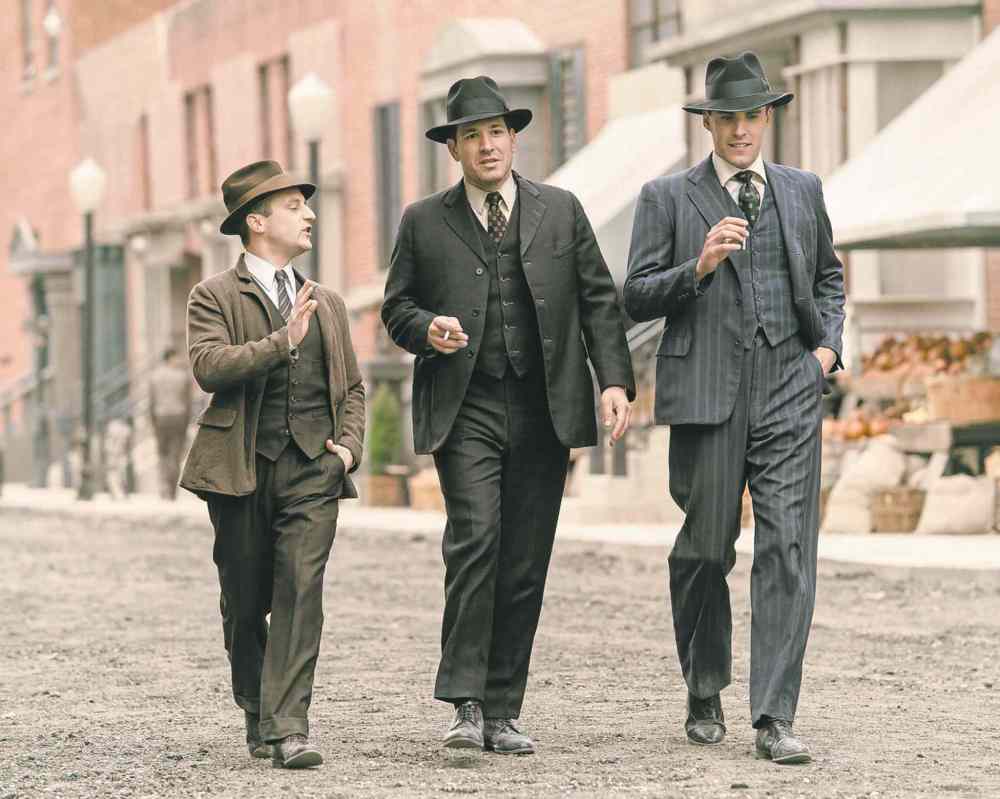
The Making of the Mob: New York is an ambitious and mostly entertaining docu-drama that chronicles the rise of underworld figures Charles (Lucky) Luciano, Meyer Lansky, Benjamin (Bugsy) Siegel, Frank Costello and Vito Genovese to the top of New York City’s organized-crime world during the first half of the 1930s.
Employing a combination of dramatized scenes and first-person commentary from an odd assortment of law-enforcement types, former gangsters, author and entertainers, The Making of the Mob: New York takes a chronological approach to its examination of the Big Apple’s most rotten criminal element.
The main focus is on three individuals — Luciano, Lansky and Siegel — who meet as youngsters and forge a friendship, despite their cultural differences, based on their shared desire to rise above the poverty that made life miserable for most of America’s new immigrants in the early 20th century.
The trio (played in the series by Rick Graff, Ian Bell and Jonathon C. Stewart) dabble in low-level scams and petty crime, but soon realize the path to real money leads directly into the organized-crime enterprises of New York’s top bosses.
They seize an opportunity to make an impression on Frank Costello (Anthony DiCarlo), a mid-level player in the “family” of ruthless mobster Joe Masseria (Stelio Savante), and quickly work their way into positions of trust by demonstrating a willingness to do whatever was needed or asked.
In the two episodes provided for preview, Luciano and Lansky are shown as a formidable team — Italian-American Luciano had guts and driving ambition, while Jewish immigrant Lansky possessed an analytical mind and an aptitude for working the numbers to maximize profits — and it’s clear from the outset that they are destined for great (but very bad) things in the criminal world.
The dramatized scenes in The Making of the Mob: New York are quite well executed, making the most of decent performances by unknown actors and portraying Mob-style violence in pretty much as graphic a fashion as a basic-cable channel can allow.
The documentary-style interview clips are more of a curiosity, as they rely more on famous people whose work has loose connections to the Mob world than on the input of those with actual expertise in the area of organized crime.
It’s fun to see actors such as Chazz Palminteri (A Bronx Tale), Joe Mantegna (The Godfather, Part III), The Sopranos’ Vincent Pastore, Frank Vincent and Drea De Matteo, former New York City mayor Rudy Guiliani and New Jersey-born singer Frankie Valli offer their perspectives on New York’s crime history, but their “expert” credentials seem more than a little bit shaky.
The emphasis is clearly more on entertainment than education, so we’ll let the celebrity-over-substance choice slide. In the end, The Making of the Mob: New York will be remembered as a pretty decent effort by a TV network to do its part in keeping Hollywood’s beloved and lucrative gangster mythology alive.
brad.oswald@freepress.mb.ca Twitter: @BradOswald