

Brain storm
Decision-making is all in our minds... whether we know it or not
Advertisement
Read this article for free:
or
Already have an account? Log in here »
To continue reading, please subscribe:
Monthly Digital Subscription
$1 per week for 24 weeks*
- Enjoy unlimited reading on winnipegfreepress.com
- Read the E-Edition, our digital replica newspaper
- Access News Break, our award-winning app
- Play interactive puzzles
*Billed as $4.00 plus GST every four weeks. After 24 weeks, price increases to the regular rate of $19.95 plus GST every four weeks. Offer available to new and qualified returning subscribers only. Cancel any time.
Monthly Digital Subscription
$4.99/week*
- Enjoy unlimited reading on winnipegfreepress.com
- Read the E-Edition, our digital replica newspaper
- Access News Break, our award-winning app
- Play interactive puzzles
*Billed as $19.95 plus GST every four weeks. Cancel any time.
To continue reading, please subscribe:
Add Free Press access to your Brandon Sun subscription for only an additional
$1 for the first 4 weeks*
*Your next subscription payment will increase by $1.00 and you will be charged $16.99 plus GST for four weeks. After four weeks, your payment will increase to $23.99 plus GST every four weeks.
Read unlimited articles for free today:
or
Already have an account? Log in here »
Hey there, time traveller!
This article was published 17/03/2016 (3659 days ago), so information in it may no longer be current.
‘It’s not my fault.”
It’s a blame-deflection declaration as easily dismissed as it is employed — but what if it turned out to be true?
The new locally produced documentary My Brain Made Me Do It offers some interesting new insights into human brain function and the notion that we are in conscious control of our decisions and behaviour. The film, directed by Ryszard Hunka and produced by Merit Motion Pictures (which won a best history documentary Canadian Screen Award earlier this month for Vietnam: Canada’s Shadow War) airs tonight at 8 p.m. on CBC-TV’s The Nature of Things.
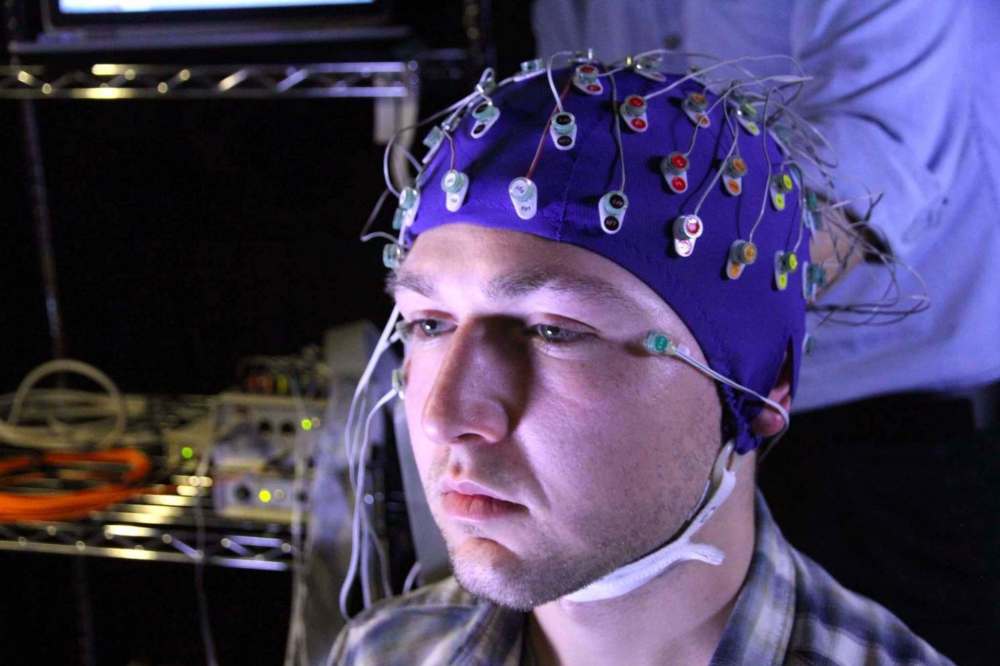
The film focuses most of its attention on the influence of human brain biology on criminal behaviour, but the information it presents might make you reconsider just how much control you actually have over your normal day-to-day routine.
My Brain Made Me Do It begins its exploration of conscious-vs.-unconscious decision-making by recalling a horrendous crime that took place in 1966 — the mass murder of 16 people on the University of Texas (Austin) campus by student and former U.S. marine Charles Whitman, who carried a rifle to the top of the college’s bell tower and opened fire on the courtyard below.
It was, as one interview subject observes, America’s introduction to the sort of mass murder in public spaces that has become so tragically commonplace in that country. What’s relevant to this film, however, is not so much the crime itself, but the scientific investigation that followed. Friends of the killer said he showed no indications whatsoever that he might perform such a shocking and violent act, but the diaries Whitman kept in the months leading up to the shooting offered a very different perspective.
Whitman — who, it was learned, also killed his mother and wife before gunning down students and teachers on the U of T campus — had been recording increasingly angry and violent thoughts in his diary, and among his final entries was a suicide note that requested that an autopsy be performed “when it’s all over” to see what had gone wrong with his brain.
The post-mortem examination revealed Whitman had a massive tumour in his brain that had been pressing against the amygdala, the part of the brain that controls fear and aggression. In the decades that followed, many more cases were discovered in which tumours were present in the brains of violent criminals.
According to neuroscientist David Eagleman, head of the Center for Science and Law in Houston, Texas, it doesn’t take something as catastrophic as a tumour to profoundly affect brain physiology (and, as a result, human behaviour). Anything from a head injury to too much coffee can affect the decisions and behaviours we all think we control.
“We think that we know the reasons we do what we do and why we believe what we believe, but in fact, we have so little awareness of the vast machinery that we’re sitting on top of,” says Eagleman.
“What I think we can conclude, in the view of modern neuroscience, is that if we have free will at all, it is a very small player in the system — if it exists at all.”
My Brain Made Me Do It shows how recent advances in brain-imaging technology have allowed scientists to study the link between brain structure and criminal behaviour in ways that were previously unimaginable. One researcher, Kent Kiehl of the Mind Research Network in Albuquerque, N.M., conducted MRI examinations on hundreds of incarcerated psychopaths and found, almost without exception, their brains shared specific traits not seen in tests on “normal” brains.

And that, according to Kiehl, Eagleman and others featured in the documentary, should cause us to reconsider the idea individuals choose to behave in the ways they do.
Eagleman’s clinical work includes the creation of an alternative treatment for drug addiction, in which patients trying to kick drug habits are introduced to a “pre-frontal workout” that helps them to exercise the part of the brain that controls cravings and the suppression of drug-seeking impulses. The results so far have been encouraging, he says.
One thing My Brain Made Me Do It does not do, however, is suggest these new conclusions about conscious vs. unconscious decision-making somehow mean actions shouldn’t have consequences.
“It doesn’t let anyone off the hook,” says Eagleman. “The legal system still says, ‘Are you guilty or not guilty; did you pull the trigger or did you not pull the trigger?’ People who are violent and aggressive have to be taken off the streets to protect the more general society, whether or not we would say it’s their fault in some deep fundamental free-will sense.”
brad.oswald@freepress.mb.caTwitter: @BradOswald
History
Updated on Thursday, March 17, 2016 11:37 AM CDT: Updates