

Western promises
TV documentary follows PM's visit to beleaguered First Nations

Advertisement
Read this article for free:
or
Already have an account? Log in here »
To continue reading, please subscribe:
Monthly Digital Subscription
$0 for the first 4 weeks*
- Enjoy unlimited reading on winnipegfreepress.com
- Read the E-Edition, our digital replica newspaper
- Access News Break, our award-winning app
- Play interactive puzzles
*No charge for 4 weeks then price increases to the regular rate of $19.00 plus GST every four weeks. Offer available to new and qualified returning subscribers only. Cancel any time.
Monthly Digital Subscription
$4.75/week*
- Enjoy unlimited reading on winnipegfreepress.com
- Read the E-Edition, our digital replica newspaper
- Access News Break, our award-winning app
- Play interactive puzzles
*Billed as $19 plus GST every four weeks. Cancel any time.
To continue reading, please subscribe:
Add Free Press access to your Brandon Sun subscription for only an additional
$1 for the first 4 weeks*
*Your next subscription payment will increase by $1.00 and you will be charged $16.99 plus GST for four weeks. After four weeks, your payment will increase to $23.99 plus GST every four weeks.
Read unlimited articles for free today:
or
Already have an account? Log in here »
Hey there, time traveller!
This article was published 18/06/2016 (3468 days ago), so information in it may no longer be current.
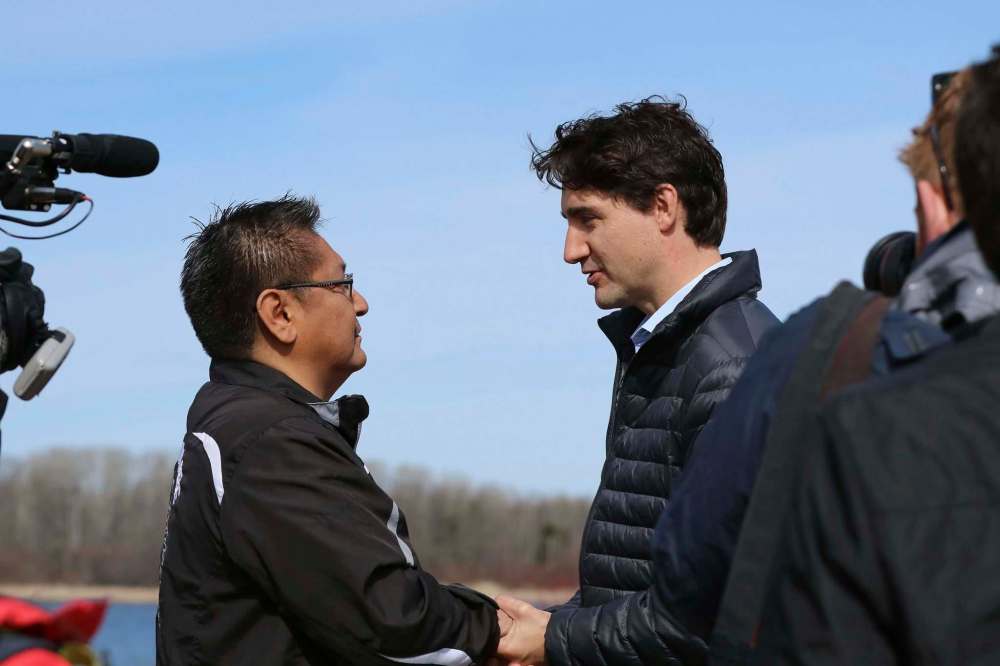
A lot of eyebrows — and perhaps a few angry voices — were raised earlier this spring when Prime Minister Justin Trudeau made a historic visit to the Shoal Lake 40 First Nation and local media were barred from covering the event.
The exclusion — which included two Winnipeg-based TV news crews being escorted off the reserve when they tried to gain access to the PM’s April 28 visit — is not discussed in the documentary Cut-Off, which airs Sunday at 9 p.m. on Viceland Canada, a speciality channel focused on reality, lifestyle and documentary programming aimed at millennial viewers.
But the segment’s host, Toronto-based actor/dancer/choreographer Sarain Carson-Fox, says the decision to block other media from covering Trudeau’s one-day stop was made by Shoal Lake 40 Chief Erwin Redsky alone.
“It was never Vice that actively tried to keep other media at bay,” said Carson-Fox, who is also co-host of a new Viceland Canada series called RISE, which network promotional materials state will “bring viewers to the frontlines of indigenous resistance.”
“The request to keep other media out came from Chief Redsky… At the time, it seemed like this was a news story. What was actually going on was an opportunity for the community to have a conversation, and Chief Redsky was afraid that by having extended media (present), there might not be the opportunity that they needed to have with the prime minister… Vice responded to the community’s wishes.”
The hour-long documentary profiles two First Nations communities — Cross Lake and Shoal Lake 40, which is the source of Winnipeg’s water supply and, rather ironically, has been under a boil-water advisory for more than two decades — facing different challenges created by their isolation.
The film opens with the Viceland Canada crew visiting Cross Lake, which was in the midst of a youth-suicide epidemic at the time. In a series of wrenching interview clips, the father and several friends of a teenager who killed herself recall a young woman who had been driven to despair by the living conditions she faced.
“It’s a perfect scenario,” Carson-Fox says in the film, likening First Nations existence to being incarcerated in prison, and life in the most isolated of those communities to being flung “in the hole” during a prison term. “Eventually, if you stay in that scenario long enough, you start killing off yourselves and then you’re not a problem for the government any more.”
After the brief Cross Lake segment (and a couple of subsequent short stops there), the film shifts its focus mainly to Shoal Lake 40, which Carson-Fox explains was the choice of the PM’s office after being presented with several options for a Viceland-accompanied First Nation visit.
The host and her camera crew arrived at Shoal Lake 40 a day before Trudeau was flown in by helicopter, allowing Carson-Fox to interview residents and take a tour of portions of the reserve — including a traditional burial ground — that were annexed by the City of Winnipeg in 1915 to allow access to Shoal Lake’s water supply.
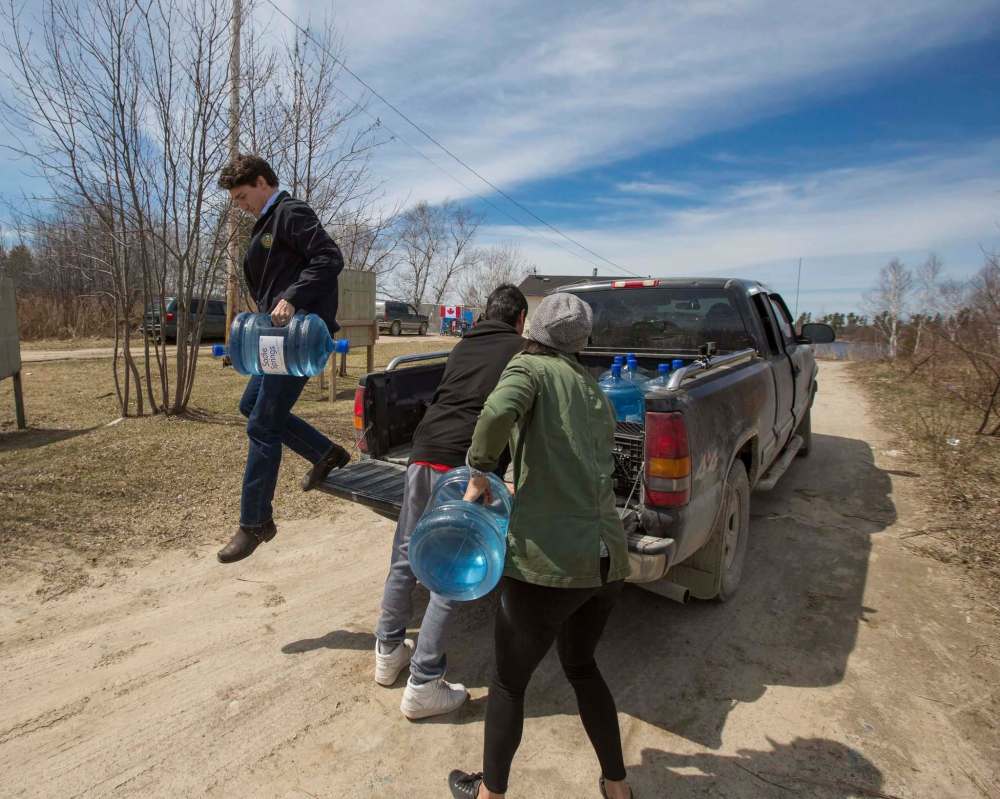
The PM’s visit includes several staged-for-the-camera conversations and activities, including a pickup-truck run that has Trudeau and Carson-Fox tending to the weekly task of delivering bottled water to Shoal Lake 40 residents’ homes. As they’re seated, amid a jumble of empty and full water-cooler bottles, the host asks the Trudeau if he intends to keep all the promises he made to Canada’s indigenous population during his election campaign.
“If I made promises, it’s because I intend to keep them,” Trudeau replies earnestly. “And if I say we’re going to eliminate all boil-water advisories in five years and it ends up taking 5 1/2 years or six years, I think I’ll be OK with that. If it ends up taking 20 years, then I did break my promise.”
A session involving Trudeau in conversation with Shoal Lake 40’s youth population produces mostly shy questions and polite remarks, until Carson-Fox pushes the mostly teen group to open up about what’s really on their minds. When the talk becomes more frank and the tears begin to flow, the PM offers hugs and words of comfort.
When interviewed this week by telephone, Carson-Fox offered only cautious optimism about the possibilities that the PM’s promises will be kept.
“In terms of a community actively engaging in reconciliation and healing, I’m very optimistic about how the people (of Shoal Lake 40) will use this opportunity to invest in their own community and continue to uplift themselves,” she said. “But in terms of the political perspective, what needs to happen in Shoal Lake needs to happen not in the month before the five-year mark; it needs to happen right now.
“I would like to see all the commitments the PM has made start to be put in action immediately; if that happens, I will start to feel that the promises and the five-year mark are actually real. If it goes another year and there’s no progress, I’ll have a hard time believing that the commitments made were real ones.”
Cut-Off is in keeping with the Vice brand’s youth-focused, fast-paced and immersive style of reporting, and as a primer aimed at introducing a young audience to indigenous issues, it’s reasonably effective. But regardless of who issued the media-exclusivity order during the PM’s visit to Shoal Lake 40, the fact Viceland Canada’s cameras were the only ones allowed to document the trip will limit the impact of its message to the rather scant viewership of a just-launched specialty channel in the upper reaches of the channel-number spectrum.

brad.oswald@freepress.mb.caTwitter: @BradOswald


Our newsroom depends on a growing audience of readers to power our journalism. If you are not a paid reader, please consider becoming a subscriber.
Our newsroom depends on its audience of readers to power our journalism. Thank you for your support.
TV PREVIEW
Cut-Off
● Hosted by Sarain Carson-Fox
● Sunday at 9 p.m.
● Viceland Canada
Our newsroom depends on a growing audience of readers to power our journalism. If you are not a paid reader, please consider becoming a subscriber.
Our newsroom depends on its audience of readers to power our journalism. Thank you for your support.
Advertisement Advertise With Us
Advertisement Advertise With Us