Women still fighting for comedic ground
Advertisement
Read this article for free:
or
Already have an account? Log in here »
To continue reading, please subscribe:

Digital Subscription
One year of digital access for only $205*
- Enjoy unlimited reading on winnipegfreepress.com
- Read the E-Edition, our digital replica newspaper
- Access News Break, our award-winning app
- Play interactive puzzles
*First annual payment billed as $205.00 + GST for one year. This annual subscription will automatically renew at $233.00 + GST every 52 weeks (10% off the regular annual price of $259.35). Offer available to new and qualified returning subscribers only. Cancel any time.
To continue reading, please subscribe:
Add Free Press access to your Brandon Sun subscription for only an additional
$1 for the first 4 weeks*
- Enjoy unlimited reading on winnipegfreepress.com
- Read the E-Edition, our digital replica newspaper
- Access News Break, our award-winning app
- Play interactive puzzles
*Your next Brandon Sun subscription payment will increase by $1.00 and you will be charged $17.95 plus GST for four weeks. After four weeks, your payment will increase to $24.95 plus GST every four weeks.
Read unlimited articles for free today:
or
Already have an account? Log in here »
Hey there, time traveller!
This article was published 12/12/2018 (2845 days ago), so information in it may no longer be current.
Becoming a standup comedian means constant indignity. I should know, because I’ve gone through it. There’s the waiting around to perform for five people at a sad bar. Showing up repeatedly to open mics to prove yourself. Spending years becoming decent. Getting bumped for more seasoned or famous comics. The inevitable bombing.
Midge Maisel goes through a lot of that, plus sexism, in Amazon’s The Marvelous Mrs. Maisel, which follows her journey from 1950s Upper West Side housewife to standup comic.
In the second episode of Season 2, which began streaming Dec. 5, Midge (Rachel Brosnahan) gets booked on a show, and her fellow performers — all men — can’t stop commenting on her gender and looks. “Bobby told us there was a lady comic coming on tonight. Didn’t tell us she was quite so pretty,” one says. Others suggest her big break must have been because she slept with a much more famous comedian. And they’re shocked that she knows a four-letter word. “Wow,” another says, “little lady’s got a potty mouth.”
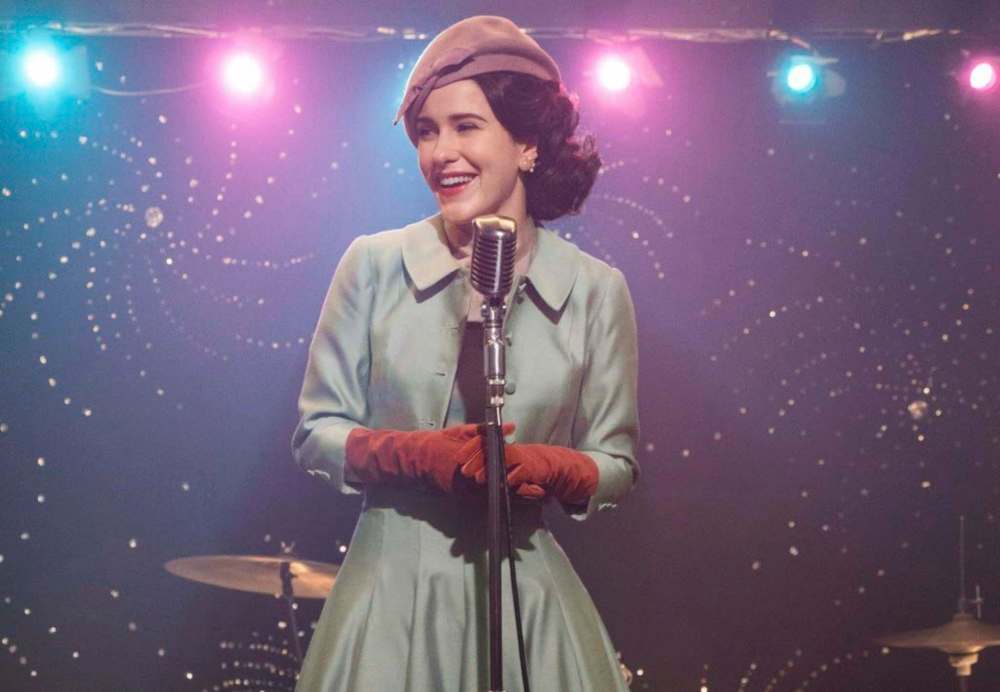
They also insult her during their own sets, warning the audience that a woman will perform later and she’s probably not funny. When she finally takes the stage (light spoiler ahead), Midge roasts them thoroughly, putting their fragile male egos on blatant display. She also angers the booker, making her return to the club uncertain.
Things have dramatically improved since Midge’s ’50s world. A woman doing standup isn’t the rarity it once was. Rather than “lady comics,” there are now many successful comics who happen to be women. The #MeToo movement has sparked conversation about sexual harassment and misconduct and raised a new level of awareness in the comedy scene.
And yet, watching Midge face all that chauvinism didn’t feel entirely foreign to me.
Several years ago, I performed a guest spot as I was trying to get back into standup.
After my set, the headliner took the stage — and spent several minutes talking about my appearance and making graphic, sexual comments. Not wanting to irk the booker by heckling, I felt powerless as I sat silently next to the friends who had come out to see me, vacillating between fury and embarrassment. Apparently not yet done, the male headliner sought me out after the show and gave unsolicited advice: wear frumpy clothes, because the audience is focused on how you look, not what you’re saying. (People laughed at my jokes, so he seemed to be the only one with this problem!)
It all made me question whether doing comedy was worth putting up with garbage men. I decided that I can’t let the trash win. Thankfully, that experience stands as an anomaly in my standup career. Most of my male peers have been supportive and treated me with the respect afforded any other comic. I know men who actively support women in comedy. And there are so many talented female comedians with diverse points of view that it’s hard not to be inspired.
Still, many women who perform standup have stories similar to mine. They’ve had to worry about their appearance. They’ve seen people in the crowd immediately adopt a “prove it” posture when they’ve taken the stage, or men using that time as an opportunity to go to the bathroom. They’ve been told by audience members, “I don’t normally find women funny, but you were great!” And they’ve been introduced by hosts with “and your next comic is a woman,” not with their comedy credits.
Although Mrs. Maisel is “set in a different time era, it’s still prevalent today, some of these things,” comic Holly Lynnea said. “I’ve been struggling here lately a lot with, and most women do, the apparel that you wear onstage. Because a lot of the times you’re trying to deflate whatever sort of preconceived notions someone has when you step onstage. Do you dress down? Do you diminish your light because you’re trying to be accepted, trying to be taken seriously?”
It’s the kind of mental work many women take on that men often don’t. Comic Lace Larrabee dresses up for the stage, and for a long time grappled with criticisms from men and women about her appearance. She finally just owned it.
“I’m sure no man has ever considered that in comedy, has ever had a several yearlong debate with themselves over whether they should wear their hair straight or curl it, or put more or less makeup on, is it OK to wear a skirt with tights and high heels onstage,” she said. “Because you have to consider that: You don’t want to be too sexy, you don’t want to be too this or that, and it sucks that I spend as much time thinking about that as I do about content.”
A performer’s experience can vary depending on the scene, city or even club. Sometimes when comedian Mia Jackson is on the road, “especially if I headline somewhere, they’ll go, ‘Well you’re a woman, you’re headlining, so we’ll make the host a male comic and we’ll make the feature a male comic, because we don’t want anybody to feel too overwhelmed,’” she said. “You’re like, really? You don’t want anybody to feel overwhelmed with women, and we’re 50 per cent of the population? OK.”
Years ago, that kind of one-woman-per-show mentality was much more prevalent. (Jackson, for instance, is currently touring with Amy Schumer and Janelle James.) Standup Liza Treyger said that “we’re not pitted against each other” now, as women and marginalized people have expanded the comedy scene. “We’re going to do our own thing,” she said. “We cared less about fitting in since there are so many places to perform.”
Many of the comics I spoke to said they don’t experience this kind of treatment as much these days. Maybe there’s increased cultural awareness. Maybe they’re just more seasoned performers and afforded the respect that comes with that. Whatever the reason, it turns out all of those little jabs haven’t been enough to stop them from doing what they love.
“Things bother me, but it hasn’t affected my overall experience in comedy, and I love my life,” Treyger said. “I don’t want to do anything else.”
Jackson says she has to do comedy. “I’m not good at anything else anymore because all my skills have vanished,” she said with a laugh.
— Washington Post
History
Updated on Wednesday, December 12, 2018 7:39 AM CST: Photo added.