Mania for interpreting show all-consuming
Game of Thrones scrutinized for subtext
Advertisement
Read this article for free:
or
Already have an account? Log in here »
To continue reading, please subscribe:

Digital Subscription
One year of digital access for only $205*
- Enjoy unlimited reading on winnipegfreepress.com
- Read the E-Edition, our digital replica newspaper
- Access News Break, our award-winning app
- Play interactive puzzles
*First annual payment billed as $205.00 + GST for one year. This annual subscription will automatically renew at $233.00 + GST every 52 weeks (10% off the regular annual price of $259.35). Offer available to new and qualified returning subscribers only. Cancel any time.
To continue reading, please subscribe:
Add Free Press access to your Brandon Sun subscription for only an additional
$1 for the first 4 weeks*
- Enjoy unlimited reading on winnipegfreepress.com
- Read the E-Edition, our digital replica newspaper
- Access News Break, our award-winning app
- Play interactive puzzles
*Your next Brandon Sun subscription payment will increase by $1.00 and you will be charged $17.95 plus GST for four weeks. After four weeks, your payment will increase to $24.95 plus GST every four weeks.
Read unlimited articles for free today:
or
Already have an account? Log in here »
Hey there, time traveller!
This article was published 14/04/2019 (2708 days ago), so information in it may no longer be current.
It’s too big now to just be a TV show, a diversion. Every couple of decades a great story comes along and grips us more tightly than all the rest, as HBO’s Game of Thrones has done, reaching a level of the Harry Potter novels, the Star Wars movies or MGM’s The Wizard of Oz. Thus, the common references become second nature (“Winter is coming”), major characters become ingrained (“Daenerys” autocorrects while texting) and everyone wants a personal piece of it, to talk about it in their own way.
This includes asking what Game of Thrones has meant, what it stood for, what it brought to the viewers and what they brought to it.
That’s the only drawback to tonight’s long-awaited première of the eighth and final season of the magnificent and all-consuming Game of Thrones: the mania for interpreting it, the hordes who can’t resist piling their theories on it. The op-ed columnists clumsily reaching for a GoT metaphor in the surfeit of Democratic 2020 hopefuls. The outlying conservative strategist itching to make a Mad King comparison. The preacher looking for a shred of righteous clarity (from Jon Snow? Brienne of Tarth? Samwell Tarly?), so he can spice up a sermon. The television critics and other cultural cognoscenti who are as in the dark as anyone else about what season 8 will bring.
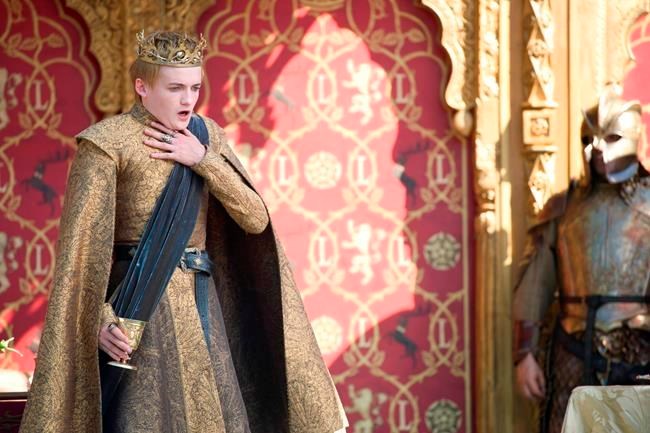
Amid so much talk and typing and vlogging and podcasting, Game of Thrones will go down as the TV drama of our time (certainly of the 2010s), yet purists oppose any effort to contextualize a show that was conceived and launched in the early Obama years, and is based on a series of five fantasy novels (by George R.R. Martin), the first of which came out more than 20 years ago. How can something so long in the making, set so safely apart from our present reality, be misconstrued as topical? Usually I might agree — such analysis can be irritating or inaccurate. It can also ruin the fun.
Yet it’s all there, isn’t it? Right in front of our mesmerized faces?
The pointless political scheming in the face of profound climate change. Cutthroat grabs for power, with a galling subversion of protocol and order. Weapons of mass destruction. Violence everywhere you look. Vile expressions of racism and discrimination. Human trafficking. A societal collapse across a continent, engineered by the ruling class and funded by the big banks, with little to no regard for the poor and sick. Radicalized religious faith as a response to cultural upheaval. The mutual disdain between urban cores and rural heartlands. A massive wall providing what turns out to be a false sense of security. Women ascending to power; men preoccupied with birthright entitlements and jokes about their genitals.
Game of Thrones even showed millennials complaining about their parents’ generation. Here’s Daenerys Targaryen (Khaleesi, Mother of Dragons, the odds-on favourite to survive the whole saga, played by Emilia Clarke) mustering a few of her highborn peers at the end of Season 5: “Our fathers were evil men, all of us here. They left the world worse than they found it. We’re not going to do that. We’re going to leave the world better than we found it… No more reaving, roving, raiding or raping.”
Fantasy isn’t always just a fantasy, not if the subtext is doing its job, establishing a mythology and rewriting some moral code. Those of us who watch Game of Thrones and sense relevance aren’t watching it wrong or trying too hard to see what isn’t there. You can get to Season 8 and have at least a passing thought that all Westeros politics is local. You can arrive at this penultimate moment and realize, hey, maybe, this is us.
● ● ●
As a critic, I encouraged people to watch Game of Thrones however they like, so long as they watch it, so long as they give themselves a chance to be part of its moment. Watch it intellectually if you must, paying rapt attention to every detail (or scrambling to look stuff up, on your phone, as it’s happening). Watch it with arms folded, deploring its bloody violence and sexual depravity, triggers galore. Or watch it casually, as you would any TV show.
To my lasting embarrassment, I gave Game of Thrones a dismissive, 800-word review when it premièred in April 2011, if only because the show’s barriers to entry seemed excessive: all those names, all those new places, all those white British guys with receding hairlines and grey beards; the silly degree of self-importance, conjuring memories of the kids who played Dungeons & Dragons in middle school — swords, dragons, next. (That was before anyone saw Ned Stark’s beheading.) Two years later, I wrote a longer mea culpa in the form of a season 3 review, confessing to my biases and other misjudgments (Shame! Shame! Shame!) and encouraging a simpler approach to watching the show: let it wash over you. Let it sink in. Watch until it carries you away.
Some could never watch it casually; they needed to know every last detail, down to characters, lineage, royal houses, imaginary geography. They scrutinized the dialogue for any whiff of portent or past/future reference. They corrected each other online — politely, although sometimes furiously — in the comments sections of Monday-morning recaps.
Longtime fans of Martin’s novels were remarkably kind through the first five seasons (especially considering the common unkindness of the Twitter era), letting TV viewers discover and engage the story in a pure state, free of spoilers and nitpicks. When the show surpassed the point where Martin’s books left off, in 2015, we all boarded the same ship and the story lines sped up and intensified, for better or worse.
Some viewers transformed into ardent fans, with a driving need to categorize, summarize and sort Game of Thrones, appealing to know-it-alls, posted with an absolute sense of authority the Definitive List of the 21 Most Shocking Moments, Ranked; the 25 Most Devastating/Satisfying Deaths; the Eight Most WTF Scenes. That’s partly an internet thing (the Game of Clickbait). But, on a more impressive level, it was about making an already big tent even bigger. A graphic artist at the Washington Post, Shelly Tan, busied herself creating and updating an impressive illustrated guide of every character who ever died on-screen in Game of Thrones; through Season 7, she counts 2,339 dead.
At another end of the fan spectrum, Saturday Night Live cast member Leslie Jones was praised for the hyper-intense reactions she would live-tweet while watching new episodes, causing NBC Late Night host Seth Meyers to tape himself watching an episode with Jones in 2017. “You are watching the show at another level than I’m watching it,” Meyers told her.
“Because I am Game of Thrones, homey,” Jones replied. “G-o-T don’t let you down, son.”
“When it comes to Game of Thrones, this is where you are the most like a young, nerdy, white 12-year-old,” Meyers said. A friendly joke, but within it, the real secret of the show’s success: At its best, it found the nerd in anyone, everyone.
● ● ●
Some have wondered if these last six episodes won’t also herald the end of television as we knew it, the campfire around which Americans gathered for seven decades for communal stories and the shared experience.
That theory will last about as long as it takes us all to find a new favourite TV show, which will probably start off small and niche-looking; before you know it, people will be tweeting about it, talking about it at work, clamping their hands over their ears at Christmas parties because they’re still a season behind on it.
What is true is that Game of Thrones reigned during a desperate and even apocalyptic period for the industry itself, as hordes abandoned their costly cable and satellite services and chose to stream their TV instead, defying the old means of measurement and profit.
A darkness settled; new alliances formed. House Disney acquired most of House Fox. House AT&T took House Warner (where HBO resides, along with the Turner networks). House Comcast conquered the territories of NBC and Universal. House CBS warred internally with its stepsibling House Viacom. All of this occurred under the relentless thrum, a sound of marching coming from the north: Netflix, Netflix, Netflix — always growing, devouring the big talent and instilling a panic in all the other houses, relentlessly making more television than us common folk could ever watch.
And what about us — the common folk, the serfs, the plebes, carefully meting out our HBO Go passwords? The Lannisters made their disdain for us frequently known, which only added to the shock/satisfaction of watching Cersei Lannister (Lena Headey) make her naked walk of shame through King’s Landing’s streets, which were packed with peasants who spat at her and called her the c-word. Meanwhile, the heroic contours of Khaleesi only became clear when she began freeing slaves, en masse. Like just about every hit show or lasting story (save Dickens; save Les Miserables), Game of Thrones is firmly fixated on the would-be rulers, the highborn, the key players and the messiah figures. The villages and kingdoms are full of thieves and prostitutes, tradesmen and farmers — a bunch of nobodies who can only ever hope to factor into a subplot for a few episodes. Would anyone have watched the show from the bottom up?
Late in the game, in season 6, we see that Game of Thrones isn’t even really about the big (rich) characters sorting themselves into good, evil and zombie. It’s about money. We watch House Lannister go deeper into hock with the mysterious Iron Bank of Braavos, which provides gold to finance the ongoing war with those who seek to claim the throne.
Until then, I hadn’t given much thought to the economy of Westeros, or to its astonishing wealth gap and the notion that there are puppet strings controlled by bankers. The Star Wars saga made a similar and surprising swerve in its most recent episode, The Last Jedi, when it suggested that most of the galaxy was, at best, ambivalent about the battle between the First Order and the Resistance, other than as a means to sell arms for profit. Such cynicism is particularly jarring to encounter in the midst of a favourite fantasy, and therefore more resonant.
It’s no accident that the show of the decade hinged so frequently on deception, lies, misinformation and the commodification of power. Westeros is a deeply corrupt land where most of the population lives in the dark (news is delivered by messenger crows), unaware of what its rulers are really up to. At the end of Season 7, where Game of Thrones last left off, the sad hero Jon Snow (Kit Harington), explained his refusal to tell a lie, even a useful one:
“When enough people make false promises, words stop meaning anything,” he said. “Then there are no more answers, only better and better lies. And lies won’t help us in this fight.”
I know it’s not supposed to be us, but with TV characters saying stuff like that in a politically distrustful era like the one we’re living through, how can it not be? Game of Thrones could be as far away as you like, preoccupied with its own make-believe. It could also be eerily close, as near as you needed it to be.
● ● ●
Game of Thrones (one hour) returns tonight at 9 p.m. on HBO. The series finale will air May 19.
— Washington Post
Related Articles
HBO looks beyond 'Game of Thrones,' maybe back to a prequel
Advertisement Advertise With Us
Advertisement Advertise With Us