

Netflix’s Bundy problem

Advertisement
Read this article for free:
or
Already have an account? Log in here »
To continue reading, please subscribe:
Digital Subscription
One year of digital access for only $75*
- Enjoy unlimited reading on winnipegfreepress.com
- Read the E-Edition, our digital replica newspaper
- Access News Break, our award-winning app
- Play interactive puzzles
*Billed as $5.77 plus GST every four weeks. After 52 weeks, price increases to the regular rate of $19.95 plus GST every four weeks. Offer available to new and qualified returning subscribers only. Cancel any time.
Monthly Digital Subscription
$4.99/week*
- Enjoy unlimited reading on winnipegfreepress.com
- Read the E-Edition, our digital replica newspaper
- Access News Break, our award-winning app
- Play interactive puzzles
*Billed as $19.95 plus GST every four weeks. Cancel any time.
To continue reading, please subscribe:
Add Free Press access to your Brandon Sun subscription for only an additional
$1 for the first 4 weeks*
- Enjoy unlimited reading on winnipegfreepress.com
- Read the E-Edition, our digital replica newspaper
- Access News Break, our award-winning app
- Play interactive puzzles
*Your next Brandon Sun subscription payment will increase by $1.00 and you will be charged $17.95 plus GST for four weeks. After four weeks, your payment will increase to $24.95 plus GST every four weeks.
Read unlimited articles for free today:
or
Already have an account? Log in here »
Hey there, time traveller!
This article was published 11/05/2019 (2568 days ago), so information in it may no longer be current.
The new Netflix crime drama Extremely Wicked, Shockingly Evil and Vile is supposedly based on a memoir by Elizabeth Kloepfer (released under the pseudonym Elizabeth Kendall) that details her scary, dysfunctional romance with serial killer Ted Bundy.
It’s really more about Netflix’s scary dysfunctional romance with serial killer Ted Bundy.
In January, the streaming service found it necessary to chide some viewers of its documentary series Conversations with a Killer: The Ted Bundy Tapes, specifically fans who kept calling the serial killer “hot.” Netflix’s social media manager tweeted: “I’ve seen a lot of talk about Ted Bundy’s alleged hotness and would like to gently remind everyone that there are literally THOUSANDS of hot men on the service — almost all of whom are not convicted serial murderers.”
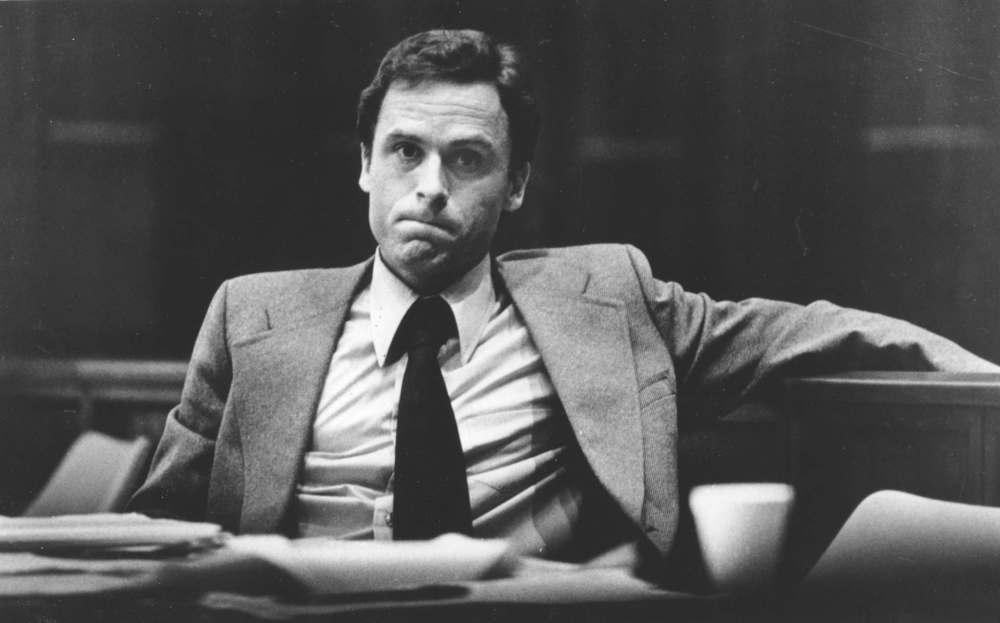
Netflix was claiming the high road here, but the Hot Bundy issue came at least partly out of the service’s decision to give a four-episode platform to a manipulative, media-thirsty killer. Netflix now seems to be doubling down on the problem by following up with this dramatized feature, which stars former teen heart-throb Zac Efron as Bundy, a man who viciously murdered at least 30 women (and probably more).
Director Joe Berlinger (who also worked on Conversations with a Killer) and scripter Michael Werwie aren’t setting out to glamourize evil or sensationalize violence. The film isn’t irresponsible, but — as with Conversations — it is oddly tilted toward Bundy’s own vision of himself, playing up his charisma and gliding over his savagery.
Efron actually does just fine. Besides his remarkable physical resemblance to Bundy, the 31-year-old one-time Disney Channel star has a keen grasp of Bundy’s weaponized charm, his glib plausibility as a clean-cut, confident, well-spoken middle-class white guy.
The problem is that Extremely Wicked bills itself as based on the experiences of Liz Kendall (Lily Collins). During promotional events, the filmmakers and stars played up the notion that the film provides a new take on the Bundy story from a survivor’s point-of-view. This woke feminist declaration would be more convincing if the film were able to deliver a fully realized female character. Unfortunately, even though the story is based on her autobiography, Liz remains vague, her motivations hazy, her emotional conflicts unexplored.
A single mother living in Seattle, Liz dated Bundy for almost six years. The film starts with their meeting in 1969 and ends with his 1979 trial for a brutal killing spree in Florida.
The relationship often seems to be incongruously dressed in gauzy rom-com tropes. The two meet cute and go home together. Liz falls asleep, waking the next morning to find Ted making omelettes, adorably, in a frilly apron.
This dreamboat version of Bundy persists, complete with a happy-family montage, even as Liz sees media reports of a killer described as a handsome, brown-haired guy who drives a Volkswagen — just like her Ted. A dog is instinctively scared of him, and Liz’s daughter has an unusual obsession with sharks. But Liz herself is shown as mostly oblivious.

Werwie structures the story for suspense, saving Liz’s big secrets for the end of the film. This is a departure from the book, in which Liz was spooked early on by Bundy’s sometimes threatening behaviour and inexplicable habits.
Maybe the film is trying to emphasize that many people were taken in by Bundy, including the breathlessly adoring young women who showed up for his trial and wrote him letters in jail. Even the judge (John Malkovich) whose description of Bundy’s crimes gives the film its name can’t help but call Bundy “a bright young man” who would have made a good lawyer.
This is an intriguing line and one that could be expanded to explore our queasy collective fascination with psychopaths. Bundy’s trial was one of the first to be broadcast nationally in the United States, and in hindsight the fatal decision to open the courtroom to cameras — to fuse real-life horror with televised entertainment — seems to have anticipated the current craze for true-crime books, serials and podcasts. This thread remains largely unexamined.
Instead, Bundy, that attention-seeking, self-dramatizing egotist, keeps taking up all the room. His grandiose sense of himself, his perpetual aggrievement, his calculated charisma seem to overpower not just the people around him but even the filmmakers.
In Extremely Wicked, Shockingly Evil and Vile, the serial killer comes into terrifying focus, while the women he damages remain mostly indistinct. If we really want to use pop culture to challenge misogynistic violence, we’ve got to flip that dynamic.
Studying at the University of Winnipeg and later Toronto’s York University, Alison Gillmor planned to become an art historian. She ended up catching the journalism bug when she started as visual arts reviewer at the Winnipeg Free Press in 1992.
Our newsroom depends on a growing audience of readers to power our journalism. If you are not a paid reader, please consider becoming a subscriber.
Our newsroom depends on its audience of readers to power our journalism. Thank you for your support.
Studying at the University of Winnipeg and later Toronto’s York University, Alison Gillmor planned to become an art historian. She ended up catching the journalism bug when she started as visual arts reviewer at the Winnipeg Free Press in 1992.
Our newsroom depends on a growing audience of readers to power our journalism. If you are not a paid reader, please consider becoming a subscriber.
Our newsroom depends on its audience of readers to power our journalism. Thank you for your support.
Advertisement Advertise With Us
Advertisement Advertise With Us