Netflix miniseries on Central Park Five well worth the look
Advertisement
Read this article for free:
or
Already have an account? Log in here »
To continue reading, please subscribe:

Digital Subscription
One year of digital access for only $205*
- Enjoy unlimited reading on winnipegfreepress.com
- Read the E-Edition, our digital replica newspaper
- Access News Break, our award-winning app
- Play interactive puzzles
*First annual payment billed as $205.00 + GST for one year. This annual subscription will automatically renew at $233.00 + GST every 52 weeks (10% off the regular annual price of $259.35). Offer available to new and qualified returning subscribers only. Cancel any time.
To continue reading, please subscribe:
Add Free Press access to your Brandon Sun subscription for only an additional
$1 for the first 4 weeks*
- Enjoy unlimited reading on winnipegfreepress.com
- Read the E-Edition, our digital replica newspaper
- Access News Break, our award-winning app
- Play interactive puzzles
*Your next Brandon Sun subscription payment will increase by $1.00 and you will be charged $17.95 plus GST for four weeks. After four weeks, your payment will increase to $24.95 plus GST every four weeks.
Read unlimited articles for free today:
or
Already have an account? Log in here »
Hey there, time traveller!
This article was published 02/06/2019 (2672 days ago), so information in it may no longer be current.
When They See Us, which premièred Friday on Netflix, is the kind of miniseries you get when the right showrunner assembles the right team and right performers with the unequivocating intent to correct an important story that many people still get wrong.
In this case, the celebrated producer, director and screenwriter Ava DuVernay (Selma, Queen Sugar) takes on the injustice of what happened to the Central Park Five — four African-American men and one Hispanic man who, as teenagers, were rounded up, taken to a police precinct office and coerced into saying they brutally assaulted and raped a white woman who was jogging in Central Park one evening in April 1989.
There was never any physical evidence that they did. The confessions the boys (who ranged in age from 14 to 16) gave came after many hours of coercion, intimidation and threats from detectives; two of the boys were separately urged by their fathers to tell the police what they wanted to hear.
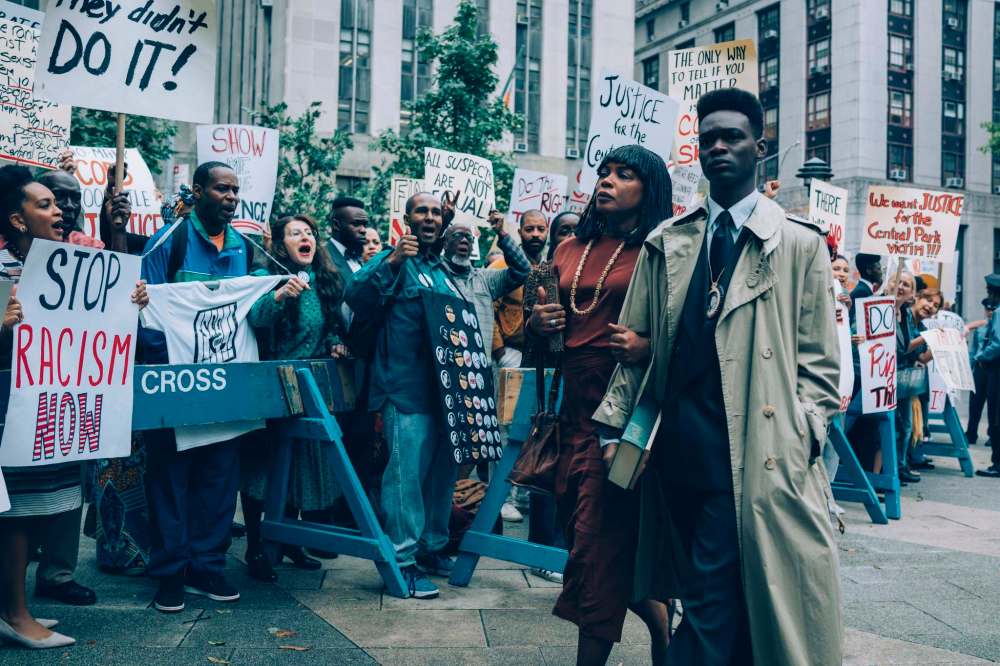
In media coverage, the boys were compared to savages who took part in a “wilding” crime spree. Real estate mogul Donald Trump took out newspaper ads to demand their execution. The boys — Korey Wise, Yusef Salaam, Raymond Santana, Kevin Richardson and Antron McCray — were found guilty on some of the charges in a 1990 trial. They spent between six and 13 years in detention centres and prisons.
As everyone ought to know by now, the jogger’s true attacker confessed in 2002 and his DNA matched the physical evidence. A state Supreme Court vacated the Central Park Five’s sentences on the district attorney’s recommendation. As adults, the five men sued the city and finally reached a US$41-million settlement in 2014.
If the next words that occur to you are, “Yes, but what about the victim?” (meaning the jogger, Trisha Meili, who wrote a memoir and still publicly expresses her doubt about a lone attacker, as well as her disappointment that the city agreed to a settlement), then it seems you have two options, 30 years later: you can absorb what When They See Us is trying to tell you, or you can retreat comfortably back to the open-shut templates of Law & Order reruns.
Split into four episodes, DuVernay’s approach bluntly but successfully turns this story inside out, borrowing the look of true-crime dramas while discarding the genre’s usual tropes. It focuses primarily on the boys, their families and the irreparable effects of their jailing.
Rather than lionize them, it goes one better and humanizes them. As the title suggests, it’s all about how they were seen and, by extension, how most minority teenage boys are still often seen — not as children and young citizens, but as potential thugs.
The series is deftly attuned to context, portraying a late-’80s New York that seethes with mob mentality when it comes to solving and prosecuting this particular crime — which, to be sure, was both heinous and infuriating. This is a drama about modern lynching; rather than leading to a noose and branch, it follows the Central Park Five on a ruinous trip through a penal system that finds ways to punish inmates even after they’re paroled.
In tone and execution, When They See Us fits somewhere between John Ridley’s underwatched ABC anthology American Crime, which also subverted the procedural genre in revealing ways, and Ryan Murphy’s FX hit The People v. O.J. Simpson: American Crime Story, which taught viewers a thing or two about the effects of time and context.
Without any background primer, the first episode moves quickly through the night of the crime and the days after, beginning with the adolescent lure of watching a group of one’s peers decide, in the moment, to head off to Central Park on a spring evening. The pace and dialogue are not expository, nor do they provide much time to get to know the boys intimately as characters (that comes later). The young actors playing the teens (Jharrel Jerome as Korey, Ethan Herisse as Yusef, Caleel Harris as Antron, Asante Blackk as Kevin and Marquis Rodriguez as Raymond) ably convey the confusion and panic of being misidentified, hauled in and falsely accused.

Felicity Huffman (talk about timing) plays Linda Fairstein, the newly appointed head of the district attorney’s sex-crimes unit, who arrives at the crime scene not long after an unconscious, nearly dead Meili was discovered. When They See Us is unsparing in the way it portrays Fairstein pushing detectives to make the case fit the wilding narrative. You better believe DuVernay is in no mood to re-litigate, build a Wikipedia page or pay lip service to anybody’s doubts. Here, in this telling, the cops are almost always corrupt, Fairstein is menacingly reckless and the prosecutor (Vera Farmiga as Elizabeth Lederer) lucks out in the second episode with a jury willing to convict the boys based on the videotaped confessions alone.
This swift treatment of the crime and the trial allows DuVernay and her co-writers (Robin Swicord, Attica Locke, Yusuf Hassan and Michael Starrbury) to spread their wings in the series’ second half: once the headlines die down, the boys become men — first languishing behind bars and then, after most of them make parole, trying to put their lives back together. The story of their parents and family (with fine performances from Niecy Nash, John Leguizamo and Michael K. Williams, among others) also begins to take shape.
The showstopper comes in the fourth episode as Korey, who was tried and convicted as an adult rather than as a juvenile, embarks on a violently terrifying, dozen-year journey through the state prison system, which includes a long detour into solitary confinement and a heartbreaking, hallucinatory (yet artfully envisioned) glimpse of his past and present. Jerome, the only actor in the series to play both the teen and adult versions of his character, gives a remarkable performance, as the system beats Korey down to the mental equivalent of rubble and he emerges as an entirely different man.
When the news of his freedom comes — and the series reaches its full, swelling sense of the miraculous — the viewer will finally understand his or her part in all this: all that’s being asked of us is to see.
— Washington Post