Nifty fifties
Many famous golden anniversaries being celebrated in 2019
Advertisement
Read this article for free:
or
Already have an account? Log in here »
To continue reading, please subscribe:
Digital Subscription
One year of digital access for only $1.44 a week*
- Enjoy unlimited reading on winnipegfreepress.com
- Read the E-Edition, our digital replica newspaper
- Access News Break, our award-winning app
- Play interactive puzzles
*Billed as $5.77 plus GST every four weeks. After 52 weeks, price increases to the regular rate of $19.95 plus GST every four weeks. Offer available to new and qualified returning subscribers only. Cancel any time.
To continue reading, please subscribe:
Add Free Press access to your Brandon Sun subscription for only an additional
$1 for the first 4 weeks*
- Enjoy unlimited reading on winnipegfreepress.com
- Read the E-Edition, our digital replica newspaper
- Access News Break, our award-winning app
- Play interactive puzzles
*Your next Brandon Sun subscription payment will increase by $1.00 and you will be charged $17.95 plus GST for four weeks. After four weeks, your payment will increase to $24.95 plus GST every four weeks.
Read unlimited articles for free today:
or
Already have an account? Log in here »
Hey there, time traveller!
This article was published 21/09/2019 (2445 days ago), so information in it may no longer be current.
Fifty years ago this month, one of Canada’s defining characteristics was enshrined in law.
On Sept. 7, 1969, the Official Languages Act became law across the country, making English and French the country’s two official languages and, where numbers warranted, federal institutions had to make services available in the two founding European languages.
“Fifty years ago, we decided as a country to recognize the equal status of English and French in Canadian society by adopting the Official Languages Act. We decided that English-speaking Canadians and French-speaking Canadians had the right to access federal services of equal quality in the official language of their choice,” Raymond Théberge, the commissioner of official languages, said in a statement earlier this month.
To defend bilingualism and the Official Languages Act, then-prime minister Pierre Trudeau wrote a column published in newspapers across the country. “It is because everyone in the country is not expected to speak both languages, and never will be, that the federal government must be able to speak to Canadians in either French or English wherever there are enough French speakers or English speakers to warrant it,” Trudeau wrote.
But the Official Languages Act isn’t the only historic item vying for our attention this year, as we see from today’s golden list of Five Famous 50th Anniversaries in 2019 (Except for the Moon Landing Because We’ve Written Too Much on that Already):
5) The golden anniversary: The Brady Bunch
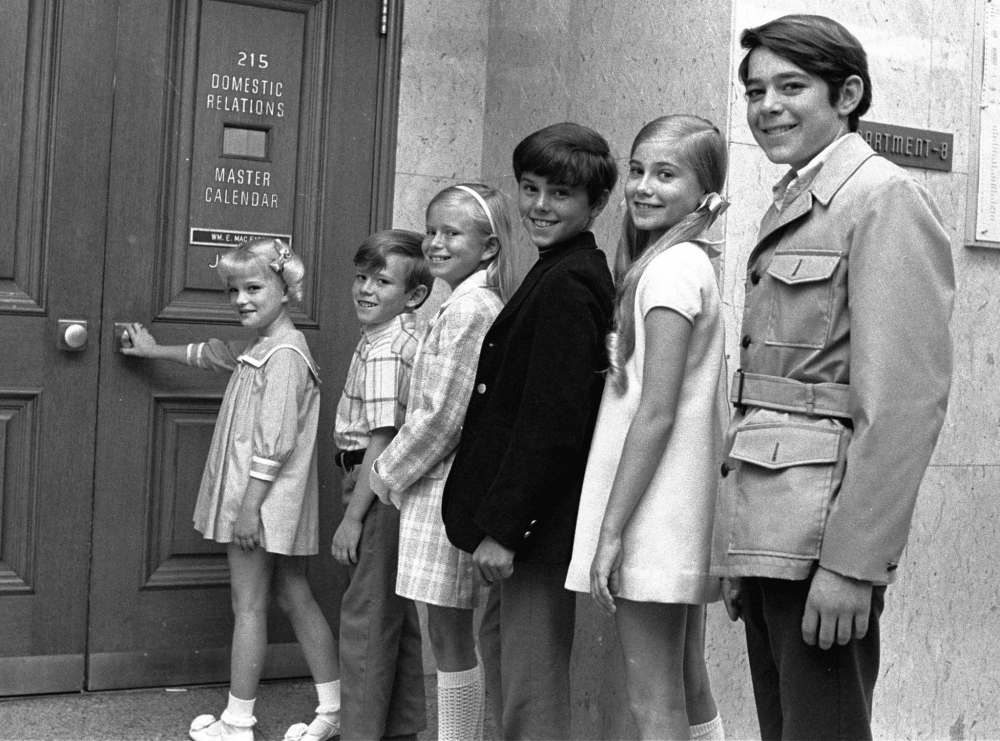
Five decades ago: As hard as this might seem to believe, the iconic TV sitcom The Brady Bunch turns 50 this coming Thursday. This blended TV family with six kids first barged into North American dens on Sept. 26, 1969, and hung around for five seasons until being cancelled on March 8, 1974, after 117 episodes. It went into syndication in 1975 and, since then, an episode of the show has been broadcast somewhere in the world every day. Its theme song, performed by the Peppermint Trolley Company, is an earworm that still haunts the brains of baby boomers. You all know the lyrics, so let’s sing loud and proud: “Here’s the story/Of a lovely lady/Who was bringing up three very lovely girls/All of them had hair of gold/Like their mother…” You know the rest: Carol, the mother of Marcia, Jan and Cindy, married Mike, father of Greg, Peter and Bobby, “and that’s the way we all became the Brady Bunch, the Brady Bunch!” The show was the brainchild of legendary TV producer Sherwood Schwartz, who came up with the idea in 1966 after reading in the Los Angeles Times that “30 per cent of marriages (in the U.S.) have a child or children from a previous marriage.” The Brady Bunch never achieved huge ratings, or critical success, during its prime-time run, but its enduring popularity has resulted in it becoming a North American cultural icon. “Completely unrealistic? Ridiculously cheesy? Who cares! Everyone has seen at least one episode and can hum the theme song. We loved all five seasons of the adventures of the Brady kids as they navigated life in a blended family with hip hair and groovy fashions,” gushes Good Housekeeping magazine. Most online lists rate Carol, as portrayed by Florence Henderson, as TV’s greatest mom of all time. On Sept. 9, HGTV premièred A Very Brady Renovation, a limited TV series that follows the Brady kids as they renovate the Studio City house used for exterior shots in the show.
4) The golden anniversary: Monty Python’s Flying Circus
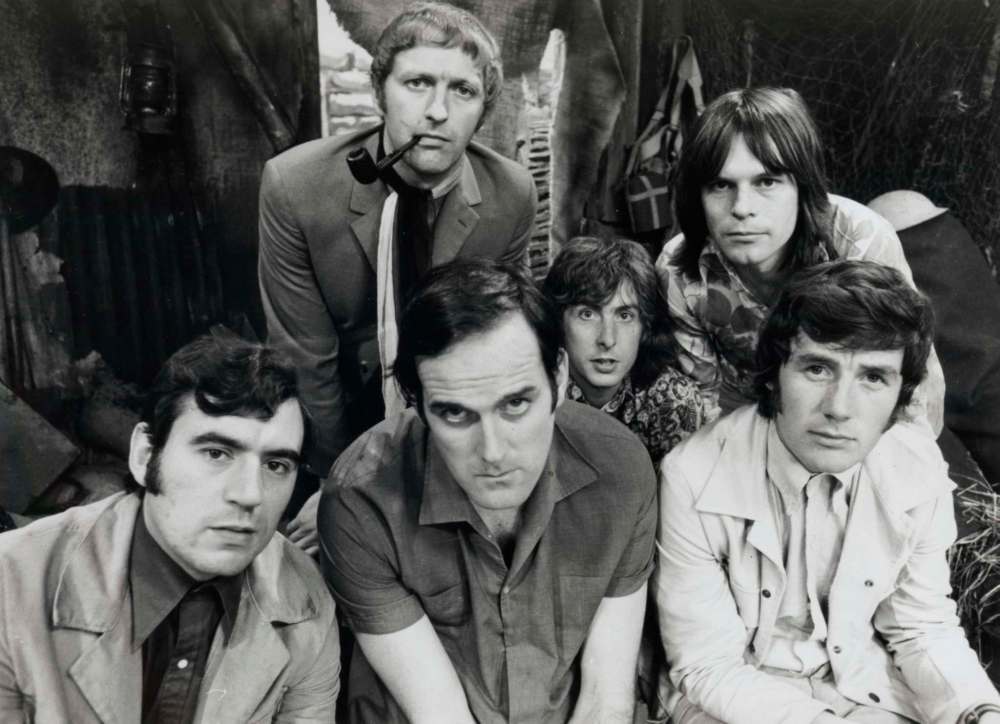
Five decades ago: As the Independent British newspaper recalls: “On Sunday 5 October 1969 at 11 p.m. (after most respectable people had gone to bed) the BBC broadcast the first episode of a show that changed the course of British comedy.” That show was Monty Python’s Flying Circus. If The Brady Bunch was one of the last of the old-school TV sitcoms, Monty Python was like nothing anyone had ever seen before, or since, for that matter. You could call it a surreal sketch comedy show, but that hardly does justice to an enduring pop culture icon that did for comedy what the Beatles did for music. “Whether you ‘get’ their cheeky humour or not, when this groundbreaking BBC series was launched in October 1969, comedy was never the same. With parodies of documentaries, game shows, random titles and arbitrary voice-overs, the show was an instant hit in the U.K., making its way to the U.S. within a few years. Madcap lunacy still reigns in their legacy of books, movies, and live shows,” according to the website of Good Housekeeping magazine. The BBC broadcast 45 episodes of this famously zany program between 1969 and 1974. It was conceived, written and performed by Graham Chapman (who died in 1989), John Cleese, Terry Gilliam, Eric Idle, Terry Jones (who was diagnosed in 2015 with frontotemporal dementia and no longer recognizes his former castmates) and Michael Palin. In a 2005 poll, three of the six Pythons were voted to be among the top 50 greatest comedians ever: Cleese at No. 2, Idle at No. 21 and Palin at No. 30. The show was introduced to Canadians in fall 1970 by the CBC, which dropped the show in 1971, prompting howls of complaint, including a protest at CBC’s Montreal studios. It later became a fixture on the network. To celebrate the golden anniversary, on Oct. 5, at an as-yet-unnamed location in London, fans will try to set a Guinness World Record for the “largest gathering of people dressed as Gumbys,” the iconic Python characters famed for wearing handkerchiefs on their head, spectacles, braces and Wellington boots.
3) The golden anniversary: Sesame Street
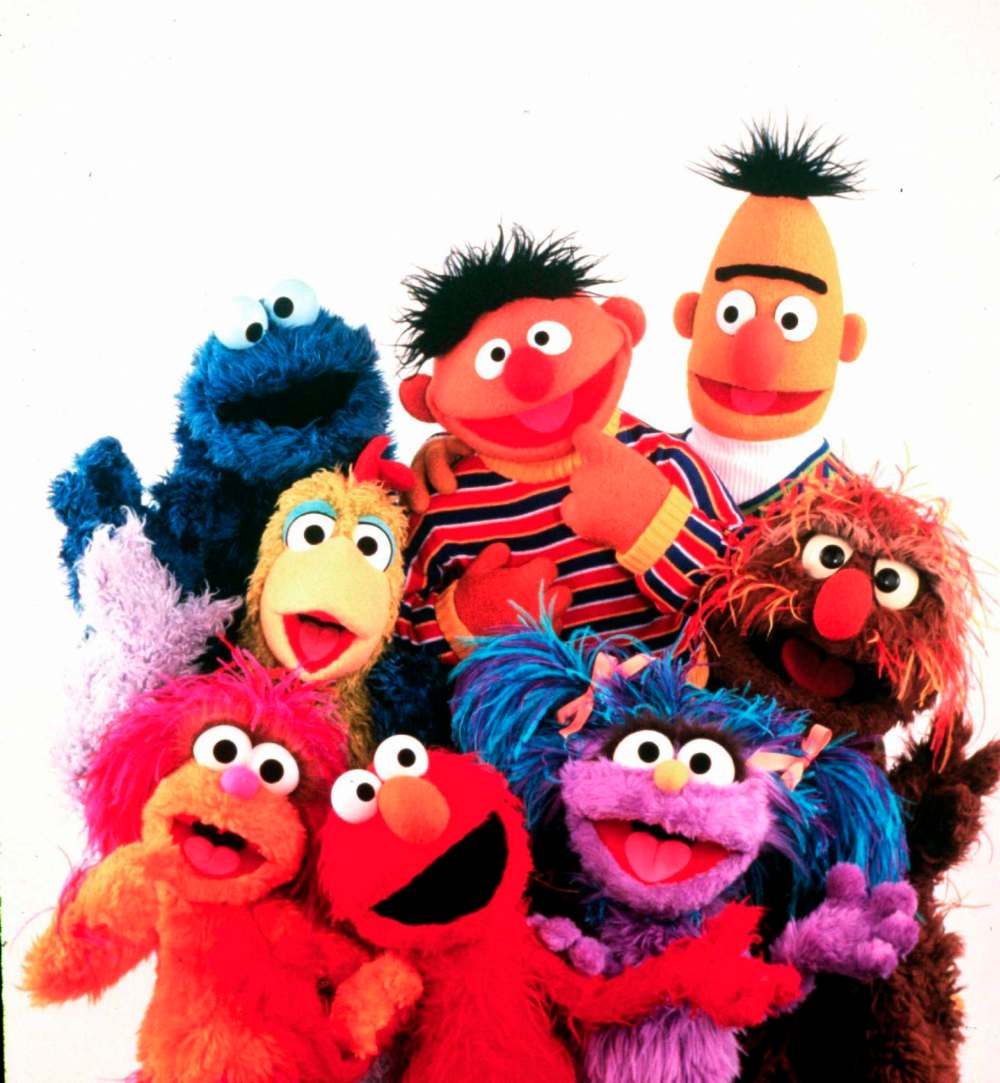
Five decades ago: It is arguably one of the most well-known songs in the history of music. It starts like this: “Sunny Day/Sweepin’ the clouds away/On my way to where the air is sweet/Can you tell me how to get?/How to get to Sesame Street.” That song, as you already know, is the unforgettable theme for the beloved children’s TV show Sesame Street, dating back to the historic first episode on Nov. 10, 1969. Five decades later, almost all of us have spent some time on Sesame Street. “Fifty years ago this fall, a show that would revolutionize children’s television debuted on America’s Public Broadcasting Service. A critical hit from the start, Sesame Street was — is — unlike anything else on TV,” Free Press columnist Jen Zoratti wrote in this paper on Sept. 4. “Sesame Street didn’t just teach multiple generations of children their ABCs and 123s. It also taught them valuable lessons about what it means to be a person in the world. Aided by a colourful, now-iconic cast of characters, the show educated without condescending to its young viewers, and wasn’t afraid of tackling tough subjects.” Those tough subjects included everything from death to racism. The show’s puppet stars — Cookie Monster, Big Bird and Oscar the Grouch, to name just a few — are woven into the very fabric of North American culture. As of this year, Sesame Street has produced more than 4,500 episodes, 35 specials, 200 home videos and 180 albums. It has won 189 Emmy Awards and 11 Grammy Awards, more than any other children’s show. “Set against the backdrop of the civil rights movement and the war on poverty, Sesame Street was created to answer a simple question: could television be used to level the playing field and help prepare less advantaged children for school?” according to a news release from Sesame Workshop, the non-profit organization behind the show. The answer is a resounding “yes!”
2) The golden anniversary: Woodstock
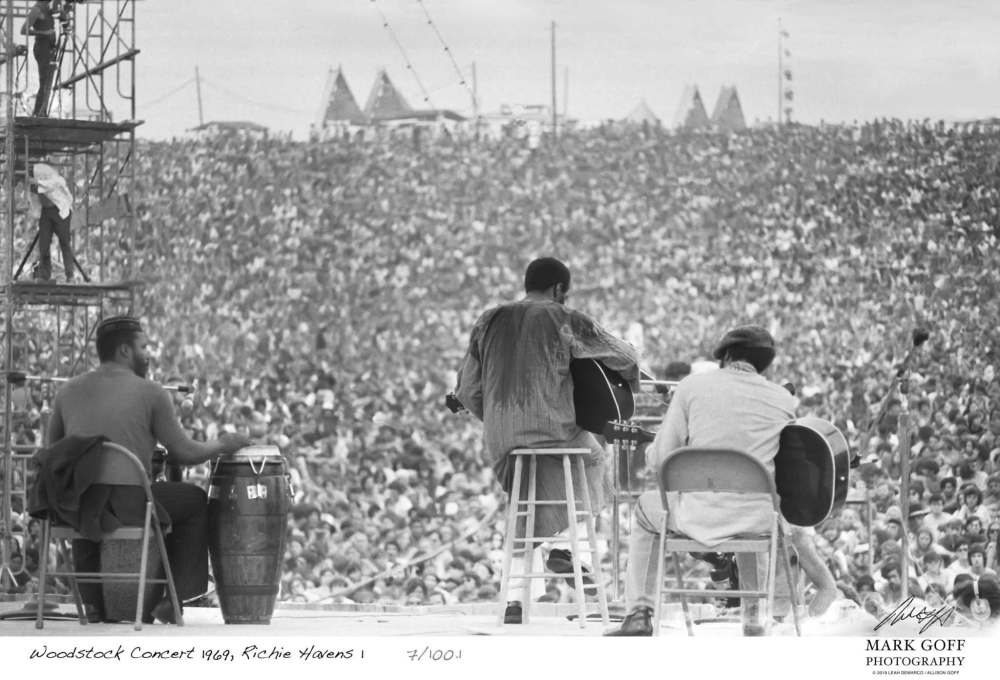
Five decades ago: Everyone of a certain age likes to claim they attended Woodstock, even if they weren’t born when the music festival was held 50 years ago, from Aug. 15-18, 1969. You don’t have to be a hippie or a historian to know this wasn’t just another music festival. Billed as “Three Days of Peace & Music,” Woodstock was a pivotal moment in music history and a defining moment for a group that likes to think of itself as the “counterculture generation.” It featured some of the biggest acts of the day, everyone from Janis Joplin and Jimi Hendrix to the Who and Jefferson Airplane. Organizers had a hard time signing acts until Creedence Clearwater Revival came on board. Originally designed as a for-profit event, it became a “free concert” after a late venue change and the fact the festival drew hundreds of thousands more people than initially expected. Organizers had expected about 50,000 attendees, but more than 400,000 descended on the site. It was supposed to be held in a 300-acre industrial park in Wallkill, N.Y., but locals opposed the event and a permit was denied. It ended up being held on a 600-acre dairy farm owned by Max Yasgur in Bethel, N.Y., about 70 kilometres southwest of Woodstock. With the last-minute change, there was no time to finish fencing or ticket booths, so organizers gave up on trying to collect cash. There was only one toilet for every 700 people. Soul and blues singer Richie Havens kicked off the show, because other acts had been stopped by police en route to the festival. Jimi Hendrix was the last act, and the crowd had dwindled from 400,000 to about 30,000 when he hit the stage Monday morning for his iconic version of The Star-Spangled Banner. It was almost the last show for Grateful Dead guitarist Bob Weir. “It was raining toads when we played,” Weir told Rolling Stone magazine. “The rain was part of our nightmare… every time I touched my instrument, I got a shock. The stage was wet, and the electricity was coming through me… There was a great big blue spark about the size of a baseball, and I got lifted off my feet and sent back eight or 10 feet to my amplifier.” Plans for a festival to mark the 50th anniversary fell apart amid permit issues, venue relocations and artist cancellations.
1) The golden anniversary: Canada decriminalizes homosexuality
Five decades ago: Earlier this summer, the federal government unveiled a commemorative loonie paying tribute to the 50-year anniversary of the decriminalization of homosexuality in Canada. Or at least the partial decriminalization when Bill C-150 passed in May 1969. The coin, and the anniversary, are the focus of controversy. Prior to 1969, homosexual acts between consenting adults, even in private, was punishable by up to 14 years in prison. The last Canadian to be imprisoned under such measures was Everett George Klippert. In 1967, Klippert, who told police he had sex with men and was unlikely to change, was sent to prison indefinitely as a “dangerous sex offender,” a sentence that was backed up by the Supreme Court of Canada that same year. That prompted then-justice minister Pierre Trudeau to propose amendments to the Criminal Code which, among other things, would relax the laws against homosexuality. “I think the view we take here is that there’s no place for the state in the bedrooms of the nation,” Trudeau famously said. The amendments became law in 1969. But York University historian Tom Hooper has argued the idea that homosexuality was decriminalized is essentially a myth. Hooper says C-150 didn’t repeal the law, it only reformed it. “A lot of people think a law was removed. It wasn’t. Gay sex was still illegal after 1969,” he told Global News. “It only allowed people to have sex in their bedroom, but everywhere else it was a crime, including in a car or in a gay bathhouse.” In an opinion piece for the Toronto Star, Wyatt James Schierman argued the 50th anniversary, and the commemorative coin, are worth celebrating. “Fifty years ago, the passage of Bill C-150 and the decriminalization of homosexuality marked the first time the Canadian government intervened to correct its injustices against the LGBTQ community. It represents a watershed moment in the progression of human rights in this country — one deserving of commemoration and celebration,” he wrote. Few debate the fact there is still far to go.
doug.speirs@freepress.mb.ca