Mediocre, apart from Gleeson’s Trump

Advertisement
Read this article for free:
or
Already have an account? Log in here »
To continue reading, please subscribe:

Digital Subscription
One year of digital access for only $205*
- Enjoy unlimited reading on winnipegfreepress.com
- Read the E-Edition, our digital replica newspaper
- Access News Break, our award-winning app
- Play interactive puzzles
*First annual payment billed as $205.00 + GST for one year. This annual subscription will automatically renew at $233.00 + GST every 52 weeks (10% off the regular annual price of $259.35). Offer available to new and qualified returning subscribers only. Cancel any time.
To continue reading, please subscribe:
Add Free Press access to your Brandon Sun subscription for only an additional
$1 for the first 4 weeks*
- Enjoy unlimited reading on winnipegfreepress.com
- Read the E-Edition, our digital replica newspaper
- Access News Break, our award-winning app
- Play interactive puzzles
*Your next Brandon Sun subscription payment will increase by $1.00 and you will be charged $17.95 plus GST for four weeks. After four weeks, your payment will increase to $24.95 plus GST every four weeks.
Read unlimited articles for free today:
or
Already have an account? Log in here »
Hey there, time traveller!
This article was published 03/10/2020 (2184 days ago), so information in it may no longer be current.
Like its central character, former FBI director James Comey, The Comey Rule is polarizing. Is this four-part limited series from Showtime (now available on Crave) nobly idealistic or pitifully naive, deeply serious or just bizarre?
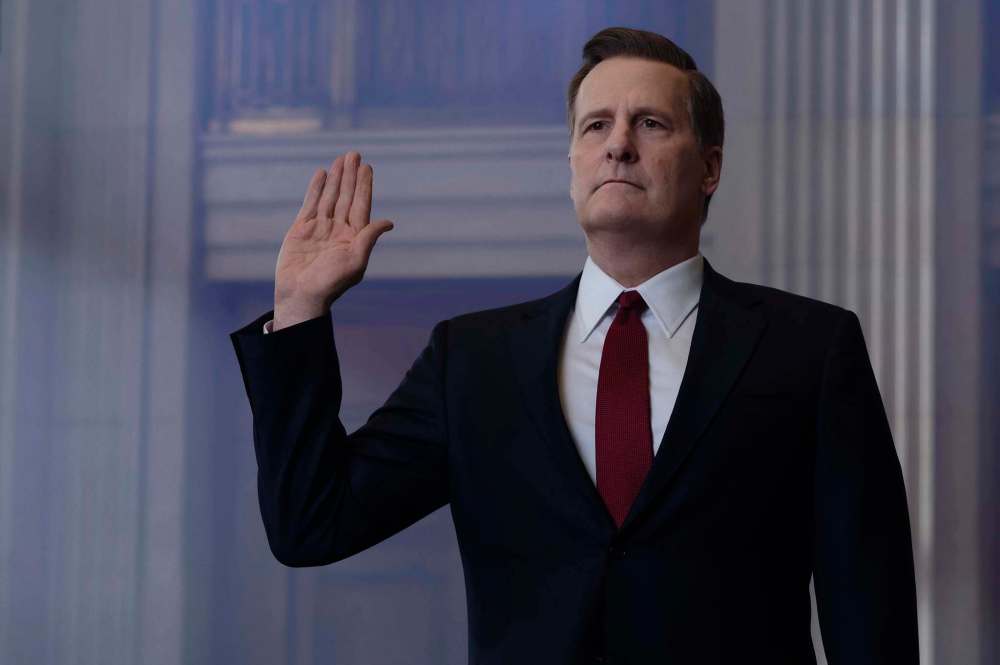
And what about the decision to turn current events — really current events: Comey was testifying before congress this week — into television drama, with look-alike actors playing people we’re seeing right now on CNN and Fox News? The Comey Rule transforms Jeff Daniels into Comey — and Scoot McNairy into Rod Rosenstein and Jonathan Banks into James Clapper and Holly Hunter into Sally Yates — while also inserting actual footage of folks like Sean Spicer and Jake Tapper. Is this odd form of docudrama wonkish or unwieldy?
The Comey Rule wants to be a hard-hitting political story. There’s lots of walking and talking in D.C. halls of power, lots of tense phone calls, lots of speechifying. But the first two episodes feel wobbly and uneven, searching for a consistent tone. In particular, writer-director Billy Ray — working from Comey’s own book, A Higher Loyalty — struggles with his approach to the title character.
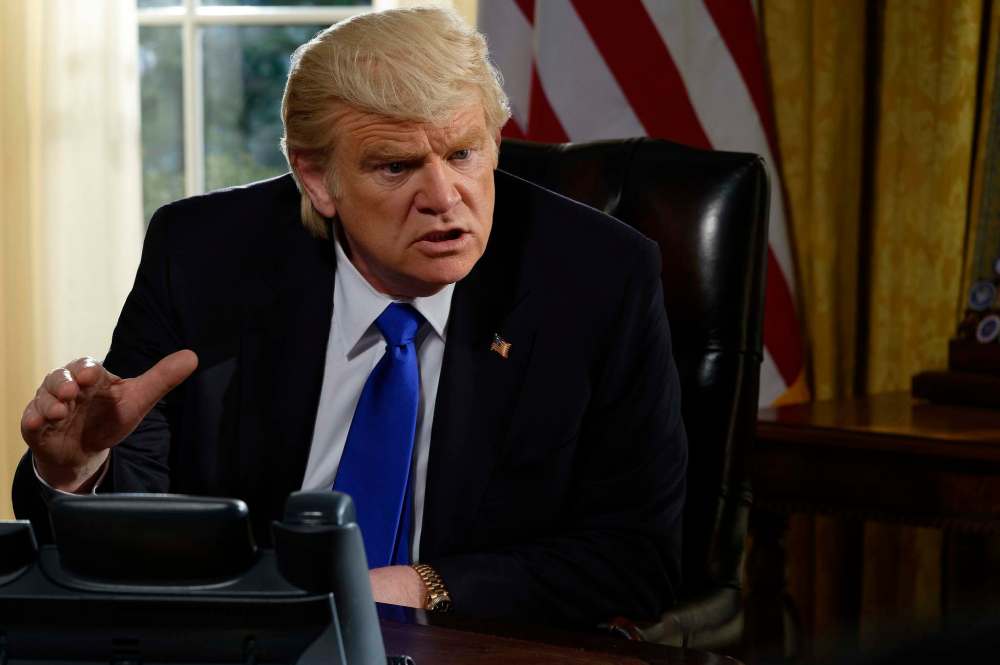
As Comey’s avuncular integrity keeps threatening to slip into Sorkinesque smugness, the series can come off as self-satisfied. It gives me no pleasure to say this, but The Comey Rule doesn’t gain any real dramatic traction until Donald Trump shows up, played with meaty menace by the great Irish actor Brendan Gleeson.
That’s the perverse paradox of the show. As usual, Trump manages to make everything about himself, even an anti-Trump drama. The series is trying to be an uplifting liberal dream about the resilience of American democracy, a hymn to institutional checks and balances in the face of individual corruption and malfeasance. And still, Trump — mean, impulsive and self-serving, everything Comey wants to stand against — grabs all the attention.
This is mostly down to Gleeson, who resists easy impersonation and searches for something essential, something human, in his subject.
Gleeson does capture some of Trump’s looming, lumbering appearance. Our first glimpse of Trump, after a lot of ominous buildup, is an extreme close up on one of his ties, hanging below his belt in ridiculous overcompensation. Gleeson gets the jaw jut, the taut, grimacing facial expressions, even the breathing.
But he never reduces Trump to physical caricature. (The production actually toned down the hair and the orange bronzer to avoid making Gleeson look clownish.)
And that’s crucial. Most satirical takes on Trump — Alec Baldwin’s Saturday Night Live appearances, for instance — take Trump and make him even Trumpier. They offer exaggeration, but they don’t yield much new insight.
Gleeson doesn’t exaggerate. He compresses. And that compression comes down to a core of endless emotional neediness. Whether Trump is offering up fake bonhomie or bullying brutality, king-of-the-world boasting or I’m-the-victim-here grievance, Gleeson connects all his instincts and actions to a never-ending need for attention and adulation.
This is a man who can’t help but make every issue about himself and his own needs, and that becomes the central tension of the series: Comey wants to maintain what is traditionally an arm’s-length relationship between the president and the FBI, while Trump wants Comey to be “his guy.”

Comey, who made his name prosecuting organized-crime families, realizes where this is going. He attempts to dodge the president’s increasingly aggressive overtures, at one point trying to blend into the Oval Office curtains. There are extended conversations in which Comey can be seen willing himself into expressionless neutrality, studiously picking lint off his suit, as Trump tries to draw him into his power vortex.
The reluctant Comey is finally cornered into a dimly lit tête-à-tête dinner in which Trump continues his push for personal loyalty. It’s a riveting scene, a tense two-hander in which Gleeson manages to turn eating a tiny bowl of vanilla ice cream into a deeply sinister act. In dramatic terms, the encounter plays like a sequence from The Godfather. In comic terms, it’s a parody of a bad date.
But there’s something more here. Trump complains about bad press, which Comey — who has been excoriated by both left- and right-wing media — knows a bit about. Trump asks Comey how he holds up under the strain, and Comey explains that he finds comfort in the love of his family. The president gives this a perfunctory nod, but you can see this answer simply doesn’t scan for him. It’s a barely noticeable expression — nuanced, underplayed, even — but Gleeson manages to convey an abyss of isolation and emptiness.
At the end of four episodes, all the politicking in The Comey Rule comes off as an unfinished and premature draft of history, but that fascinating human moment lingers.
alison.gillmor@freepress.mb.ca
Studying at the University of Winnipeg and later Toronto’s York University, Alison Gillmor planned to become an art historian. She ended up catching the journalism bug when she started as visual arts reviewer at the Winnipeg Free Press in 1992.
Our newsroom depends on a growing audience of readers to power our journalism. If you are not a paid reader, please consider becoming a subscriber.
Our newsroom depends on its audience of readers to power our journalism. Thank you for your support.
Studying at the University of Winnipeg and later Toronto’s York University, Alison Gillmor planned to become an art historian. She ended up catching the journalism bug when she started as visual arts reviewer at the Winnipeg Free Press in 1992.
Our newsroom depends on a growing audience of readers to power our journalism. If you are not a paid reader, please consider becoming a subscriber.
Our newsroom depends on its audience of readers to power our journalism. Thank you for your support.
Advertisement Advertise With Us
Advertisement Advertise With Us