In Station Eleven, survival is built on caring and creativity

Advertisement
Read this article for free:
or
Already have an account? Log in here »
To continue reading, please subscribe:

Digital Subscription
One year of digital access for only $205*
- Enjoy unlimited reading on winnipegfreepress.com
- Read the E-Edition, our digital replica newspaper
- Access News Break, our award-winning app
- Play interactive puzzles
*First annual payment billed as $205.00 + GST for one year. This annual subscription will automatically renew at $233.00 + GST every 52 weeks (10% off the regular annual price of $259.35). Offer available to new and qualified returning subscribers only. Cancel any time.
To continue reading, please subscribe:
Add Free Press access to your Brandon Sun subscription for only an additional
$1 for the first 4 weeks*
- Enjoy unlimited reading on winnipegfreepress.com
- Read the E-Edition, our digital replica newspaper
- Access News Break, our award-winning app
- Play interactive puzzles
*Your next Brandon Sun subscription payment will increase by $1.00 and you will be charged $17.95 plus GST for four weeks. After four weeks, your payment will increase to $24.95 plus GST every four weeks.
Read unlimited articles for free today:
or
Already have an account? Log in here »
Hey there, time traveller!
This article was published 15/01/2022 (1710 days ago), so information in it may no longer be current.
As we live through a particularly wearying stage of the pandemic, Station Eleven, a series set before, during and after a devastating global plague, might seem like a hard sell. But somehow watching this 10-episode show (now on Crave, with the final instalment just released) feels oddly reassuring.
Adapted from the 2014 novel by Canadian writer Emily St. John Mandel, the story’s precipitating element is a lethal virus called “the Georgia Flu.” The series follows interconnected characters through a looping chronological structure, sometimes showing us the pandemic and its immediate aftermath, sometimes jumping back to the before times, sometimes moving 20 years ahead to reveal a world that is utterly changed but going on as best it can.
We spend much of our time with a ragtag band of musicians and actors who make an annual circle around Lake Michigan, travelling in horse-drawn caravans and performing Shakespeare for the isolated communities they come across. They visit some aging academics living at a country club and reluctantly accept a gig at “the Museum of Civilization,” a former airport that now houses an insular group of survivors. As the troupe makes its circuit, we see how the characters are connected to each other, to the past and to an uncertain future.
https://youtu.be/RaAG-SwEa7kIt may sound strange to say a story involving a disease that suddenly and swiftly kills off 999 people out of 1,000 isn’t a disaster movie. Station Eleven comes out of death and destruction, but it isn’t really about death and destruction. It’s about art, love, loss, time, memory, friendship.
It has offhand comic bits — a would-be thespian using a speech from Independence Day as his audition piece. It has brief bursts of action — skirmishes involving violent marauders called Red Bandanas. But mostly Station Eleven is a subtle, low-key, luminously lovely human drama that just happens to take place in a world ravaged by a virus.
I resisted the series for a while. (More pandemic? Really?) But when I finally watched it, I found it unexpectedly serene. Perhaps because the novel was written before COVID, the series never strains for hot-button topicality. There are parallels to our current situation — including the inevitable N95 masks — but they’re not pushed.
And there are crucial differences. Station Eleven’s disease is so completely catastrophic, so world-consuming, it might — paradoxically — make some viewers feel better. Yes, we are living through a very difficult time, but our government hasn’t collapsed, our infrastructure hasn’t completely broken down, our electrical grid hasn’t failed. We still have flush toilets.

The series, though it excises the novel’s references to Toronto and B.C., also feels secretly Canadian. There is some violence, but there are very few guns. (One is kept in the Museum of Civilization as a carefully labelled artifact of the distant past.) And while Hollywood’s post-apocalyptic genre tends toward a ruthless kill-or-be-killed dynamic, in Station Eleven, it’s by caring for others that people save themselves. The story’s basic instincts are humanist, compassionate and communal.
The show’s look is also unusual for the post-apocalyptic genre. It’s not a dystopian hellscape of grey, smoking ruins and parched, arid wastelands. Station Eleven charts the end of one world but shows the beginning of another. Its futuristic landscape is tragically de-peopled but also new and green, slow and hushed, as nature reclaims the planet. Moss covers the interiors of luxury apartments, lush vines tangle through corporate towers, roadside gas stations are now stranded among blooming fields. Scenes of the snowbound city of Chicago, as it ceases to function for its human inhabitants, are strangely beautiful.
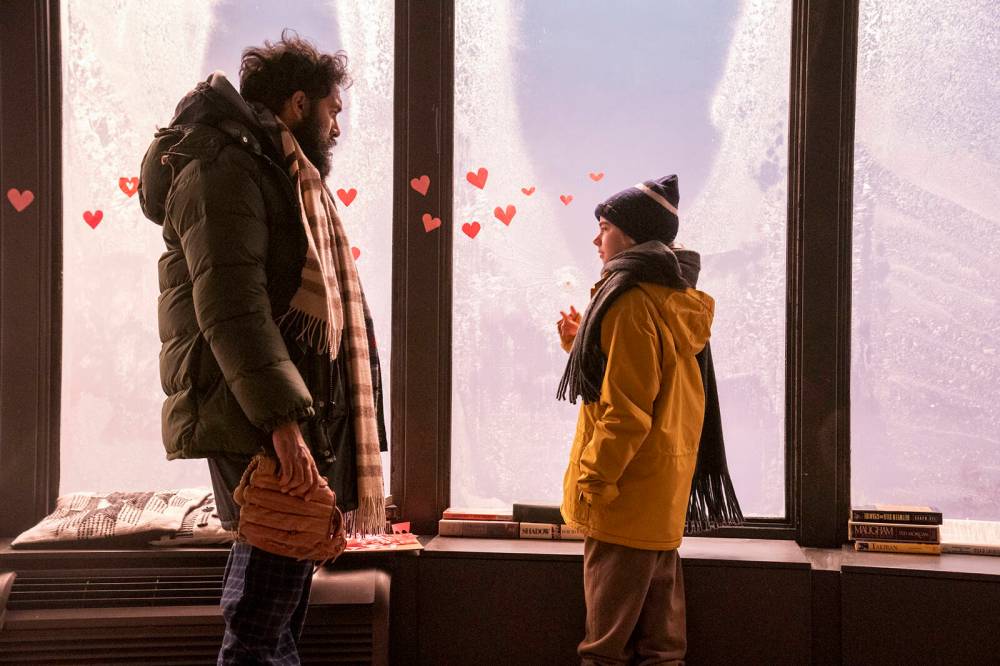
It’s not just nature that’s beautiful. Human beauty persists, in the troupe’s fire-lit performances and their scrappy, scavenged costumes. The troupe’s motto, “Survival is insufficient,” speaks for the value of art, even in — maybe especially in — subsistence-level circumstances. Station Eleven makes a good argument for Shakespeare’s continued relevance, with his words managing to survive a near extinction-level event. But there’s also a graphic novel that obsesses two of the main characters (though, significantly, it takes them in two completely different directions).
Despite Station Eleven’s very, very high fatality count — seemingly about 99.9 per cent of the world — in the end, it’s not about death. It’s about the power of storytelling to mark our time on earth and try to make some sense of our brief lives. Maybe that’s why it felt good to watch this show right now.
alison.gillmor@freepress.mb.ca
Studying at the University of Winnipeg and later Toronto’s York University, Alison Gillmor planned to become an art historian. She ended up catching the journalism bug when she started as visual arts reviewer at the Winnipeg Free Press in 1992.
Our newsroom depends on a growing audience of readers to power our journalism. If you are not a paid reader, please consider becoming a subscriber.
Our newsroom depends on its audience of readers to power our journalism. Thank you for your support.
Studying at the University of Winnipeg and later Toronto’s York University, Alison Gillmor planned to become an art historian. She ended up catching the journalism bug when she started as visual arts reviewer at the Winnipeg Free Press in 1992.
Our newsroom depends on a growing audience of readers to power our journalism. If you are not a paid reader, please consider becoming a subscriber.
Our newsroom depends on its audience of readers to power our journalism. Thank you for your support.
Advertisement Advertise With Us
Advertisement Advertise With Us