They are TV’s ghosts – networks that somehow survive with little reason to watch them anymore
Advertisement
Read this article for free:
or
Already have an account? Log in here »
To continue reading, please subscribe:
Digital Subscription
One year of digital access for only $1.44 a week*
- Enjoy unlimited reading on winnipegfreepress.com
- Read the E-Edition, our digital replica newspaper
- Access News Break, our award-winning app
- Play interactive puzzles
*Billed as $5.77 plus GST every four weeks. After 52 weeks, price increases to the regular rate of $19.95 plus GST every four weeks. Offer available to new and qualified returning subscribers only. Cancel any time.
To continue reading, please subscribe:
Add Free Press access to your Brandon Sun subscription for only an additional
$1 for the first 4 weeks*
- Enjoy unlimited reading on winnipegfreepress.com
- Read the E-Edition, our digital replica newspaper
- Access News Break, our award-winning app
- Play interactive puzzles
*Your next Brandon Sun subscription payment will increase by $1.00 and you will be charged $17.95 plus GST for four weeks. After four weeks, your payment will increase to $24.95 plus GST every four weeks.
Read unlimited articles for free today:
or
Already have an account? Log in here »
Hey there, time traveller!
This article was published 29/02/2024 (965 days ago), so information in it may no longer be current.
NEW YORK (AP) — The list of memorable characters and personalities who entered popular culture through cable television is long: Honey Boo Boo. Tony Soprano. Lizzie McGuire. Don Draper. Jon Stewart. Beavis and Butt-Head. Chip and Joanna Gaines. SpongeBob SquarePants.
Pick your own favorites. Chances are there won’t be many more to join them.
Few cable and satellite networks are a force anymore, the byproduct of sudden changes in how people entertain themselves. Several have lost more than half their audiences in a decade. They’ve essentially become ghost networks, filling their schedules with reruns and barely trying to push toward anything new.
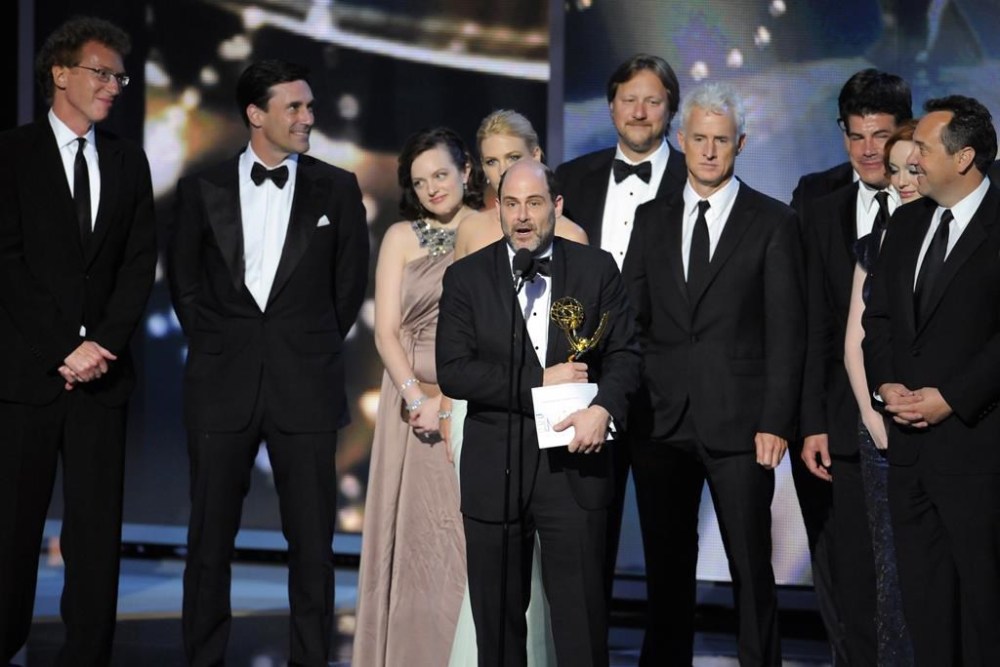
Says Doug Herzog, once an executive at Viacom who oversaw MTV, Comedy Central and other channels: “These networks, which really meant so much to the viewing public and generations that grew up with them, have kind of been left for dead.”
As they fade, so are the communities they helped to create.
WHAT HAS BEEN LOST?
Pockets of success remain, notably with lifestyle and news programming. And it’s not like there’s nothing to watch. You’ll find more options on Netflix than a diner menu.
Yet something undeniably has been lost. Stewart’s triumphant return to Comedy Central’s “The Daily Show” this winter only begs the question: Did it really have to be this way?
Cable TV primarily took flight in the 1980s, breaking the iron grip of ABC, CBS and NBC. Essentially the first fragmentation of media, cable brought people with common interests together, says Eric Deggans, NPR television critic.
“People who were previously marginalized by the focus on mass culture suddenly got a voice and a connection with other people like them,” Deggans says. “So young music fans worldwide bonded over MTV, Black people and folks who love Black culture bonded over BET, middle-aged women bonded over Lifetime and fans of home remodeling convened around HGTV and old-school TLC.”
Nickelodeon and Disney became de facto baby sitters. CNN, Fox News Channel and MSNBC changed the nation’s political discourse. ESPN occupied sports fans. HBO and Showtime, and later networks like FX and AMC, offered edgier fare that broadcasters shied away from.
Networks were endlessly malleable, too. Once MTV recognized there wasn’t much money in music videos — people would change channels when a song they didn’t like came on — the network became a relentless arbiter of cool. Generations had their own touchstones in programs like “Punk’d,” “The Osbournes” and “Total Request Live.”
Now MTV is a ghost. Its average prime-time audience of 256,000 people in 2023 was down from 807,000 in 2014, the Nielsen company said. One recent evening MTV aired reruns of “Ridiculousness” from 5 p.m. to 1:30 a.m.
The general interest USA Network’s nightly audience tumbled 69% in the same time span, and that was before January’s announcement that viewer-magnet “WWE Raw” was switching to Netflix.
Without favorites like “The Walking Dead” or “Better Call Saul,” AMC’s prime-time viewership sunk 73%. The Disney Channel, birthplace to young stars like Miley Cyrus, Hilary Duff and Selena Gomez, lost an astonishing 93% of its audience, from 1.96 million in 2014 to 132,000 last year.
TBS, TNT, History, Lifetime, FX, A&E, BET, E! Entertainment, SyFy, Comedy Central, VH1 and Discovery have all lost at least half of their 2014 audience.
For many, most of the schedules are big blocks of reruns: “Seinfeld” and “The Office” on Comedy Central, “The Big Bang Theory” and “Young Sheldon” on TBS. Tyler Perry movies dominate. Cheap and cheesy nonfiction fills time: “90 Day Fiance,” “Prison Brides,” “Married at First Sight,” “Contraband: Seized at the Border.”
That’s not appointment TV. It’s accidental. Ghosts.
MAYBE GOING DOWN THIS ROAD WAS INEVITABLE
With the explosion of Netflix, the giant companies that dominate the entertainment industry saw that as the future. To a large extent, they’ve concentrated time, energy and resources on these services, launching a competition that still hasn’t shaken out — no one knows yet how many streaming services the market will support and which ones will survive.
Was the downfall of cable the inevitable result? “That’s the gazillion-dollar question,” Herzog says.
“The conglomerates, they definitely jumped the gun, I think, in shifting their assets away from the cable networks and left them as zombies,” says Michael Schneider, television editor at Variety. “They’re paying the price.”
In 2015, some 87% of American homes had a cable or satellite television subscription, according to the Nielsen company. By 2023, only 47% of homes subscribed. If you include services like Hulu or YouTube TV, the percentage of homes with access to multiple channels was 62% last year, Nielsen said.
If fewer people have cable, then obviously fewer are watching. But it’s a classic chicken-and-egg situation: Have the number of subscribers dropped because people feel the networks have less to offer? Or is less being offered because there are fewer viewers?
To illustrate how fast habits are changing, a survey taken in January by the digital marketing agency Adtaxi found that 73% of viewers turned to streaming before cable or broadcast when they sat down to watch TV. Only a year earlier, 42% said streaming was their default choice.
Much of what people stream are programs originally on broadcast and cable. That provided a windfall hard to resist for creators of those shows, one top executive said. The tradeoff was getting people accustomed to a different kind of viewing experience — watching what they wanted, when they wanted it, even binging. All without the distraction of commercials, at least at first.
Remember couch potatoes? Channel surfers? Now the ” Netflix and chill ” generation has taken over.
That’s more than trading descriptive phrases. Reclining before a big screen with a remote control, searching for something to do, is an activity fading with the times, says John Landgraf, chairman of FX Content & Productions and a big-picture thinker of the media industry. It was Landgraf who coined the phrase “peak TV” to describe an overwhelming flood of television programming.
Streaming is more pro-active, he says. Tik-Tok, YouTube and gaming are supplanting television in occupying people who are simply looking to fill some time. “They figured out passivity,” Landgraf says. He says he’s optimistic FX’s parent, Disney, will solve this puzzle.
That’s no small thing when the industry is built upon advertisers who pay to reach those consumers — active or passive.
While streaming offers viewers the convenience of making their own schedules, its algorithms are designed to push people into ever-smaller circles, suggesting programming similar to what they’ve already watched before, Landgraf said. It further lessens the opportunities for communal viewing experiences, or stumbling upon something that broadens your outlook.
“Collectively,” he says, “we’ve lost something.”
THE ROAD TO STREAMING — AND TO THE FUTURE
Landgraf’s FX is one of the few companies keeping its brand strong while making a transition to streaming. “The Bear,” which just won an Emmy for best comedy, is an FX show but available exclusively on the Hulu streaming service. “American Horror Story” is on the actual FX television network. Several shows toggle between both.
HBO is also making the transition well, while Bravo programming is a strong draw for Peacock. Nickelodeon and MTV are among the brands having a harder time; S&P Global last week put their parent company, Paramount, on a negative credit watch, citing “the deterioration of the linear television ecosystem.”
There are still networks keeping the light on. Fox News Channel is cable’s top-rated network; news-oriented outlets thrived during the Trump administration but have faded recently. HGTV’s home remodeling holds up. The Hallmark Channel, with wholesome stories aimed at older women, averaged 929,000 viewers in prime-time last year, up 12 percent from a decade ago.
Despite the exodus of viewers, ghost networks survive because they still make money for their owners. Cable and satellite systems pay fees to carry them — passed on to consumers, of course — and advertisers buy commercials.
When that changes, all bets are off, and odds are the ghosts will move on.
___
David Bauder covers media for The Associated Press. Follow him at http://twitter.com/dbauder