Top of the pops
Only a pesky cork stands between you and your wine; what's the best way to remove it?
Advertisement
Read this article for free:
or
Already have an account? Log in here »
To continue reading, please subscribe:

Digital Subscription
One year of digital access for only $205*
- Enjoy unlimited reading on winnipegfreepress.com
- Read the E-Edition, our digital replica newspaper
- Access News Break, our award-winning app
- Play interactive puzzles
*First annual payment billed as $205.00 + GST for one year. This annual subscription will automatically renew at $233.00 + GST every 52 weeks (10% off the regular annual price of $259.35). Offer available to new and qualified returning subscribers only. Cancel any time.
To continue reading, please subscribe:
Add Free Press access to your Brandon Sun subscription for only an additional
$1 for the first 4 weeks*
- Enjoy unlimited reading on winnipegfreepress.com
- Read the E-Edition, our digital replica newspaper
- Access News Break, our award-winning app
- Play interactive puzzles
*Your next Brandon Sun subscription payment will increase by $1.00 and you will be charged $17.95 plus GST for four weeks. After four weeks, your payment will increase to $24.95 plus GST every four weeks.
Read unlimited articles for free today:
or
Already have an account? Log in here »
Hey there, time traveller!
This article was published 07/11/2009 (6121 days ago), so information in it may no longer be current.
If you’re looking for a stocking stuffer (too soon?) for your wine-drinking friend, a corkscrew is usually a pretty safe bet. Sure, more and more wines are bottled under screwcap, but wines with a cork (or cork-shaped) closure will never go the way of the dodo bird. Here’s a quick overview of different types of openers out there today…
Travel corkscrew
About: These two-piece openers are the most basic of basic. You insert the handle into the auger end, twist the auger into the cork and pull with all your might.
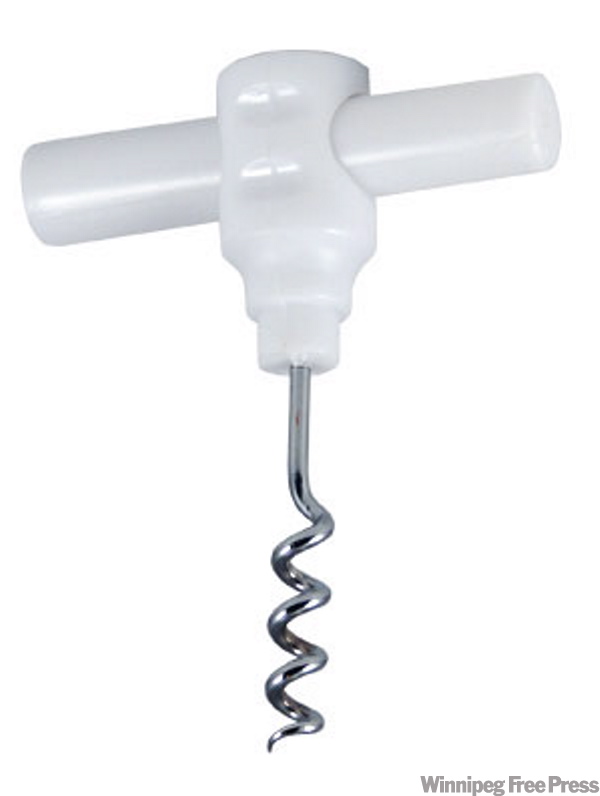
Pros: Small and cheap.
Cons: Lots of strength required, otherwise they’re virtually useless.
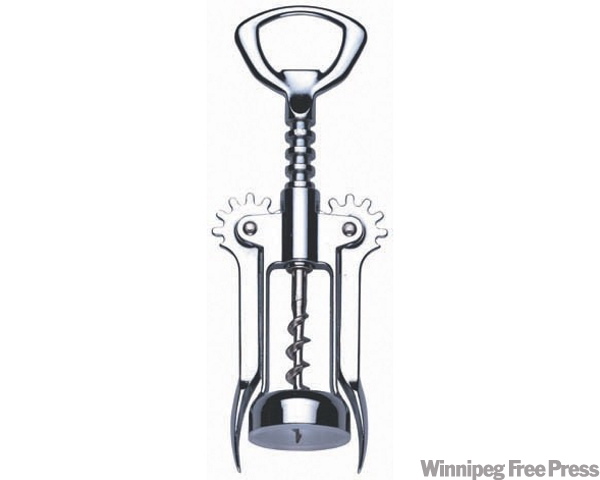
Winged/butterfly corkscrew
About: This has long been the most widely used corkscrew among your average wine drinker. You screw in the auger, push the wing-like handles down and wriggle the cork from the bottle.
Pros: A universally used corkscrew that’s fairly cheap and available everywhere.
Cons: Not very functional — the auger doesn’t dig into the cork as well as some other openers; struggles with dry or synthetic corks are common.
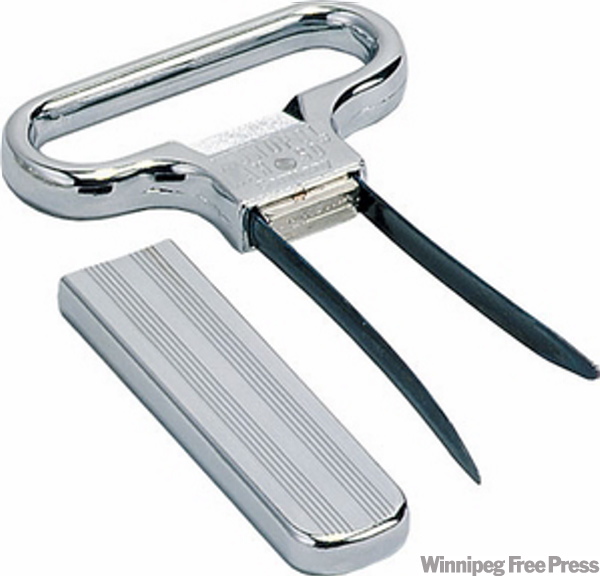
Ah-so corkscrew
About: The two prongs on this opener are gently slid/wriggled between the cork and the bottle neck, then the user twists and pulls at the same time, removing the cork without producing a hole in the stopper. The name comes from the exclamation "Ah, so that’s how it works!"
Pros: It’s small; there’s almost no chance of the cork crumbling; keeps corks intact in the event you want to use them for some sort of craft.
Cons: Not very common; takes practice to learn how to use.
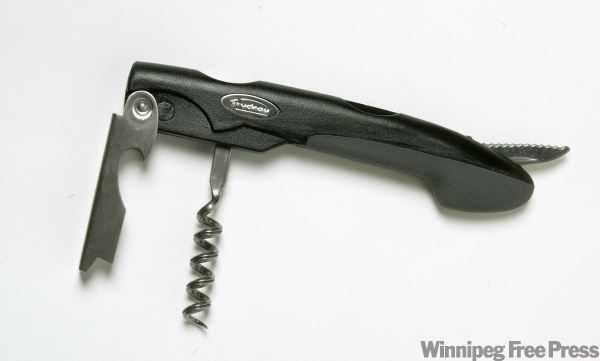
Waiter’s corkscrew
About: This opener is most commonly used by servers (who have to open more bottles of wine per day than most of us). The auger goes in, the fold-out metal piece rests on the lip of the bottle, and the cork is leveraged out. The best waiter’s corkscrews have a lever on the little metal ledge piece, which absorbs more resistance.
Pros: It’s one of the easiest, cheapest ways to open a bottle of wine.
Cons: Not as showy as some of the pricier, fancier openers; takes a bit of practice.
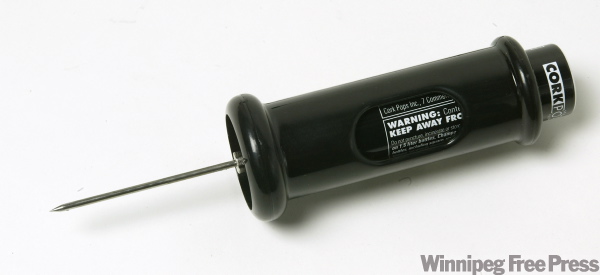
Gas-powered corkscrew
About: No, it doesn’t run on gasoline. A needle-shaped end is pushed into the cork, and the tip pokes out between the cork and the wine. A canister of low-pressure propellant discharges inert gas, which forces the cork up and out of the bottle.
Pros: Good for those who may otherwise have trouble gripping more conventional corkscrews.
Cons: Synthetic corks are tough with this opener.
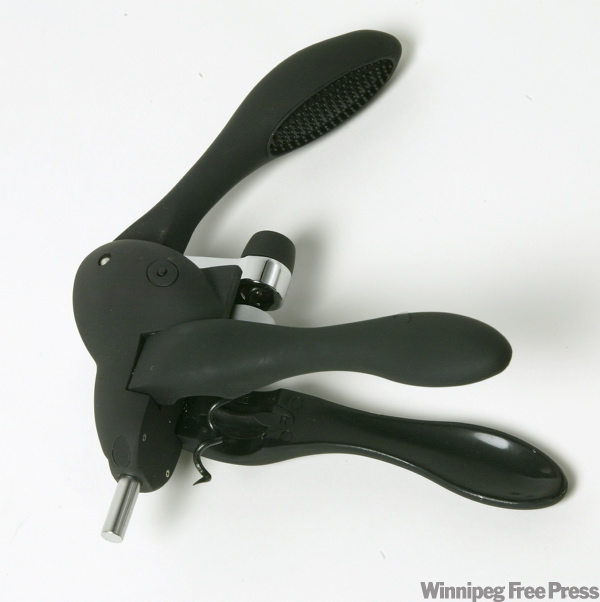
Lever model corkscrew
About: A popular model as of late. The two handles wrap around the neck, and with a quick push-pull motion, the auger plunges into the cork and removes the stopper — no twisting, fidgeting, etc.
Pros: Very simple to use; pretty darn stylish.
Cons: Cheap versions tend to come with poor augers that can stretch or break; it’s fairly large; better versions can cost upwards of $100.
***
Wine website of the week: Corkscrew types and reviews (www.wineintro.com/products/corkscrews/)
Decent overview of stoppers and accompanying pictures.
"ö "ö "ö
Rosemount 2008 Diamond Label Sauvignon Blanc (South Eastern Australia — $14.99, available at Liquor Marts and beyond)
There are distinct lime and grapefruit-rind aromas on the nose of this light, crisp Aussie white, with a light bell pepper/onion note that’s actually quite intriguing. Like many Sauvignon Blancs from the southern hemisphere in this price range, it’s a crisp, clean and tart white, delivering clean green apple lemon-lime flavours with medium acidity. Bottled under screwcap. 86/100
Cristar da Ribeira 2008 Quinta de Ventozelo White (Douro, Portugal — around $14, available at private wine stores)
A blend of five (almost unpronouncable) indigenous Mediterranean grapes, this unoaked white shows gorgeous aromas of pear, peach, fresh flowers, mineral and light spice. It’s a dry, lighter-bodied white with lovely lemon candy, mineral and tart peach flavours, with a light nuttiness to the medium finish. Not sure about availability — I picked it up at Banville & Jones. 88/100

Montpeyroux Estate 2007 Christian Audigier Syrah (Vin de Pays D’Oc, France — $19.95, available at Liquor Marts and beyond)
The eye-catching skull-themed wrap on the bottle was designed by infamous fashion designer Christian Audigier. Black cherry, warm toffee and plum aromas rule the roost here. It’s full-bodied and with fairly dry tannin, as well as a good balance of firm cherry, blueberry and espresso flavours to please most palates. Having said that, there are better values out there. Screwcap. 86/100
uncorked@mts.net
twitter.com/thegrapenut