

Get cultured
Making yogurt from scratch lets you control ingredients, avoid additives and feel good about yourself
Advertisement
Read this article for free:
or
Already have an account? Log in here »
To continue reading, please subscribe:
Monthly Digital Subscription
$1 per week for 24 weeks*
- Enjoy unlimited reading on winnipegfreepress.com
- Read the E-Edition, our digital replica newspaper
- Access News Break, our award-winning app
- Play interactive puzzles
*Billed as $4.00 plus GST every four weeks. After 24 weeks, price increases to the regular rate of $19.95 plus GST every four weeks. Offer available to new and qualified returning subscribers only. Cancel any time.
Monthly Digital Subscription
$4.99/week*
- Enjoy unlimited reading on winnipegfreepress.com
- Read the E-Edition, our digital replica newspaper
- Access News Break, our award-winning app
- Play interactive puzzles
*Billed as $19.95 plus GST every four weeks. Cancel any time.
To continue reading, please subscribe:
Add Free Press access to your Brandon Sun subscription for only an additional
$1 for the first 4 weeks*
*Your next subscription payment will increase by $1.00 and you will be charged $16.99 plus GST for four weeks. After four weeks, your payment will increase to $23.99 plus GST every four weeks.
Read unlimited articles for free today:
or
Already have an account? Log in here »
Hey there, time traveller!
This article was published 23/03/2011 (5489 days ago), so information in it may no longer be current.
LAST fall I was possessed of the idea of trying to make my own yogurt. This is the kind of fleeting thought that hits home cooks from time to time — trying to make something truly from scratch, such as wine, or cartoon-character birthday cakes, or bread. (I once also toyed with the idea of acquiring a kitchen-sized grain mill. Good grief.)
Most of the time, these sudden fits of creativity come and go. Sometimes, they stick and actually become a viable skill, even if it’s just a “culinary hobby.” Other times, you just learn your lesson — as in what is known at my house as the “Great Yogurt Experiment of 2010.” This was quickly revised to the “Great Yogurt Failure of 2010.”
It started with the idea of using the slow cooker to make homemade yogurt. Although I use the slow cooker once or twice a week all through the fall and winter, it barely gets used in the summer, so it feels a bit novel when I start using it again in the fall — and hey, why not multi-task with it?
After a couple of tries, I was reminded again why some appliances are task-specific — and while I don’t really want to fill up my kitchen with a bunch of single-use appliances, sometimes a couple of quarts of slightly sour, warmish milk is all you need to be reminded why they make those same task-specific appliances in the first place.
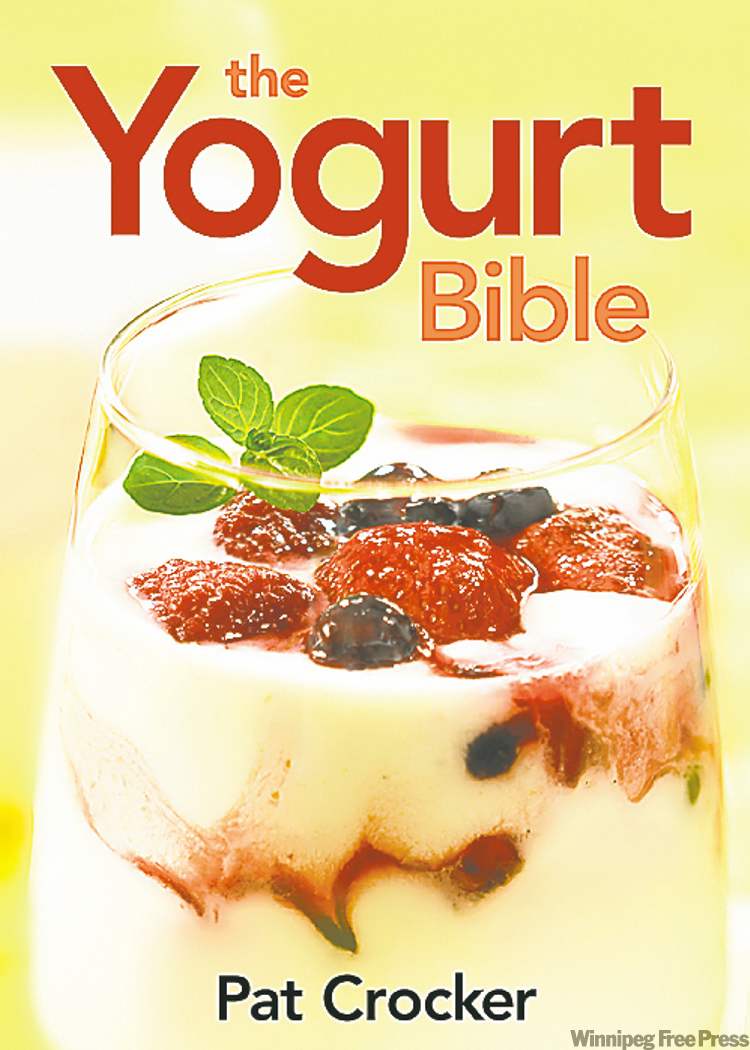
It was sort of amusing (I do mean “sort of”) when, a couple of weeks later, Pat Crocker’s The Yogurt Bible (Robert Rose, $28) landed on my desk. Here was the book with the kind of detail that could have saved me a week’s worth of culinary aggravation. And if you are really interested in learning how to make yogurt properly, this is the manual you need.
So why bother making your own yogurt? There’s a tower of research that suggests eating live-culture yogurt has health benefits. One plus in particular that Pat Crocker mentions is that because the live-culture proteins partially digest the milk, it makes our ability to digest yogurt a little easier — and that’s the reason why folks who don’t normally tolerate other dairy foods tend to do better with yogurt.
There is satisfaction in making your own foods from scratch (which is why most of us who like to cook do so) and homemade yogurt tastes fresher.
But the main reason for making it, I think, is control over your ingredients. The only thing that goes into homemade yogurt is what you put in it, and that means no gelatin, no added sugar or colouring or preservatives. Whether you are watching calories for yourself or avoiding additives for your kids, yogurt is a simple, easily made, whole food.
This week you’ll find the basic instructions for making a simple, plain yogurt. Following that, you’ll find a recipe for a main course and one for a dessert, using that same yogurt. Author Pat Crocker used a Donvier Yogurt Maker (ballpark price $50 — it would pay for itself if used regularly instead of buying commercial yogurt) to test all the recipes in her book. You can find her at www.foodwedsherbs.blogspot.com
All of the recipes are excerpted from The Yogurt Bible by Pat Crocker. www.robertrose.ca and reprinted with permission.
Basic Lower-Fat Milk Yogurt
Using instant skim milk powder gives a thicker yogurt that ferments faster. You can generally find live culture yogurt at supermarkets and whole food stores. Freeze-dried cultures can sometimes be found at the same places or online.
Food thermometer
Electric yogurt maker
1 l (4 cups) fresh nonfat (skim), 1% or 2% milk
60 ml (1/4 cup) instant skim milk powder
45 ml (3 tbsp) organic live-culture yogurt or 5 g freeze-dried yogurt culture
In a stainless-steel saucepan, heat milk to the scalding point (Heat milk over medium-low heat. Stir frequently until bubbles form around outside edge and steam starts to rise. Temperature should be approximately 77 C/170 F.) Add skim milk powder and stir until incorporated. Remove from heat and let cool to 43 C to 49 C (110 F to 120 F), stirring often. Cooling could take up to 1 hour.
In a bowl, combine starter yogurt or freeze-dried yogurt culture with about 125 ml (1/2 cup) of the cooled milk. Add to remaining cooled milk and stir well to distribute yogurt culture.
Pour into clean cups, secure lids if suggested by manufacturer, and place in yogurt maker. Set the time for 8 to 12 hours or minimum time recommended in manufacturer’s instructions. The longer yogurt ferments, the firmer and more tart it will be.
Do not disturb the milk as it is fermenting. Check one container after 8 hours and, if yogurt has reached the desired consistency, remove cups from yogurt maker, secure lids, if necessary, and refrigerate immediately. If it is not set to your liking, replace test cup and ferment for another 1 to 2 hours, or until desired consistency is reached. Refrigeration stops the fermentation process. Let yogurt chill completely before serving or using in recipes.
Baked Chicken and Mushroom Risotto
You could serve this easy chicken and creamy risotto as a luncheon dish or as a main-course dinner dish with a green salad or steamed vegetables. Don’t be tempted to omit the grated lemon zest, because it really sets up the taste.
2 litre (8-cup) baking dish, lightly oiled
3 skinless boneless chicken breasts (about 1 lb/500 g)
30 ml (2 tbsp) olive oil
15 ml (1 tbsp) butter
1 leek, white and light green parts, sliced
250 ml (1 cup) coarsely chopped mushrooms
375 ml (1 1/2 cups) arborio rice
1 litre (4 cups) chicken broth
15 ml (1 tbsp) grated lemon zest
125 ml (1/2 cup) frozen peas
250 ml (1 cup) plain yogurt
125 ml (1/2 cup) crumbled goat’s cheese
Preheat oven to 200 C (400 F). Slice chicken breasts into 1-cm (1/2-inch) wide strips. In a skillet, heat oil and melt butter over medium-high heat. Add chicken and cook, stirring frequently, for 3 minutes or until lightly browned on all sides. Using tongs, transfer to a plate and set aside.
Add leek and mushrooms to pan and cook, stirring frequently, for 5 minutes or until leek has softened. Add rice and cook, stirring constantly, for 2 to 3 minutes or until transparent. Scrape vegetables, rice and browned bits from bottom of pan into prepared baking dish. Stir in broth and lemon zest. Cover and bake in preheated oven for 20 minutes.
Add browned chicken pieces and peas to rice mixture and stir well. Cover and bake for 15 to 20 minutes or until rice is tender and chicken is no longer pink inside. Remove from oven and stir in yogurt and goat’s cheese. Serves 6.
Lemon Yogurt Cake
Very similar to a pound cake, but with less butter, this is a cake with substance.
25-cm (10-inch) springform pan, lightly oiled
250 ml (1 cup) butter, softened
250 ml (1 cup) granulated sugar
3 large eggs
15 ml (1 tbsp) grated lemon zest
5 ml (1 tsp) vanilla extract
625 ml (2 1/2 cups) all-purpose flour
5 ml (1 tsp) baking powder
5 ml (1 tsp) baking soda
2 ml (1/2 tsp) salt
250 ml (1 cup) plain yogurt
Lemon Icing
175 ml (3/4 cup) confectioner’s (icing) sugar
125 ml (1/2 cup) freshly squeezed lemon juice
45 ml (3 tbsp) plain yogurt

Preheat oven to 180C (350F). In a bowl, using a wooden spoon, cream together butter and sugar. Beat in eggs, one at a time, until smooth. Stir in lemon zest and vanilla. In a separate bowl, sift together flour, baking powder, baking soda and salt. Stir flour mixture into butter mixture alternately with yogurt, making three additions of flour mixture and two of yogurt, mixing well after each addition.
Scrape batter into prepared springform pan and bake for 1 hour or until a cake tester comes out clean when inserted into middle of cake. Let cake cool in pan for 5 minutes.
Lemon Icing: Meanwhile, in a bowl, combine sugar and lemon juice and mix well. Add yogurt. Remove ring from the pan and invert cake onto a serving plate. Spoon lemon icing over warm cake, allowing syrup to soak into the top and down the sides of the cake. Serves 6 to 8.
wendy.burke@freepress.mb.ca