

Mystery ingredient: Bitter leaf
Advertisement
Read this article for free:
or
Already have an account? Log in here »
To continue reading, please subscribe:
Monthly Digital Subscription
$1 per week for 24 weeks*
- Enjoy unlimited reading on winnipegfreepress.com
- Read the E-Edition, our digital replica newspaper
- Access News Break, our award-winning app
- Play interactive puzzles
*Billed as $4.00 plus GST every four weeks. After 24 weeks, price increases to the regular rate of $19.95 plus GST every four weeks. Offer available to new and qualified returning subscribers only. Cancel any time.
Monthly Digital Subscription
$4.99/week*
- Enjoy unlimited reading on winnipegfreepress.com
- Read the E-Edition, our digital replica newspaper
- Access News Break, our award-winning app
- Play interactive puzzles
*Billed as $19.95 plus GST every four weeks. Cancel any time.
To continue reading, please subscribe:
Add Free Press access to your Brandon Sun subscription for only an additional
$1 for the first 4 weeks*
- Enjoy unlimited reading on winnipegfreepress.com
- Read the E-Edition, our digital replica newspaper
- Access News Break, our award-winning app
- Play interactive puzzles
*Your next Brandon Sun subscription payment will increase by $1.00 and you will be charged $17.95 plus GST for four weeks. After four weeks, your payment will increase to $24.95 plus GST every four weeks.
Read unlimited articles for free today:
or
Already have an account? Log in here »
Hey there, time traveller!
This article was published 02/04/2011 (5519 days ago), so information in it may no longer be current.
What is it?
Bitter leaf is a leafy herb indigenous to Africa, and grows in most parts of sub-Saharan Africa. The bitter leaf is derived from the leaves of an evergreen shrub called Vernonia, found all over the continent. The leaf is eaten as a vegetable in many areas of east Africa, and known as “mujonso” in Tanzania, which is the country that is most traditionally linked to this plant.
Looks like:
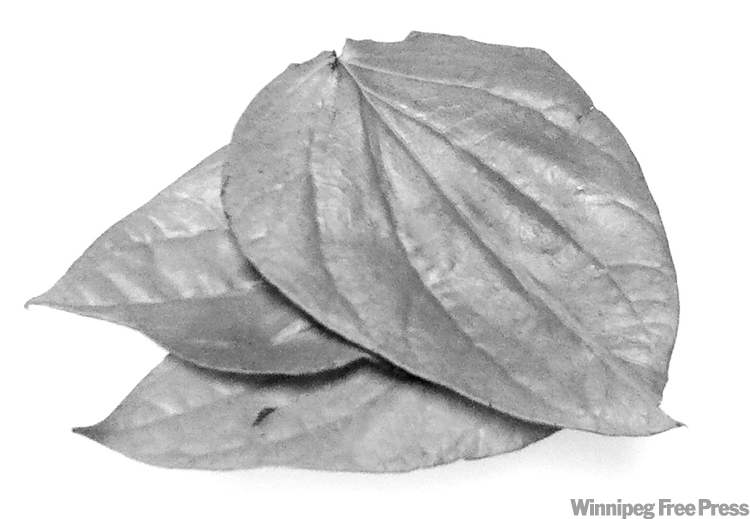
The green leaves are oblong to lance-like in shape, are veined and have soft, pale hairs on the underside of the leaf. Bitter leaf is available in pith, leaf and root form.
Tastes like:
True to its name, the leaf is bitter, but despite its taste is used as a complementary ingredient in many meals.
Used in:

In many countries in east Africa the herb is prepared the same way we would prepare spinach. The leaf is also included in many different soups and teas.
Bitter leaf is believed to help restore the stamina when consumed in the form of a tonic food called ndole, a stew of nuts and fish or ground beef.
Bitter leaf is also believed to have medicinal value, and is employed in treating parasites, and to bring relief of fever and intestinal complaints.
Found at:
You can find fresh bitter leaf at Dino’s Grocery Mart, 460 Notre Dame Ave. Be sure to poke your head into the back produce department to ask for the fresh leaves.