

Sorting through vegetable oil claims
Advertisement
Read this article for free:
or
Already have an account? Log in here »
To continue reading, please subscribe:
Monthly Digital Subscription
$1 per week for 24 weeks*
- Enjoy unlimited reading on winnipegfreepress.com
- Read the E-Edition, our digital replica newspaper
- Access News Break, our award-winning app
- Play interactive puzzles
*Billed as $4.00 plus GST every four weeks. After 24 weeks, price increases to the regular rate of $19.95 plus GST every four weeks. Offer available to new and qualified returning subscribers only. Cancel any time.
Monthly Digital Subscription
$4.99/week*
- Enjoy unlimited reading on winnipegfreepress.com
- Read the E-Edition, our digital replica newspaper
- Access News Break, our award-winning app
- Play interactive puzzles
*Billed as $19.95 plus GST every four weeks. Cancel any time.
To continue reading, please subscribe:
Add Free Press access to your Brandon Sun subscription for only an additional
$1 for the first 4 weeks*
*Your next subscription payment will increase by $1.00 and you will be charged $16.99 plus GST for four weeks. After four weeks, your payment will increase to $23.99 plus GST every four weeks.
Read unlimited articles for free today:
or
Already have an account? Log in here »
Hey there, time traveller!
This article was published 27/07/2011 (5364 days ago), so information in it may no longer be current.
Vegetable oil shelves at the supermarket are crowded with the usual suspects (canola, olive, soybean, safflower, sunflower, peanut, corn, etc.).
But with many sporting “Cholesterol Free,” “0g Trans Fat” and “Natural” on their labels, things can get confusing.
To help translate a few of those terms, we talked with registered dietitian Marisa Moore, an Atlanta-based spokeswoman for the American Dietetic Association.
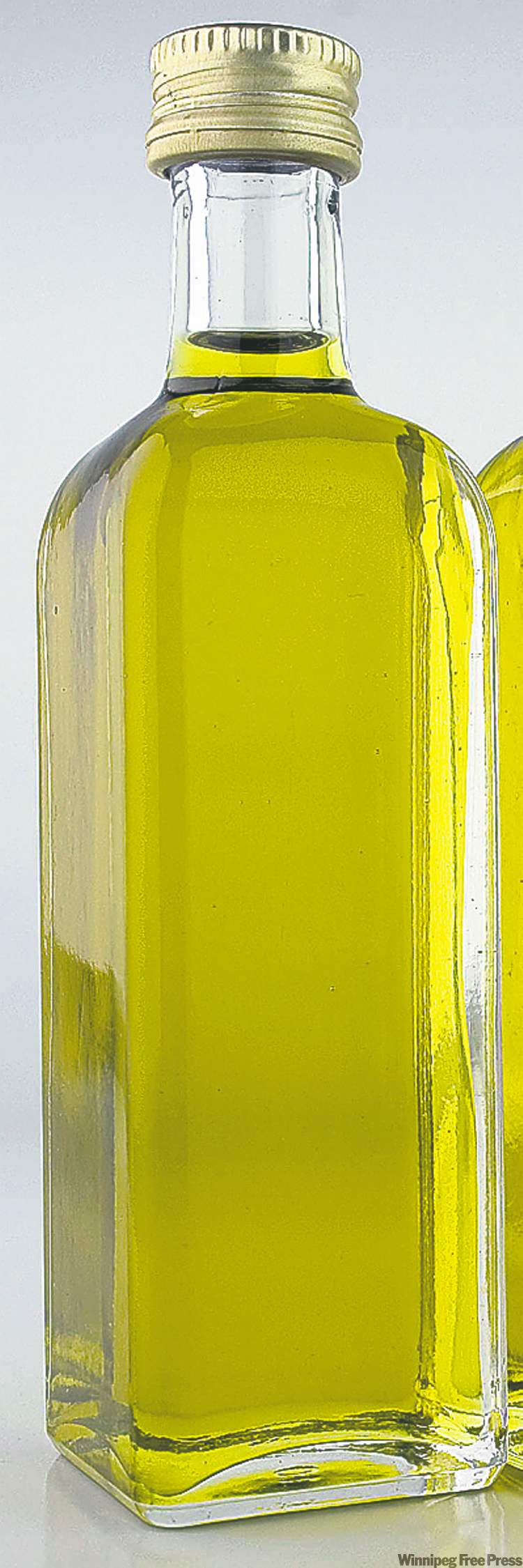
Q: What does “vegetable oil” really mean?
A: Most of the time, when you see the term vegetable oil, it refers to soybean oil. … Take a look at the ingredient list and more often than not you’ll see soybean oil listed as the only ingredient. (If) you see a combination of soybean oil plus canola oil or safflower oil, for example, it’s a blend of different plant-based oils.
Q: Why do some labels say No Cholesterol? Isn’t it found only in animal products?
A: The goal might be to attract those who are trying to lower their cholesterol who may not understand that vegetable oil doesn’t naturally have cholesterol in it.
Q: Are there trans fats in vegetable oils?
A: There wouldn’t be trans fats in the liquid vegetable oils. When you get into the solid vegetable oils, the partially hydrogenated ones — such as shortening products — then, yes, you will get trans fats there.
Q: What about “natural”? Is there a government definition for that?
A: Sometimes the term natural is used as a marketing tool. That may mean they haven’t added anything to it. Because there’s no set definition, you can’t really tell.
Q: Any last bit of advice?
A: Stick with heart-healthy oils — (such as) olive oil, canola oil, peanut oil. Then look at reducing the amount. A lot of people don’t realize heart healthy oils help to lower your total cholesterol levels versus saturated ones that increase them.
— Chicago Tribune