Filipino food isn’t well known, for reasons that seem mystifying to its fans
Familiarity breeds appetite: Learning names of Filipino food dishes makes them more appealing on buffets, takeout counters
Advertisement
Read this article for free:
or
Already have an account? Log in here »
To continue reading, please subscribe:
Digital Subscription
One year of digital access for only $1.44 a week*
- Enjoy unlimited reading on winnipegfreepress.com
- Read the E-Edition, our digital replica newspaper
- Access News Break, our award-winning app
- Play interactive puzzles
*Billed as $5.77 plus GST every four weeks. After 52 weeks, price increases to the regular rate of $19.95 plus GST every four weeks. Offer available to new and qualified returning subscribers only. Cancel any time.
To continue reading, please subscribe:
Add Free Press access to your Brandon Sun subscription for only an additional
$1 for the first 4 weeks*
- Enjoy unlimited reading on winnipegfreepress.com
- Read the E-Edition, our digital replica newspaper
- Access News Break, our award-winning app
- Play interactive puzzles
*Your next Brandon Sun subscription payment will increase by $1.00 and you will be charged $17.95 plus GST for four weeks. After four weeks, your payment will increase to $24.95 plus GST every four weeks.
Read unlimited articles for free today:
or
Already have an account? Log in here »
Hey there, time traveller!
This article was published 09/01/2013 (5037 days ago), so information in it may no longer be current.
If the restaurant scene in any city reflects its population, you would expect Filipino food to be massive in Winnipeg.
After all, roughly one in every 14 Winnipeggers can claim some Philippine descent, while one in 20 cited Tagalog as the main language they speak at home when the 2011 census was conducted.
Winnipeg’s Filipino community is large enough to support roughly two dozen restaurants, most of them buffets or takeout counters, plus a couple of Filipino food trucks and a handful of sit-down restaurants that offer made-to-order menus.

But it’s rare to hear Winnipeggers say, “Hey, let’s go out for Filipino tonight” the way restaurant-goers commonly propose going out for sushi, pizza or even pho. Filipino food just isn’t that well known outside the Philippine-Canadian community, for reasons that seem mystifying to its fans.
“I’ve always wondered about this,” says Ron Cantiveros, the publisher of Winnipeg’s Filipino Journal and a fan of all manner of food. “I think it comes down to what we’re used to back in the Philippines, where there’s a lot of street food and mom ‘n’ pop cafes, but not a lot of sit-down restaurants.”
The vast majority of Winnipeg’s Filipino restaurants are casual places that offer a number of dishes on a buffet or steam table. Filipino customers already know the dishes, while non-Filipinos will eat them without actually knowing what they are — and thus miss out on the chance of recognizing them by name.
“You’re not looking at it on a menu, the way you’re looking at 200 variations of pho at Vietnamese restaurants,” offers Cantiveros, who figures familiarity is the main knock against Filipino cuisine.
But there’s also the matter of some ingredients that don’t jibe with the most timid of Western palates — at least not during the days before nose-to-tail cooking became trendy and offal and charcuterie started showing up on high-end menus.
One of the most popular Filipino dishes, a beef stew known as kalderata, is flavoured with liver paste. Blood is the key ingredient in dinuguan, a common Filipino pork stew. Oxtail and sometimes tripe are the stars in kare kare, a peanut-sauce stew.

None of these comfort-food dishes are the least bit challenging, especially in comparison to the fertilized duck eggs known as balut, which contain partly developed embryos, or bopis, a dish of pork-lung stew.
“That stuff scares finicky Filipino folk, too,” says Cantiveros, citing bopis and balut as treats savoured by first-generation arrivals. “I don’t really eat it.”
At the other extreme of the accessibility scale, the Philippine spring rolls known as lumpia are so common in Winnipeg, they’re dished out by food trucks during the summer and served all year as bar snacks at at least two Corydon Avenue lounges. And pancit, a sour-sweet dish of fried glass noodles, is usually an instant hit with anyone who tries it.
Like any other cuisine, Philippine food is a fusion of culinary influences that reflect centuries of human history. The original inhabitants of the Pacific Island archipelago were already blessed with a variety of fish, fruit and vegetables. Starting in the 16th century, they acquired a taste for pork from Spanish silver traders and steamed buns and noodles from the Chinese merchants who met them halfway. Modern Philippine cuisine also has Japanese, Malaysian and Vietnamese influences.
Filipino restaurants are concentrated in the city’s northwest quadrant, along Sargent Avenue in the West End, Isabel Street in the inner city and sprinkled throughout the North End, Tyndall Park, Garden City and the Maples.
If you happen to find yourself in a Philippine spot, the following glossary may help you figure out what’s on the steam table.
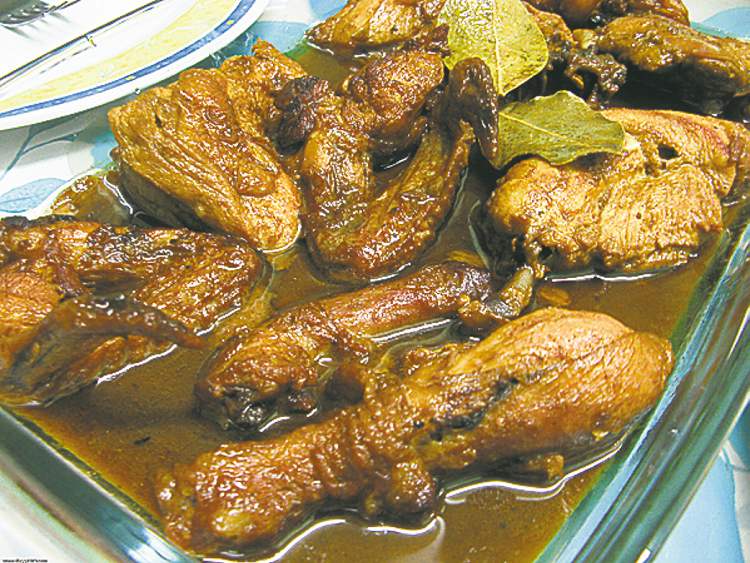
Adobo: Chicken, pork or other meat cooked in vinegar, soy sauce and garlic. Not to be confused with Spanish adobo — a red-pepper marinade — although it appears that’s what inspired the name.
Balut: A fertilized duck egg, eaten as street food in the Philippines and available in Winnipeg at Asian groceries. The very definition of an acquired taste, the partly developed embryo inside the shell may be the ultimate challenge to the western palate. Few Canadian-born Pinoy profess to actually like the stuff.
Bopis: Pork-lung stew. Don’t be scared off by the idea: patrons of Philippine buffet restaurants find it quite tasty after placing it on their plates without knowing what it is. Lung has a mild taste, for offal, especially compared to gamier animal parts, such as liver or kidneys.
Dinuguan: Pork or offal in a pork-blood sauce. Again, don’t be turned off by the blood: This is a tasty, savoury stew.
Halo-halo: A sweet and very filling dessert mixture of palm fruit, young coconut, jackfruit, boiled beans and other fruit, topped with evaporated milk and shaved ice.
Kalderata: A hearty stew of beef and potatoes in a tomato-based sauce that usually also includes peppers, carrots and — the secret ingredient — a smidgeon of liver paste. You won’t taste the latter, but it adds complexity to the dish.
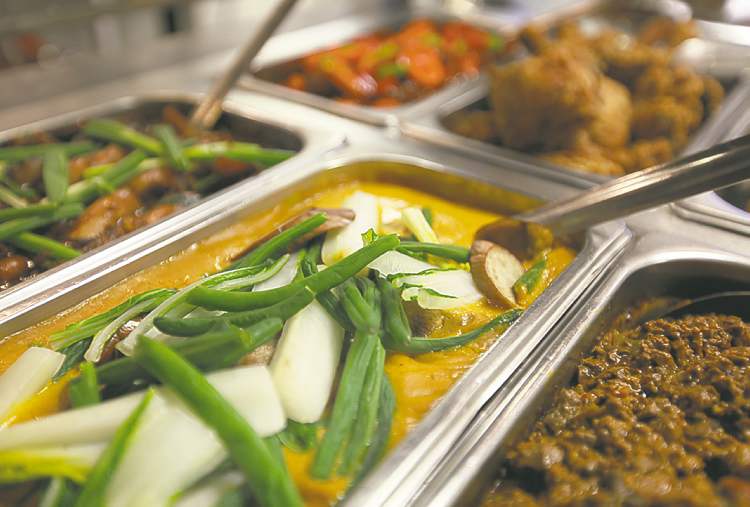
Kare kare: A slow-cooked stew of oxtail in peanut sauce with green beans, eggplant and other veggies. Sometimes served with a small dish of salty shrimp paste to kick up the seasoning.
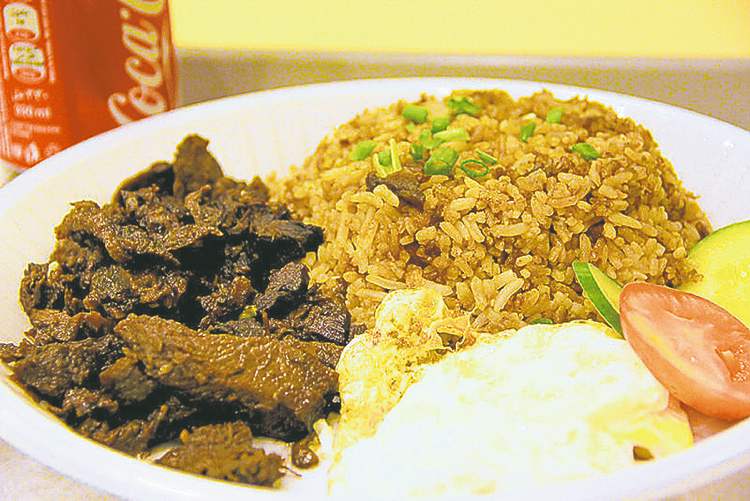
Longganisa: A small, fat pork sausage, sweetened with brown sugar or cane sugar. At breakfast, a dish of longganisa served with an egg on top of rice is known as longsilog.
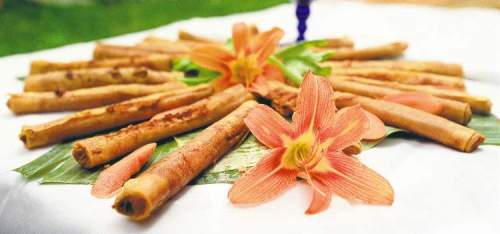
Lumpia: Philippine spring rolls. Larger ones usually contain vegetables, while smaller, cigarillo-sized lumpia usually contain ground pork. Arguably the best-known Philippine foodstuff in Winnipeg; there are two lumpia carts at St. Norbert Farmers’ Market during the summer.
Okoy: Shrimp and bean sprout fritters, adapted last century from the Japanese omelettes known as okonomiyaki.
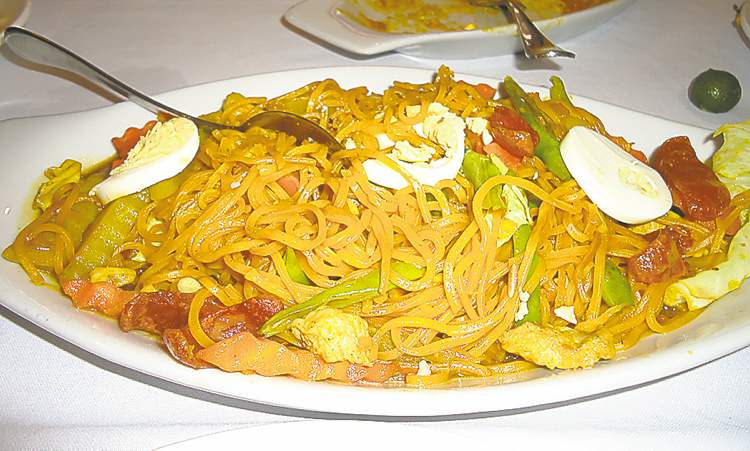
Pancit: Along with lumpia, this noodle dish is arguably the most accessible Philippine foodstuff. The most common variety is pancit bihon, glass noodles fried with soy sauce, fish sauce, lime juice, strips of cabbage, bits of sweet cured sausage and sometimes small shrimp. You are guaranteed to find pancit at any Filipino takeout counter or buffet.
Sinangag: Fried rice with garlic. A base for a number of breakfast dishes.
Siopao: Fluffy, steamed dumplings, similar to the barbecue pork buns served as part of Chinese dim sum. Usually stuffed with meatball filling, or hard-boiled egg pieces with hoisin-flavoured shredded chicken or pork. The name is a variant of siu bau, or Chinese pork buns.
Sisig: A time-consuming dish of pork jowl, belly or shoulder marinated in vinegar or citrus juice, braised until soft, chopped into small pieces and then fried up with onions and chicken liver. There’s also squid sisig, tuna sisig and in San Francisco, a sisig taco truck. Expect pork sisig in Winnipeg.
Tapa: Cured slices of beef, usually fried or grilled. On top of rice with an egg at breakfast time, it becomes tapsilog.
Tinapa: Smoked fish. Milkfish, also known as bangus, becomes bangsilog over rice at breakfast.
Tocino: Pork in a sweet marinade, fried until the sugars caramelize. Served over rice with an egg, it becomes tosilog.
Turon: A deep-fried banana or ripe-plantain fritter. Basically, a dessert spring roll. Greasy, addictive and fantastic. Try to get them while they’re still warm. Often on sale at Filipino groceries, at the checkout stand.
bartley.kives@freepress.mb.ca