

Break out ice cream maker for homemade gelato, sorbet or sherbet

Advertisement
Read this article for free:
or
Already have an account? Log in here »
To continue reading, please subscribe:
Monthly Digital Subscription
$1 per week for 24 weeks*
- Enjoy unlimited reading on winnipegfreepress.com
- Read the E-Edition, our digital replica newspaper
- Access News Break, our award-winning app
- Play interactive puzzles
*Billed as $4.00 plus GST every four weeks. After 24 weeks, price increases to the regular rate of $19.95 plus GST every four weeks. Offer available to new and qualified returning subscribers only. Cancel any time.
Monthly Digital Subscription
$4.99/week*
- Enjoy unlimited reading on winnipegfreepress.com
- Read the E-Edition, our digital replica newspaper
- Access News Break, our award-winning app
- Play interactive puzzles
*Billed as $19.95 plus GST every four weeks. Cancel any time.
To continue reading, please subscribe:
Add Free Press access to your Brandon Sun subscription for only an additional
$1 for the first 4 weeks*
*Your next subscription payment will increase by $1.00 and you will be charged $16.99 plus GST for four weeks. After four weeks, your payment will increase to $23.99 plus GST every four weeks.
Read unlimited articles for free today:
or
Already have an account? Log in here »
Hey there, time traveller!
This article was published 26/06/2013 (4675 days ago), so information in it may no longer be current.
Here’s my first confession. I’m not big on kitchen gadgets. I have a few standbys — my stalwart silver Kitchen-Aid mixer, my elderly Braun coffee grinder.
But our compact galley kitchen doesn’t have much room for space-hogging unitasker appliances. I also have a slightly puritanical commitment to the idea that most cooking requires only a sharp knife and a good saut© pan.
Despite these constraints, I still splashed out on an ice cream maker a few summers ago. Some frozen desserts can be made without this handy small appliance — as long as you have a freezer, you can pull off a gorgeous pistachio semifreddo or coffee granita — but others demand special equipment.
It started with my obsession with green tea ice cream. I was determined to make it at home, so I bought an ice cream maker, a basic model that chills and churns using a pre-frozen bowl.
And, yes, my first batch of green tea ice cream was pretty swell — creamy, cool and a sophisticated designer shade of green. It was also fairly finicky to make. The recipe called for a base of egg yolks, milk and heavy cream. Often called French-style, this method involves making a temperamental custard, straining the mixture through a sieve, and cooling it in an ice bath.
After an initial burst of activity, my ambitious ice cream-making dreams dwindled.
So, argh. Here’s my second confession. My ice cream maker was taking up prime kitchen real estate and producing almost nothing.
It might have ended as another lesson in the pitfalls of impulse-purchasing. Then I hit on a recipe for lemon buttermilk sherbet in an old Bon Appetit magazine. It required only four ingredients, a quick stir, a stint in the fridge, and then the ice cream maker could do its stuff.
This recipe was much easier and quicker than French-style ice cream and, as a bonus, was quite a bit healthier. (Buttermilk, despite its name, is only one per cent milk fat.) And it was delicious.
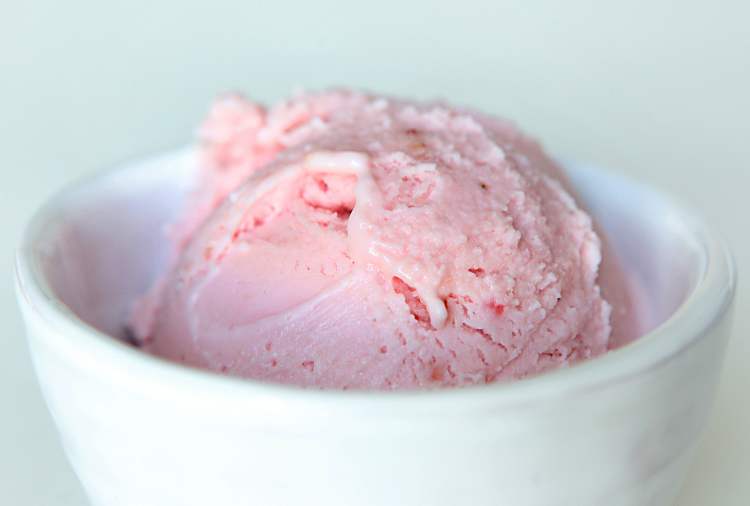
Since then, I generally look past the custard-based ice creams, heavy with whipping cream, to sorbets (usually made with fruit), sherbets (often made with fruit and a bit of dairy) and gelati (which use more milk and less cream).
Another family favourite is a spiced sorbet made with orange juice, honey and spices. This recipe originally came from Bon Appetit but has been picked up, with minor variations, by a lot of food bloggers. You can see why: The cool citrus base plays beautifully with a hit of heat from ginger, cloves and cinnamon.
Gelati, made with milk, has a softer, denser texture than ice cream and a lower butterfat percentage. Some Italian gelati use an egg base, but Sicilian-style usually relies on just a smidge of cornstarch as a stabilizer, making it easy to whip up. Fans of the Sicilian style will tell you that this simplicity makes for intense flavours. (I tried out a deep, dark chocolate this week.)
One note: You can’t quite replicate Italian gelato at home. And it’s not just because you’re not standing near the Pantheon in Rome when you’re eating it. Gelateria-style treats are churned at a slower speed and made and stored at slightly warmer temperatures than conventional ice creams. Some gelati fans try to achieve that gorgeous consistency by serving the mixture right out of the machine after it has been churned, rather than freezing it.
Keep in mind: Homemade sorbets, sherbets and gelati will be meltier than commercial versions. These recipes don’t make big batches — most ice cream makers handle only a litre at a time. And they don’t have the long freezer life of commercial brands. You’ll need to consume them within a day or two of making.
Still, with these fresh tastes, that shouldn’t be hard.
alison.gillmor@freepress.mb.ca
Spiced Honey-Orange Sorbet
750 ml (3 cups) water
250 ml (1 cup) granulated sugar
125 ml (1/2 cup) clover honey
30 ml (2 tbsp) finely grated orange peel
15 ml (1 tbsp) chopped peeled fresh ginger
2 whole cloves
1 cinnamon stick, about 5 cm (2 in) long
1 small bay leaf
500 ml (2 cups) chilled fresh orange juice
45 ml (3 tbsp) fresh lemon juice
In a large heavy pot, combine water, sugar, honey, orange peel, ginger, cloves, cinnamon and bay leaf. Bring to boil over medium-high heat, stirring until sugar dissolves. Boil until syrup is thick and mixture is reduced to 500 ml (2 cups), about 10-15 minutes. Discard bay leaf. Cool syrup completely.
Strain syrup into medium bowl. Add chilled orange juice and lemon juice. Process mixture in ice cream maker according to manufacturer’s instructions. Transfer sorbet to container with lid, cover and freeze until set, about 3 hours. Serve within 3 days. Let soften slightly before serving.
Tester’s notes: The mix of chilly citrus and spice really makes this dessert. Be sure the mixture is completely chilled before it goes into the ice cream maker. Clover honey will add a layer to the flavour, but regular honey will do just fine.
— adapted from Bon Appetit
Lemon Buttermilk Sherbet
500 ml (2 cups) granulated sugar
125 ml (1/2 cup) fresh lemon juice (about 3-4 lemons)
30 ml (2 tbsp) finely grated lemon peel
900 ml (4 cups) buttermilk
Stir sugar, lemon juice and peel in medium bowl. Add buttermilk; stir until sugar dissolves. Chill until very cold, about 4 hours. Process mixture in an ice cream maker according to manufacturer’s instructions. Transfer to container with lid and freeze until set, about 3 hours. Serve within 3 days. Let soften slightly before serving.
Tester’s notes: I love the fresh, tart flavours of lemon and the tang of the buttermilk. While this sherbet doesn’t have a ton of butterfat, it does have a lot of sugar. You might be tempted to cut back the amount, but changing the ratio of sugar will change the freezing point and affect the texture.
— adapted from Bon Appetit
Sicilian-Style Chocolate Gelato
750 ml (3 cups) whole milk, divided
175 ml (3/4 cup) granulated sugar
30 ml (2 tbsp) cornstarch
175 ml (3/4 cup) cocoa
Pinch salt

In a medium saucepan over medium heat, bring 500 ml (2 cups) of the milk to a simmer, then remove from heat. In a medium bowl, whisk together sugar, cornstarch, cocoa and salt and add remaining 250 ml (1 cup) milk, stirring until smooth. Add cocoa mixture to hot milk, and cook over medium heat, stirring constantly, until mixture bubbles slightly at edges, then cook 1 minute more. Mixture should be dark, glossy and slightly thickened. Set aside to cool, then cover with plastic wrap, pressing wrap directly onto surface of mixture, and refrigerate overnight. Process mixture in an ice cream maker according to manufacturer’s directions, then transfer to container with lid and freeze until set, about 3 hours. Serve within 3 days. Let soften slightly before serving.
Tester’s notes: This gelato had a dense creaminess and an intensely chocolate taste. My cooked chocolate mixture was smooth, but if any lumps make it past your assiduous stirring, you might want to strain the mix through a fine-mesh sieve.
— adapted from Saveur
Studying at the University of Winnipeg and later Toronto’s York University, Alison Gillmor planned to become an art historian. She ended up catching the journalism bug when she started as visual arts reviewer at the Winnipeg Free Press in 1992.
Our newsroom depends on a growing audience of readers to power our journalism. If you are not a paid reader, please consider becoming a subscriber.
Our newsroom depends on its audience of readers to power our journalism. Thank you for your support.
Studying at the University of Winnipeg and later Toronto’s York University, Alison Gillmor planned to become an art historian. She ended up catching the journalism bug when she started as visual arts reviewer at the Winnipeg Free Press in 1992.
Our newsroom depends on a growing audience of readers to power our journalism. If you are not a paid reader, please consider becoming a subscriber.
Our newsroom depends on its audience of readers to power our journalism. Thank you for your support.
Advertisement Advertise With Us
Advertisement Advertise With Us
History
Updated on Wednesday, June 26, 2013 6:27 AM CDT: adds photo, formats text, changes headline