The Winnipeg Free Press would like to show you notifications for breaking news and noteworthy local journalism.
No Thanks
Allow
Notification Settings
This browser doesn't support push notifications at the moment. Check browsers features, update your browser or try to use one from the list of recommended to manage your notifications settings:
Firefox (27+)
Google Chrome (30+)
Safari ( MacOS 13+ with browser 16.1+ and iOS 16.4+ ) / Note make sure Push API support enabled under Settings > Safari > Advanced > Experimental Features
Microsoft Edge
If you wish to manage your notification settings from this browser you will need to update your browser's settings for this site. Just click button below and allow notifications for this site
Note Safari 16.4+ working on iOS devices also need this site app to be installed at device's Home Screen for Push Notifications to work
Notifications are blocked for this site. If you wish to manage your notification settings from this browser you will need to update your browser's settings. Usually you'd need to click on site options icon to the left of address bar and change notifications preferences/permissions from there
In Sicily, a traditional meal-on-the-run comes in the form of arancini, or deep-fried rice balls dusted with bread crumbs and stuffed with the likes of cheese, peas, tomato sauce or ground beef.
*Billed as $4.00 plus GST every four weeks. After 24 weeks, price increases to the regular rate of $19.95 plus GST every four weeks. Offer available to new and qualified returning subscribers only. Cancel any time.
Monthly Digital Subscription
$4.99/week*
Enjoy unlimited reading on winnipegfreepress.com
Read the E-Edition, our digital replica newspaper
Access News Break, our award-winning app
Play interactive puzzles
*Billed as $19.95 plus GST every four weeks. Cancel any time.
To continue reading, please subscribe:
Add Free Press access to your Brandon Sun subscription for only an additional
*Your next subscription payment will increase by $1.00 and you will be charged $16.99 plus GST for four weeks. After four weeks, your payment will increase to $23.99 plus GST every four weeks.
In Sicily, a traditional meal-on-the-run comes in the form of arancini, or deep-fried rice balls dusted with bread crumbs and stuffed with the likes of cheese, peas, tomato sauce or ground beef.
Hey there, time traveller!
This article was published 16/10/2013 (4563 days ago), so information in it may no longer be current.
In Sicily, a traditional meal-on-the-run comes in the form of arancini, or deep-fried rice balls dusted with bread crumbs and stuffed with the likes of cheese, peas, tomato sauce or ground beef.
In South America, workers in a rush may palm an empanada. In South Asia and East Africa, the samosa fills the same role.
Every region of the planet boasts some version of a protein-filled pastry that can be held in one hand and eaten in the midst of getting somewhere without creating a mess on the bus, in a car or on the street.
In the world’s most populous nation, a portable meal may arrive in the form of the steamed buns known as bao — yeasty, fluffy Chinese snacks that have spread across Asia and are finding their way into North American restaurant kitchens.
Anyone who has ever gone for dim sum has probably encountered char siu bao, the oversized steamed buns filled with Chinese barbecued pork. Savvy brunch-goers avoid these things because they know consuming an entire steamed pork bun will quickly fill them up. There are simply too many things to taste at dim sum to devote every recess of your stomach to yeasty dough, as addictive as it is.
In response to this dilemma, restaurants that offer smaller, lighter versions of bao have sprouted up across the continent. In the Chicago area, the regional Lettuce Entertain You restaurant chain has opened up six Wow Bao fast-food kiosks, which offer small steamed dumplings stuffed with fillings ranging from kung pao chicken to coconut custard.
In New York City and Toronto, the higher-end Momofuku Noodle Bar — part of Korean-American chef David Chang’s growing empire — serves up taco-like open-face bao filled with the likes of shiitake mushrooms with hoisin sauce, lamb with sichuan pepper and even pastrami with sauerkraut.
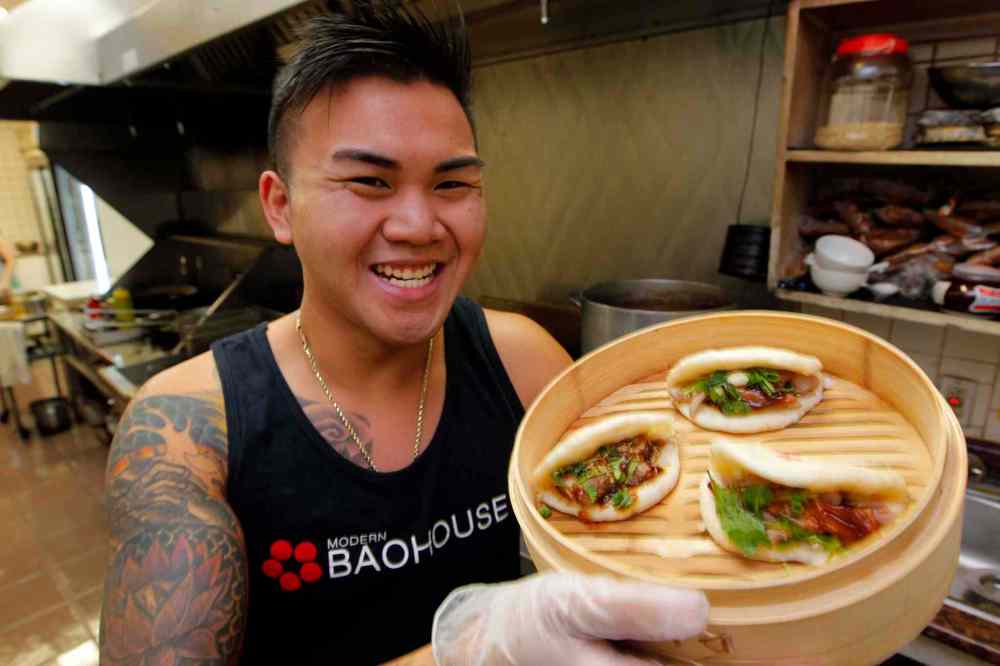
And in Winnipeg, young Vietnamese-Canadian entrepreneur Tommy Nguyen has launched a catering service called Modern Baohouse, which places the likes of Peking duck, South Asian butter chicken and Philippine cured pork belly into folded crescents of steamed bao dough.
Nguyen, 24, got the bao bug from BaoHaus, another New York City restaurant that’s helped popularize steamed dough.
“I wanted to start something similar to it, but I wanted to infuse it with different cultures,” says Nguyen, a self-trained chef who got his start working the line at a Perkins franchise. “A lot of people nowadays lose their culture. I want to show off what I grew up with.”
So far, Nugyen’s hand-held Asian fusion offerings can only be found though his online-only delivery service, www.modernbaohouse.com. His bao also appears sporadically on the takeout shelves of Winnipeg Street supermarket Lucky Grocery — when he can get his hands on the see-through plastic clamshell cases he needs to show off his handiwork.
His ultimate goal is to open a casual bao shop of his own.
“I want to make it fast-food style, like a smaller version of a Subway,” he says. “Eventually, my dream is to turn it into a franchise.”
In the meantime, Winnipeggers interested in filling their bellies with bao don’t have to wait. One version or another of stuffed pastries are available in dozens of local Asian groceries and restaurants.
But since almost every form of bao looks pretty much the same from the outside, you need to know what you’re looking at before you buy: The same fluffy white exterior can conceal fillings as diverse as vanilla custard and pork sausage.
For the purposes of identification, here are some of the most common varieties of bao on sale in Winnipeg retailers and restaurants:
Boris Minkevich / Winnipeg Free Press
Tommy Nguyen is hoping to open a casual bao shop of his own. For the time being, his Asian fusion creations are available only through his online delivery service, and once in a while at Lucky Grocery.
The Chinese original
What it’s called: Bao or dunbao, the latter being a term for “big bun.”
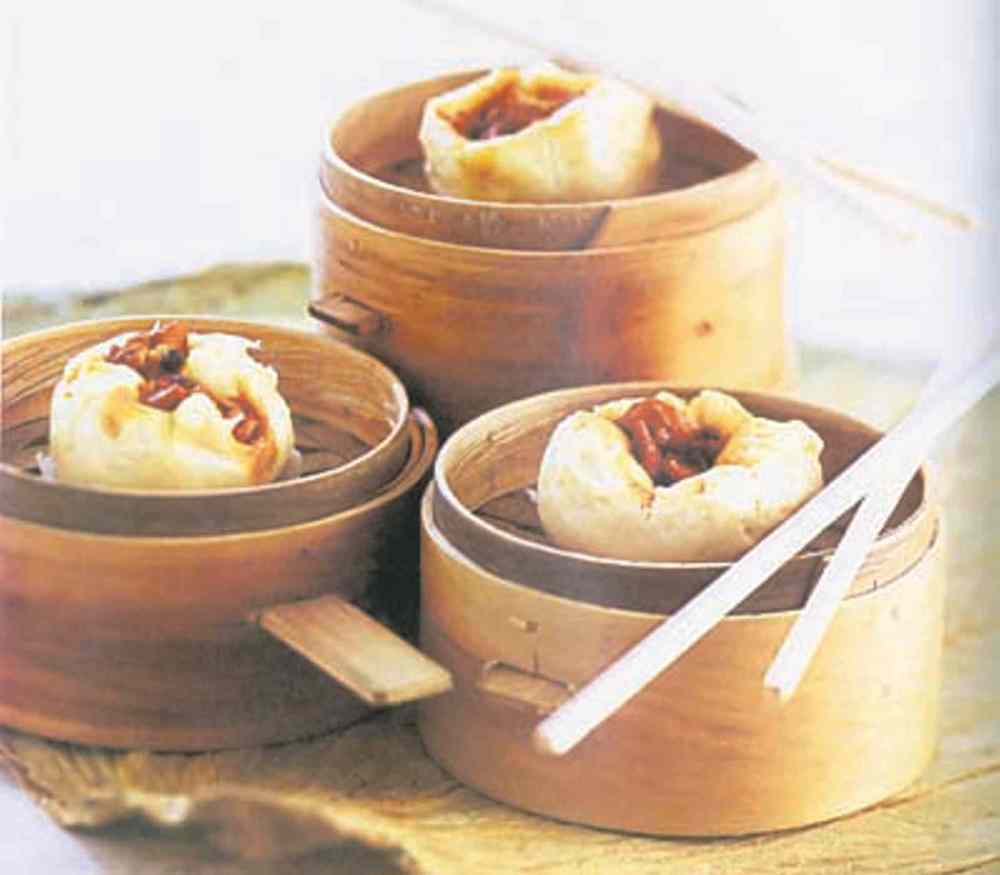
Where you’ll find it: On dim sum carts in Chinese restaurants and in both the fresh and frozen-food aisles of Asian grocers. To cook at home, simply steam until heated through.
What’s inside: The savoury bao are usually filled with morsels of barbecue-flavoured pork. The dessert versions can filled with vanilla custard or thick sweet pastes made of red beans or lotus seeds.
The Philippine version
What it’s called: Siopao, which was brought to the Philippines by Fujianese traders.
Where you’ll find it: In the takeout counters at Asian grocers and in Filipino restaurants. Some pan-Asian Winnipeg restaurants also serve a deep-fried version.
What’s inside: Usually minced chicken or pork, egg and Chinese sausage. When in doubt, ask.
CP
The Vietnamese take
What it’s called: Banh bao, which travelled south from China to Vietnam.
Where you’ll find it: Asian grocers and Vietnamese butcher shops.
What’s inside: Usually minced pork, mushrooms, half a boiled egg and a slice of Chinese sausage.
Tribune Media MCT
Asian fusion
What’s it’s called: Bao, generally.
Where you’ll find it: Modern Baohouse accepts orders at www.modernbaohouse.com.
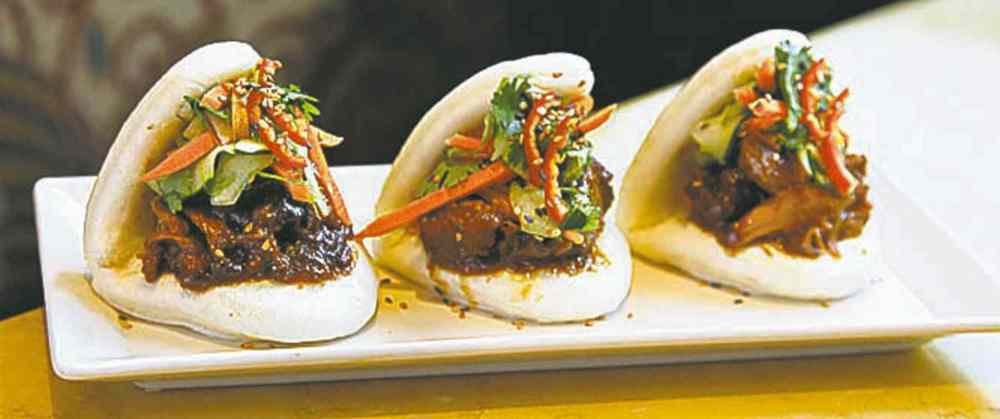
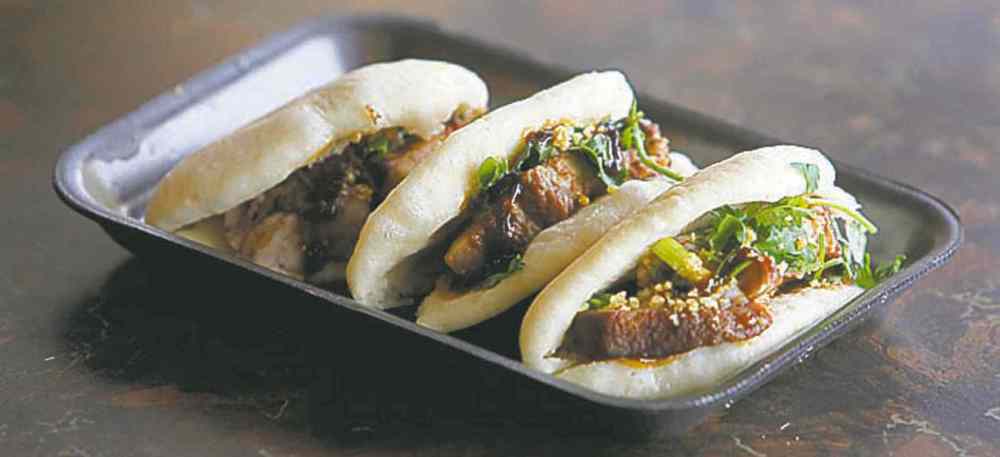
What’s inside: Like a Taiwanese version of a taco, fusion bao tend to be open-faced, not stuffed. This provides some degree of certainty regarding what you are about to eat — but that spoils the surprise.