

Carrot cake: A long, rich history
Advertisement
Read this article for free:
or
Already have an account? Log in here »
To continue reading, please subscribe:
Digital Subscription
One year of digital access for only $75*
- Enjoy unlimited reading on winnipegfreepress.com
- Read the E-Edition, our digital replica newspaper
- Access News Break, our award-winning app
- Play interactive puzzles
*Billed as $5.77 plus GST every four weeks. After 52 weeks, price increases to the regular rate of $19.95 plus GST every four weeks. Offer available to new and qualified returning subscribers only. Cancel any time.
Monthly Digital Subscription
$4.99/week*
- Enjoy unlimited reading on winnipegfreepress.com
- Read the E-Edition, our digital replica newspaper
- Access News Break, our award-winning app
- Play interactive puzzles
*Billed as $19.95 plus GST every four weeks. Cancel any time.
To continue reading, please subscribe:
Add Free Press access to your Brandon Sun subscription for only an additional
$1 for the first 4 weeks*
- Enjoy unlimited reading on winnipegfreepress.com
- Read the E-Edition, our digital replica newspaper
- Access News Break, our award-winning app
- Play interactive puzzles
*Your next Brandon Sun subscription payment will increase by $1.00 and you will be charged $17.95 plus GST for four weeks. After four weeks, your payment will increase to $24.95 plus GST every four weeks.
Read unlimited articles for free today:
or
Already have an account? Log in here »
Hey there, time traveller!
This article was published 08/03/2014 (4458 days ago), so information in it may no longer be current.
Since medieval times, carrots have been used in cakes because sweeteners were scarce and expensive. Carrots, which contain more sugar than any other vegetable besides the sugar beet, were much easier to come by and were used to make all sorts of sweet desserts.
So who baked the first carrot cake? Who knows? — there will always be a dispute about that. Their popularity was probably revived during and after the Second World War due to sugar-rationing.
In the early 1960s, carrot cakes became commonly available in restaurants and cafeterias in the United States. First as a novelty item, but people liked them so much the cakes soon became standard dessert fare. The Food Network has listed carrot cake, with its cream-cheese icing, as No. 5 of the top five fad foods of the 1970s. I don’t think it is a fad, I’m sure it is here to stay.
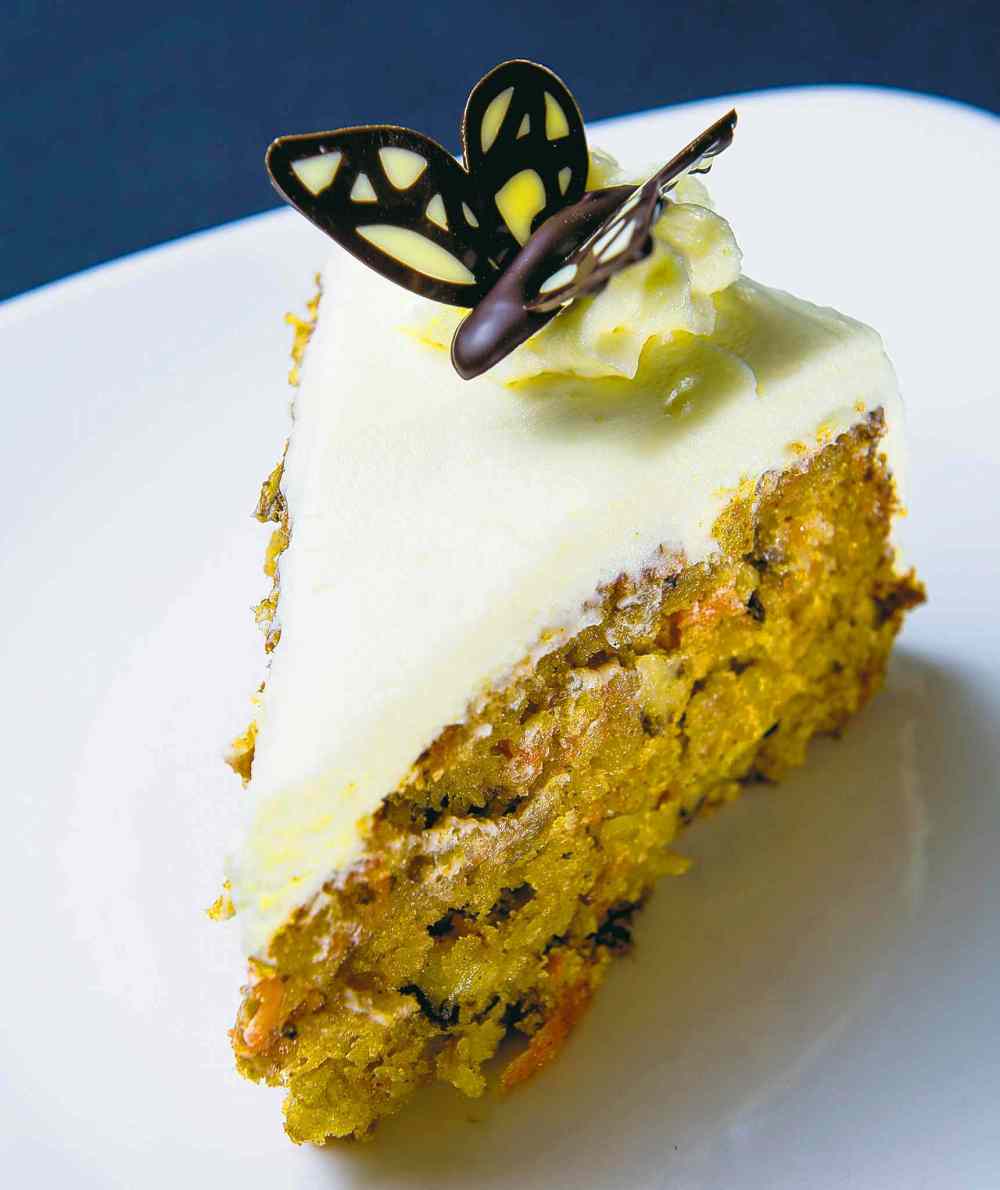
Carrot cake was voted as the favourite cake in the United Kingdom, according to a survey in the Radio Times in 2011.
The recipe below has evolved and changed as I have baked it over the years, to what really works for me in flavour and moisture.
If you want to add a different flavour to this cake, substitute one-quarter of the carrots with finely-grated parsnip.
You can also sprinkle toasted coconut on top and around the sides. There I go changing it again!
Carrot cake
625 ml (21/2 cups) flour
10 ml (2 tsp) baking powder
8 ml (11/2 tsp) baking soda
15 ml (3 tsp) mixed spice
3 ml (1/2 tsp) cinnamon
1.5 ml (1/4 tsp) ginger
5 ml (1 tsp) salt
325 ml (11/2 cup) sugar
300 ml (11/4 cup) oil
4 eggs
5 ml (1 tsp) vanilla
500 ml (2 cups) carrots, grated
250 ml (1 cup) canned crushed pineapple
125 ml (1/2 cup) walnuts, chopped
65 ml (1/4 cup) smooth apricot jam
1. Preheat the oven at 180 C
2. Sift together the dry ingredients.
3. Beat the oil, eggs, sugar and vanilla together for 3 minutes
4. Add the carrots, pineapple, nuts and jam. Mix well.
5. Fold in the dry ingredients.
6. Pour into an 8-inch spring form cake pan.
7. Bake for 45 minutes.
8. Cool for 10 minutes before removing.
Cover with frosting when cool.
Cream cheese frosting
250 g (8 oz) cream cheese, softened
65 ml (1/4 cup) butter, softened
21/2 ml (1/2 tsp) finely grated lemon rind
21/2 ml (1/2 tsp) vanilla

250 ml (1 cup) icing sugar
1. Cream butter and cream cheese together until combined
2. Add vanilla and lemon rind
3. Fold in icing sugar and mix until smooth