

New cookbook explores the food and flavours of the boreal forest

Advertisement
Read this article for free:
or
Already have an account? Log in here »
To continue reading, please subscribe:
Digital Subscription
One year of digital access for only $1.44 a week*
- Enjoy unlimited reading on winnipegfreepress.com
- Read the E-Edition, our digital replica newspaper
- Access News Break, our award-winning app
- Play interactive puzzles
*Billed as $5.77 plus GST every four weeks. After 52 weeks, price increases to the regular rate of $19.95 plus GST every four weeks. Offer available to new and qualified returning subscribers only. Cancel any time.
To continue reading, please subscribe:
Add Free Press access to your Brandon Sun subscription for only an additional
$1 for the first 4 weeks*
- Enjoy unlimited reading on winnipegfreepress.com
- Read the E-Edition, our digital replica newspaper
- Access News Break, our award-winning app
- Play interactive puzzles
*Your next Brandon Sun subscription payment will increase by $1.00 and you will be charged $17.95 plus GST for four weeks. After four weeks, your payment will increase to $24.95 plus GST every four weeks.
Read unlimited articles for free today:
or
Already have an account? Log in here »
Hey there, time traveller!
This article was published 29/10/2014 (4229 days ago), so information in it may no longer be current.
With its simple, seasonal, fresh flavours, northern food has become a cool new cooking trend. The New Nordic cuisine has been sweeping through Scandinavia and other parts of Europe. Canada, despite being vastly, frigidly, undeniably northern, is lagging behind.
Michele Genest’s new food book could change that.
Part cookbook and part travelogue, The Boreal Feast (Harbour Publishing, 248 pages, $28.95) is a culinary exploration of Earth’s largest biome. The Whitehorse, Yukon-based Genest journeys through the boreal forest that stretches around the top of the world, meeting hunters, fishers, foragers, chefs and indigenous elders. Her book celebrates a bounty of boreal foods, including wild berries, mushrooms, herbs, fish and game, and the seasonal feasts that bring northern people together.
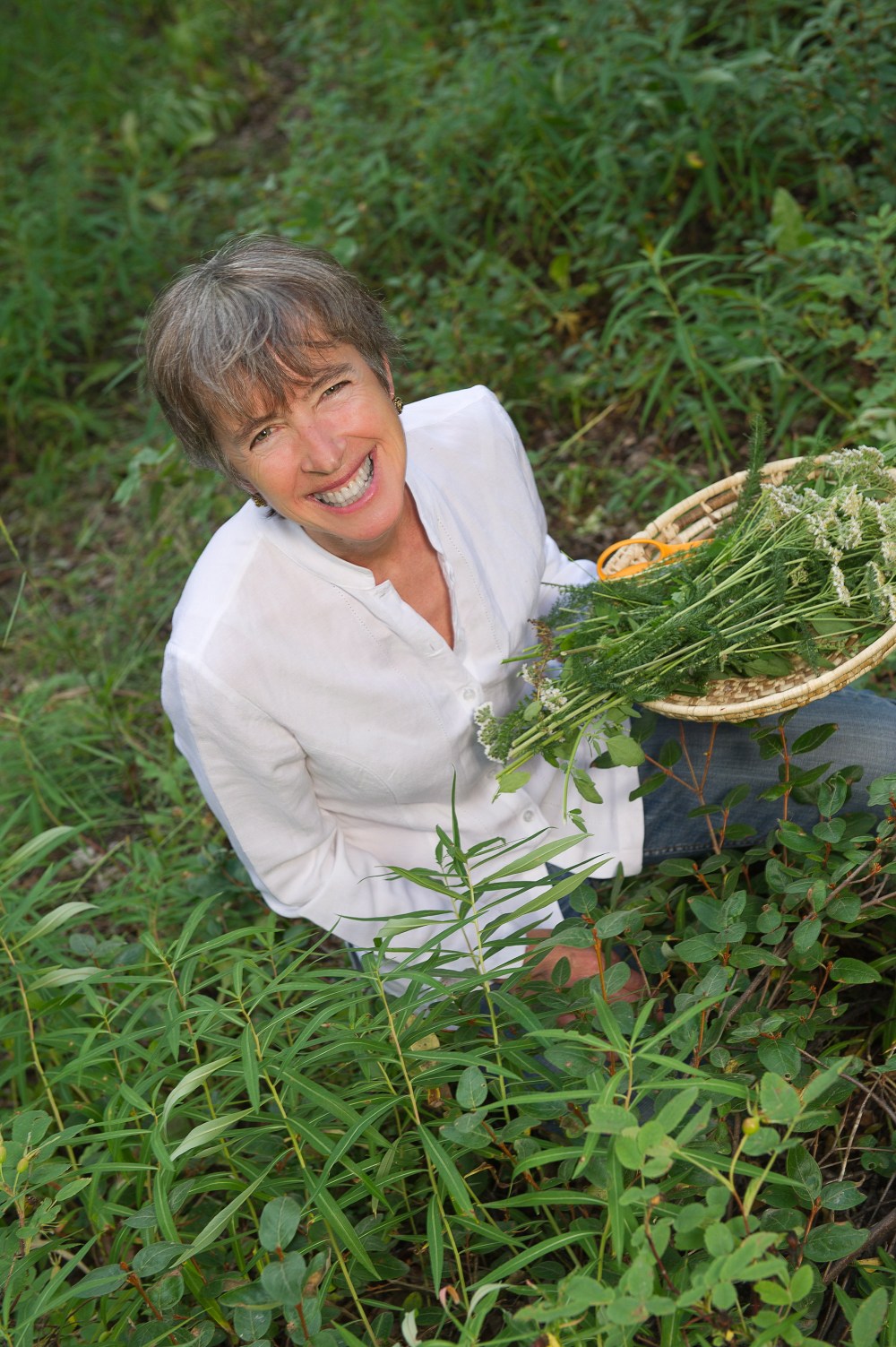
Following up on her award-winning debut cookbook, The Boreal Gourmet, Genest starts with Canada, ranging from the Pacific Northwest across the Yukon to northern Quebec. But she also travels throughout Sweden, Norway and Finland, finding different culinary traditions but also many commonalities.
“We share a topography and some of our flora and fauna,” Genest points out. Wild berries, for example, are popular in Canada, especially blueberries and cranberries.
“And berry-picking and foraging are a big, culturally important thing to do in Scandinavia,” says Genest. “In season, there are wild lingonberries in the supermarkets.”
There are differences as well, including the extent to which some northern foods make it down south. Take reindeer, for instance. “On our first night in Sweden we had a fresh reindeer roast. In a Stockholm restaurant we had reindeer with juniper berries,” recalls Genest. “We ate smoked reindeer heart. We had salted reindeer, cold smoked, hot smoked.”
“It was cool to see how reindeer informs Swedish cuisine,” says Genest. “It was just part of the everyday.”
Partly this is possible because reindeer are herded in Sweden, traditionally by the Sami people. “Reindeer have been used in a controlled and managed fashion for centuries, which is different from the Canadian North,” explains Genest. “In Canada, you can get moose or caribou, but you have to know a hunter.”
Then there are ingredients that are widely available but just aren’t well known in southern Canada, like spruce tips, the tender little shoots that appear on the ends of spruce branches in spring. “In Whitehorse, where I live, they usually come into season late May or early June,” says Genest. “But that’s variable, depending on the winter you’ve had.”
Genest describes the taste of spruce tips as “resiny, a little bit citrusy and bright.” They work well in a range of dishes, from pastas to crème brulée, but you need to test for pungency. Add too much, as Genest did when she was developing a drink recipe, and your dish can taste like Pine-Sol.
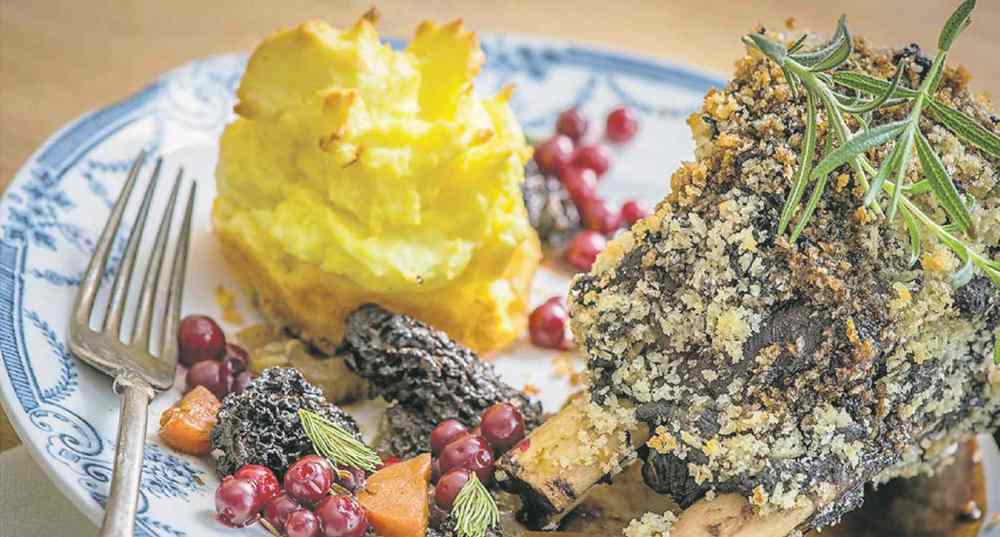
Genest is passionate about seasonal northern ingredients, including arctic char and whitefish, birch syrup and soapberries, shaggy mane mushrooms and wild-growing herbs like yarrow, Artemisia tilesii and pineapple weed. But she also offers substitutions for cooks whose foraging probably only extends to the local grocery store.
“I’m not a purist,” Genest declares. “I’m really interested in finding out more about the food of the boreal forest, but I don’t mind combining northern foods with southern foods.”
The recipes in The Boreal Feast are arranged seasonally, from foods that mark the summer solstice to dishes that offer comfort and cheer in the darkness of winter. The feasts range from an intimate Thanksgiving dinner for four to a fish fry-up for 40. Genest also includes a section on the boreal pantry. These recipes, for foods like pickled spruce tips and cloudberry jam, tie into the recent mania for canning, fermenting and preserving.
The book is about food, but it’s also about place. “Through my love of the food of the boreal forest, I started to feel quite protective of it, to think of it as something precious that we have to take care of,” Genest says. This seems especially important as the North increasingly becomes a flashpoint for environmentalist concerns, indigenous issues and political battles.
“The thing we have to remember is that it’s this beautiful, gorgeous resource, a source of lumber, gas and minerals, all those things that we look to the forest with an eye for extracting,” says Genest. “But we also need to remember what an incredible important place it is for us, the humans and the animals who live there.”
Recipes taken from The Boreal Feast by Michele Genest, Harbour Publishing, $28.95.
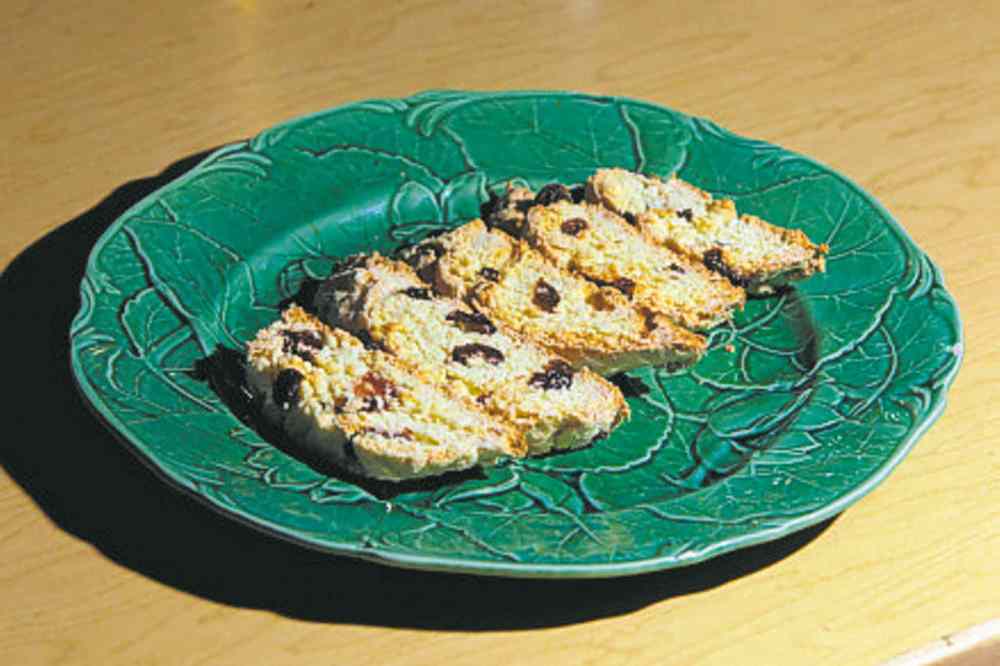
Wild Cranberry Biscotti
3 eggs
5 ml (1 tsp) almond extract
180 ml (3/4 cup) dried wild lowbush cranberries (lingonberries), or substitute cultivated dried cranberries
475 ml (2 cups) all-purpose flour, divided
125 ml (1/2 cup) white sugar
5 ml (1 tsp) baking powder
Pinch of salt
Preheat oven to 150 C (300 F) and line a baking sheet with parchment paper.
Beat eggs and almond extract together.
Toss cranberries with 15 ml (1 tbsp) of the flour and set aside.
Combine remaining flour with dry ingredients. Add egg mixture, stirring with a wooden spoon until dough forms. Add cranberries at the end.
With floured hands, divide dough in half. On a lightly floured counter, shape each half into a log about 25 cm (10 inches) long and 5 cm (2 inches) wide. Place the logs on the baking sheet. leaving about 7.5 cm (3 in) between them to make room for spreading.
Bake for 35 to 40 minutes, until firm to the touch.
Remove from the oven and cool for 10 to 15 minutes on a rack.
With a serrated knife, cut each log on the diagonal into 2-cm (3/4-inch) slices.
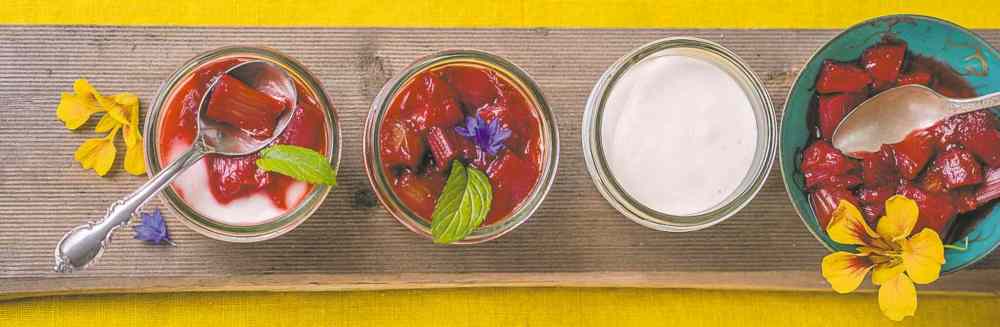
Arrange slices (on their sides) on parchment-lined baking sheet. Bake at 150 C (300 F) for 10 to 12 minutes, turn over, and bake for another 10 to 12 minutes.
Remove from the oven, cool on a rack, and when thoroughly cool, store in a cookie tin.
Makes about 40 biscotti.
Tester’s notes: These are real Italian-style biscotti, not the cookie-ish version often found in North America. With no added fat, they bake up fairly dry and resolutely crunchy and need to be softened by being dipped in coffee or maybe dessert wine.
I found my biscotti to be browning a bit too fast, and reduced the time in the second baking to about seven minutes a side.
Doris Brändström’s Sandsopp Soup
30 g (1 oz) dried sandsopp mushrooms (or see substitutions in the tester’s notes)
2 medium shallots, finely chopped
1 clove garlic, minced (optional)
22 ml (1 1/2 tbsp) butter
45 ml (3 tbsp) flour
15 ml (1 tbsp) tomato paste
1 l (4 cups) vegetable broth
30 g (1 oz) blue cheese
250 ml (1 cup) crème fraiche or 35 per cent cream
Salt and pepper to taste
5 ml (1 tsp) lemon juice (optional)
Minced parsley to garnish
Crumble the dried mushrooms and soak them in 250 ml (1 cup) hot water until softened. Strain through a sieve and reserve the liquid.
Combine soaked mushrooms, shallots and garlic (if using) in a food processor and whizz to a coarse paste.
In a medium saucepan, melt butter over medium heat. Sauté mushroom and shallot mixture until browned, about 5 minutes.

Sprinkle flour over the mixture, stir vigorously (the mixture burns easily) and cook for 2 minutes. Add tomato paste, stir in vegetable stock and mushroom water (leaving any gritty bits behind). Bring to the boil, reduce heat to low and whisk in the blue cheese and creme fraiche or cream.
Simmer over low heat for about 30 minutes, uncovered, whisking occasionally. Taste and season with salt and pepper. Stir in lemon juice, if using. Sprinkle with minced parsley before serving.
Tester’s note: One ounce of dried mushrooms might not seem like a lot, but it packs a lot of concentrated taste in this creamy, complex soup. The Swedish version uses the velvet bolete mushroom, not a common subspecies in Canada, but Genest suggests that dried porcini, available in many supermarkets, will be a close substitute.
Make sure you reserve the incredibly flavourful mushroom water. In some of my more scatterbrained cooking moments, I have strained valuable liquids right down the kitchen sink.
alison.gillmor@freepress.mb.ca
Studying at the University of Winnipeg and later Toronto’s York University, Alison Gillmor planned to become an art historian. She ended up catching the journalism bug when she started as visual arts reviewer at the Winnipeg Free Press in 1992.
Our newsroom depends on a growing audience of readers to power our journalism. If you are not a paid reader, please consider becoming a subscriber.
Our newsroom depends on its audience of readers to power our journalism. Thank you for your support.
Studying at the University of Winnipeg and later Toronto’s York University, Alison Gillmor planned to become an art historian. She ended up catching the journalism bug when she started as visual arts reviewer at the Winnipeg Free Press in 1992.
Our newsroom depends on a growing audience of readers to power our journalism. If you are not a paid reader, please consider becoming a subscriber.
Our newsroom depends on its audience of readers to power our journalism. Thank you for your support.
Advertisement Advertise With Us
Advertisement Advertise With Us
History
Updated on Wednesday, October 29, 2014 6:58 AM CDT: Corrects spellings of crème brulée, Doris Brändström, replaces photo, changes headline