Less-popular cuts of beef take a bit more care and prep, but payoff can be huge
Advertisement
Read this article for free:
or
Already have an account? Log in here »
To continue reading, please subscribe:

Digital Subscription
One year of digital access for only $205*
- Enjoy unlimited reading on winnipegfreepress.com
- Read the E-Edition, our digital replica newspaper
- Access News Break, our award-winning app
- Play interactive puzzles
*First annual payment billed as $205.00 + GST for one year. This annual subscription will automatically renew at $233.00 + GST every 52 weeks (10% off the regular annual price of $259.35). Offer available to new and qualified returning subscribers only. Cancel any time.
To continue reading, please subscribe:
Add Free Press access to your Brandon Sun subscription for only an additional
$1 for the first 4 weeks*
- Enjoy unlimited reading on winnipegfreepress.com
- Read the E-Edition, our digital replica newspaper
- Access News Break, our award-winning app
- Play interactive puzzles
*Your next Brandon Sun subscription payment will increase by $1.00 and you will be charged $17.95 plus GST for four weeks. After four weeks, your payment will increase to $24.95 plus GST every four weeks.
Read unlimited articles for free today:
or
Already have an account? Log in here »
Hey there, time traveller!
This article was published 24/06/2015 (4037 days ago), so information in it may no longer be current.
If the high price of beef is messing up your summer grilling plans, don’t freak out. There’s no need to plunk down big bucks on the most expensive cuts.
Tenderloin is easy to cook, T-bones look impressive on a plate and rib-eyes satisfy that craving for beefiness. But there are other cuts of steak that are just as easy to prepare, pack even more of a flavour wallop and will not drain your bank account as quickly.
So-called flat steaks, in particular, are fantastic on the grill. Flank steak is amazingly easy to prepare, skirt steak is a flavour-packed revelation and hanger steak may just become your favourite steak of all, once you figure out how to trim it.
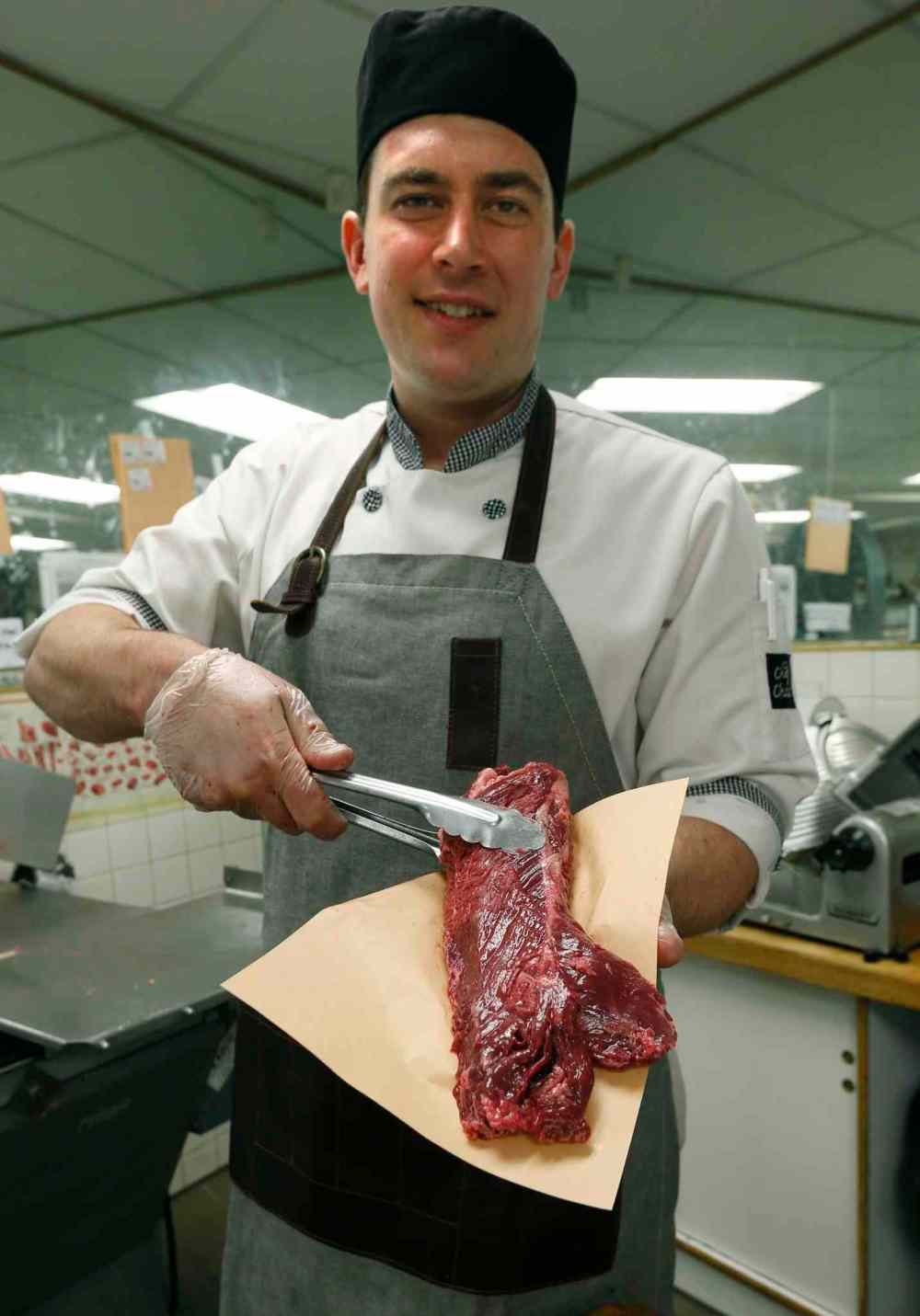
Here’s a primer on three cuts you may have not tried at home. I encourage you to do so, for the sake of both your tastebuds and your wallet.
Flank steak
You’ve probably eaten flank steak all of your life, even you haven’t made it at home. That’s because this wide, flat and very lean cut is the piece of cow most commonly sliced into Chinese restaurant stir-fries, fried up on the griddle to serve as the filling for Philly cheesesteaks and is used in other dishes that require lean strips of beef.
Flank comes from the belly of the cow, where it serves as abdominal muscle. It’s almost as lean as beef tenderloin but is chewier and has far more flavour.
Flank is tender enough, however, that it doesn’t need to be steeped in marinade for hours, like the tougher and tougher-to-find skirt steak. As a result, flank is often used by home cooks in place of skirt as the chief ingredient in fajitas.
Flank is the perfect cut of steak for serving a family or a group of dinner guests, as it can be grilled and then sliced into toppings for steak salads, tacos or sandwiches. It may also be served family-style as a main course, albeit less economically.
Flank usually requires no trimming, provided your butcher has removed the large fatty cover from the slab of meat. Marinate it for flavour, if you like, or simply apply a rub before grilling.
I prefer to do both, starting with a light marinade (try leftover dry white wine, olive oil, minced garlic and crushed rosemary) and finishing up with a rub (I like smoked paprika, New Mexico chili powder, dry mustard, salt, pepper and a bit of brown sugar). Keep it low in acid, as there’s no need to tenderize flank steak.
The ease of cooking flank has made it a more popular cut of steak in recent years, and the retail price tends to reflect the demand. Sobey’s, for example, sells flank for $23.12 a kilogram, which is comparable to standard cuts of steak. This price is offset, however, by the fact you’ll typically use flank slices as a salad topping or taco filling, allowing it to go further than a rib-eye or T-bone. As well, all the flank you purchase by weight is edible flesh; there are no bones to discard and little fat or sinew.
Grill an intact slab of flank steak over high heat, no more than two minutes per side, to ensure it remains medium rare. Flank is so thin, it can cook through completely if left unattended by an inattentive griller.
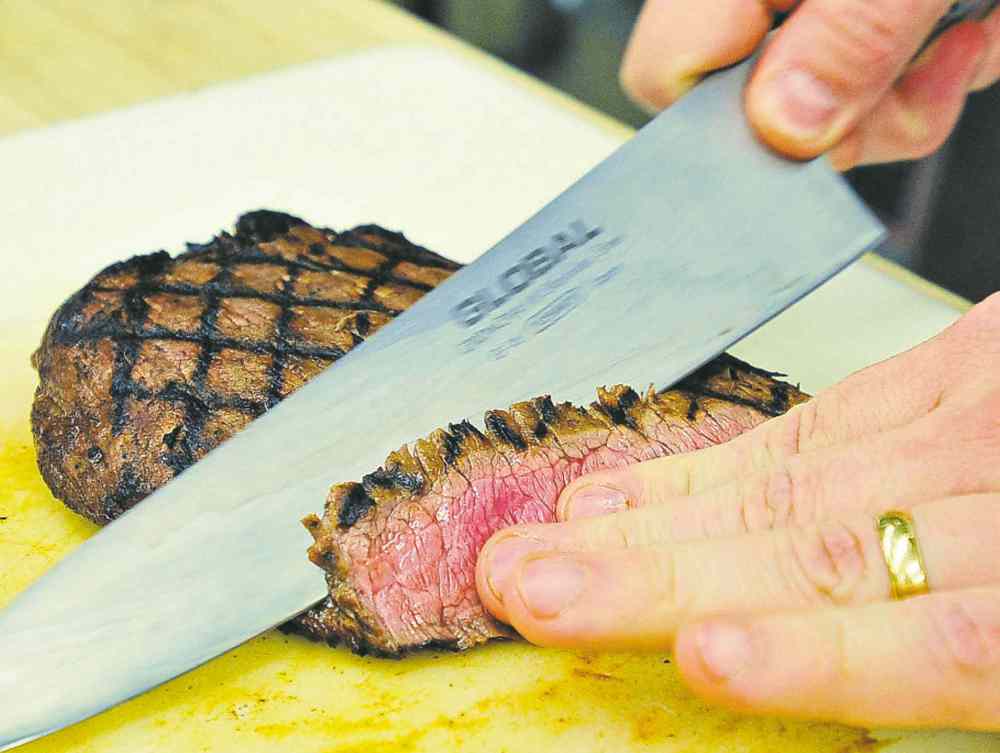
Once off the grill, allow a slab of flank to rest up to 10 minutes before slicing it thinly, across the grain. You can also just slice off what you need and keep the rest for sandwiches for the remainder of the week.
Skirt steak
One of the most flavourful cuts of beef — only oxtail tastes even beefier — is skirt steak, which is a portion of a cow’s diaphragm, one of the hardest-working muscles on the animal.
Thanks to that function, skirt steak is far tougher than flank, has a coarse texture and a bit more fat. It’s also a longer, flatter ribbon of a cut, roughly twice as lengthy as a slab of flank and only half as wide.
Due to its toughness, skirt steak absolutely must be marinated before grilling. Immerse a strip in an acidic marinade for at least four hours, but overnight is better.
Why bother with skirt at all? This cut is prized most for its flavour, but also for its chewy texture. If you’ve ever eaten authentic Tex-Mex fajitas — soft flour tortillas filled with strips of chewy, juicy grilled steak — you understand the appeal.
In the U.S., the price of skirt has risen along with the popularity of fajitas. In Canada, the cut can be hard to find, as it tends to get ground up into hamburger instead of finding its way into butcher shops.
You may have to place a special order with your butcher. I spent two summers trying to convince a purveyor of grass-fed beef to sell me skirt (and flank) before he agreed; once he started selling the cuts, he couldn’t keep them in stock.
At home, cut each long strip of skirt into two smaller pieces, which are easier to manipulate on the grill.
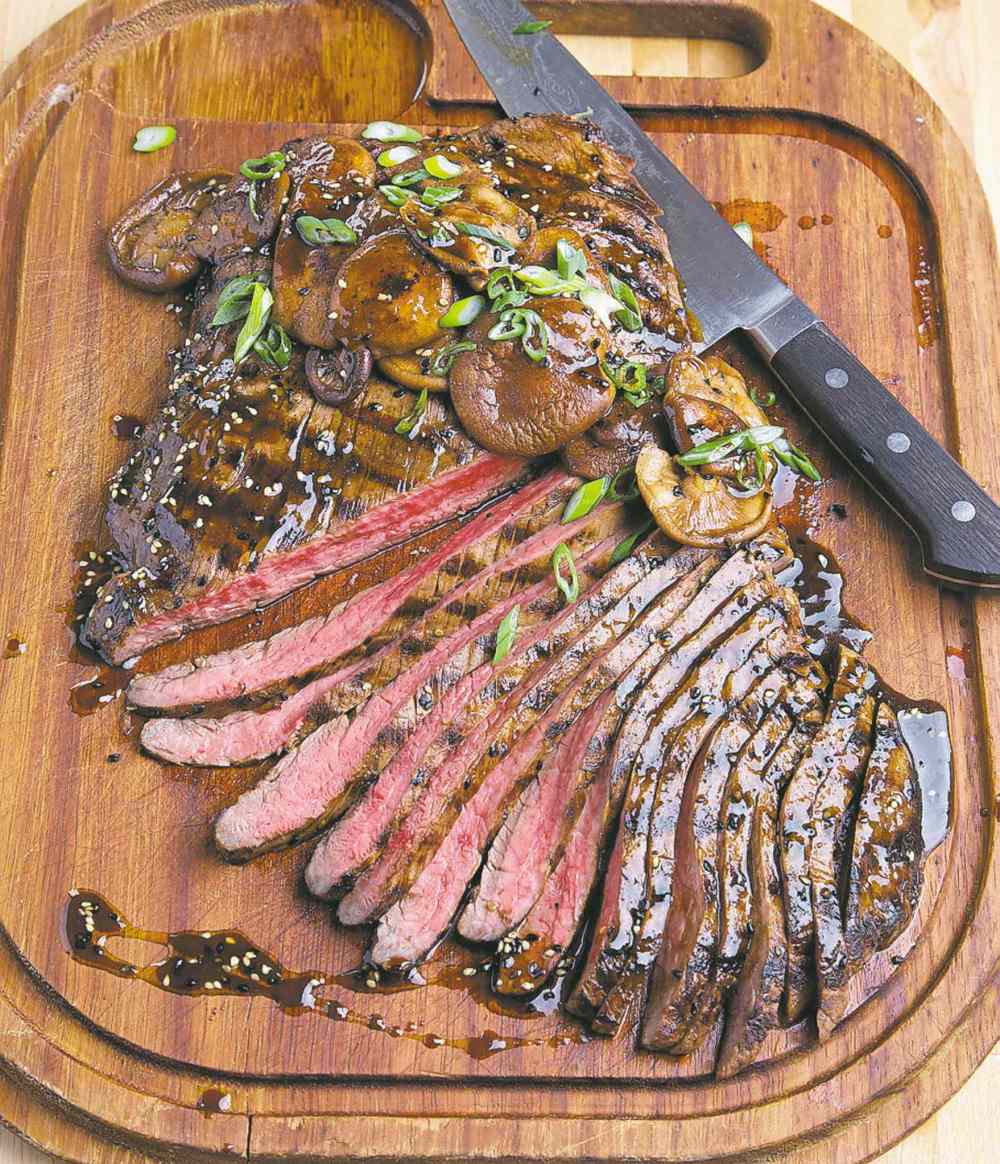
For fajitas or any other Tex-Mex dish, make a marinade out of lime juice, olive oil, minced garlic, ground cumin, chili powder, salt, pepper and a touch of brown sugar or molasses. For an Asian marinade, try lime juice, tamari or soy, fish sauce, sesame oil, minced garlic, chili flakes, salt, pepper and splash of rice vinegar or mirin for sweetness.
Marinate no longer than a day and then shake off the marinade. Grill the skirt steak over very high heat for no more than a two or three minutes per side. You want the finished product to be medium-rare or medium, as well-done skirt can be tough to chew.
Let grilled skirt rest 10 minutes and then slice it thinly. You’ll wind up with the perfect texture: charred outside and pleasantly chewy inside.
Hanger steak
Hanger steak comes from the bottom of the cow’s rib cage; it’s a tender muscle attached to the tougher skirt, which has way more work to do.
The French call this thing onglet, which is how it’s sometimes listed on restaurant menus. The main attraction is the intensely beefy flavour, unusually coarse, almost rope-like texture and relative tenderness.
Hanger steak is also inexpensive compared to almost every other desirable cut of steak; Portage Avenue grocer De Luca’s sells hanger for a mere $14.99 a kilogram.
Unlike skirt, hanger steak doesn’t require tenderization. You can marinate it briefly, but you can easily get away with a mild rub or even just a sprinkling of salt and pepper.
You do, however, need to prep the actual piece of meat. If your hanger steak is encased in silverskin, you’ll need to peel the tough membrane away with a sharp knife before seasoning and cooking.
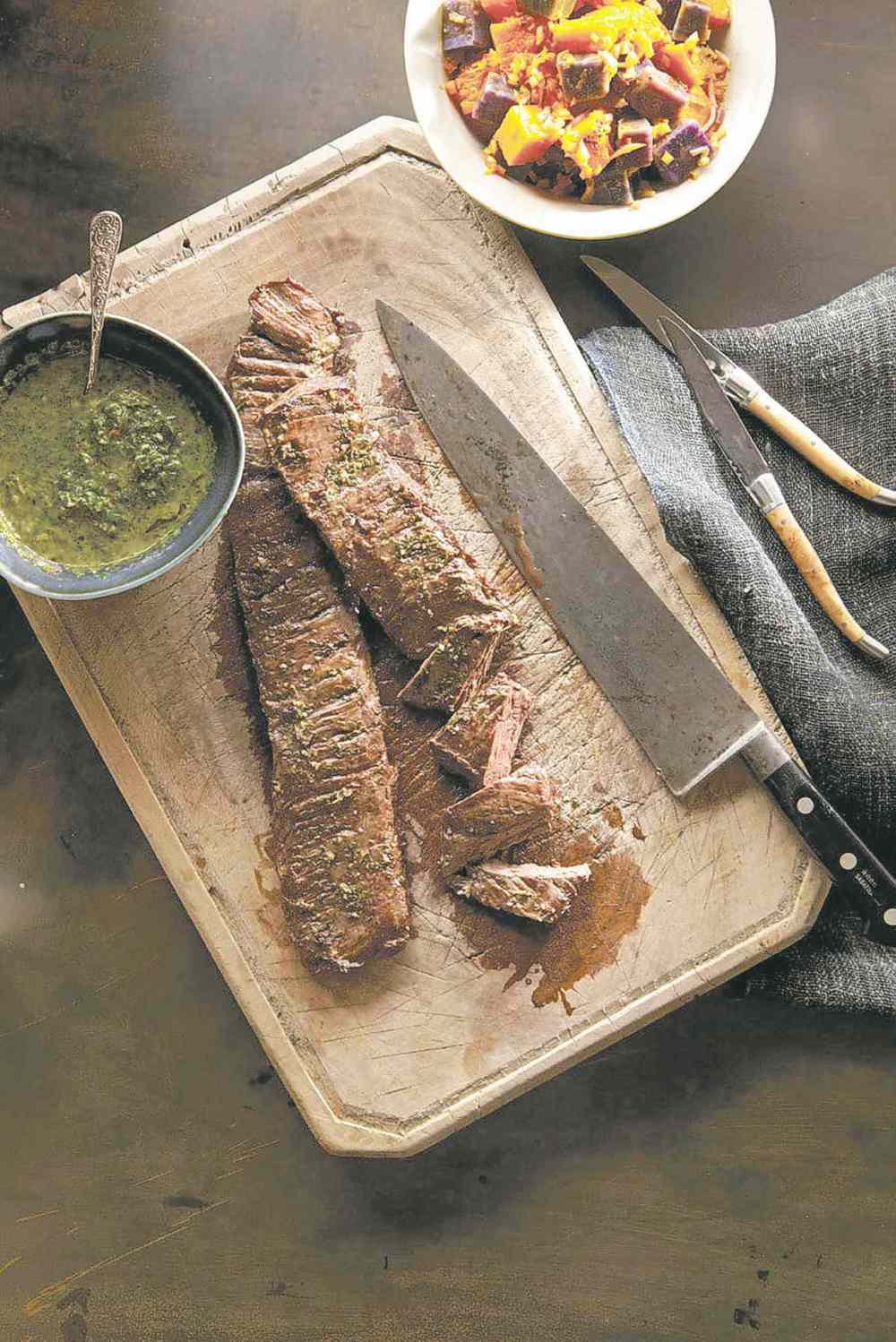

With the silverskin off, a hanger steak will look like a lobe with one very tough ribbon of sinew running most of the way down the centre. Cut away that tough tissue — effectively dividing the steak in two — and you’ll be left with two long hanger steaks. (If one “half” is wider, you can bisect it and wind up with three strips of equal width in total.)
Grill each very lean, tender cylinder of onglet as you would a chunk of tenderloin: No more than medium rare, to preserve both the flavour and the texture.
Let it rest and cut it into 1.5-centimetre-wide slices for appearance sake — or serve the steak as is. There’s no need to slice it very thinly, as you would skirt or flank.
bartley.kives@freepress.mb.ca
History
Updated on Wednesday, June 24, 2015 8:03 AM CDT: Adds photo, changes headline