Nutritious recipes just one ingredient of budget-friendly cookbook
Advertisement
Read this article for free:
or
Already have an account? Log in here »
To continue reading, please subscribe:

Digital Subscription
One year of digital access for only $205*
- Enjoy unlimited reading on winnipegfreepress.com
- Read the E-Edition, our digital replica newspaper
- Access News Break, our award-winning app
- Play interactive puzzles
*First annual payment billed as $205.00 + GST for one year. This annual subscription will automatically renew at $233.00 + GST every 52 weeks (10% off the regular annual price of $259.35). Offer available to new and qualified returning subscribers only. Cancel any time.
To continue reading, please subscribe:
Add Free Press access to your Brandon Sun subscription for only an additional
$1 for the first 4 weeks*
- Enjoy unlimited reading on winnipegfreepress.com
- Read the E-Edition, our digital replica newspaper
- Access News Break, our award-winning app
- Play interactive puzzles
*Your next Brandon Sun subscription payment will increase by $1.00 and you will be charged $17.95 plus GST for four weeks. After four weeks, your payment will increase to $24.95 plus GST every four weeks.
Read unlimited articles for free today:
or
Already have an account? Log in here »
Hey there, time traveller!
This article was published 04/08/2015 (4063 days ago), so information in it may no longer be current.
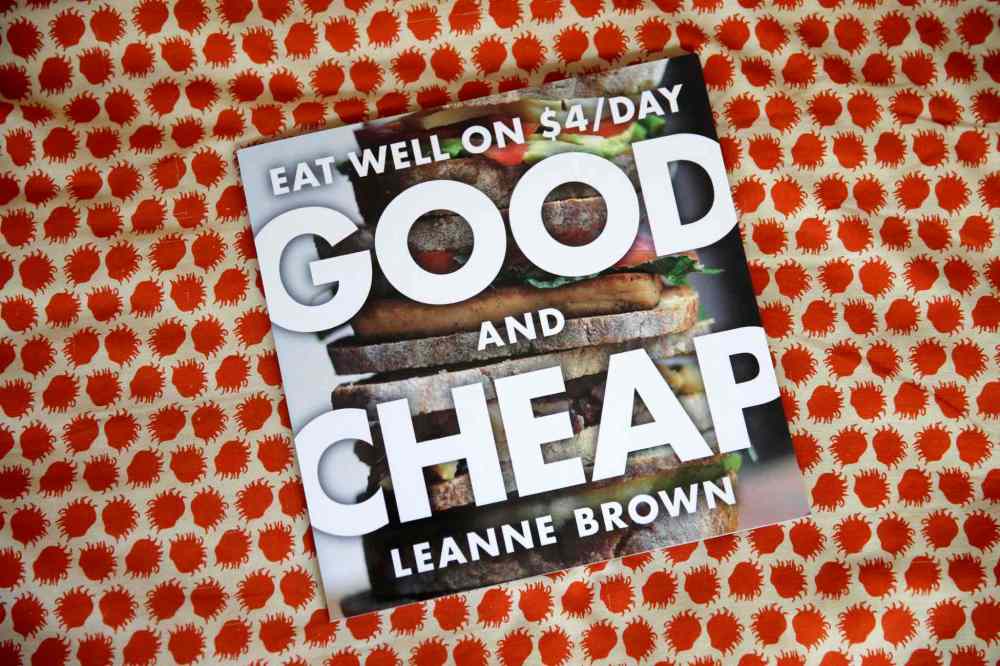
A cookbook title like Good And Cheap: Eat Well on $4/Day sounds like a publicity stunt — a challenge you would issue to some wealthy celebrities or politicians to see if they could survive for a week on the few dollars that low-income individuals and families survive on every day.
But in this recession-friendly cookbook, author Leanne Brown emphasizes that eating on $4 a day is not to be seen as some sort of challenge or competition. Her book is a guideline attempting to meet the goal of seeing as many people as well-fed as possible with attention and consideration for their economic constraints.
Brown, 30, from Edmonton, completed an arts degree at University of Alberta. While doing a stint working at city hall, she was strongly drawn to work around food policy.
“I had to figure out how to work more directly with food, but I knew that I didn’t want to be a chef,” says Brown.
“My dream job became how to share my own personal joy of cooking and get more people to cook at home.”
She enrolled in the New York University food studies program and was developing an idea for her thesis when she realized there were gaps when it came to addressing the issues of home cooking for people with low incomes. She looked into America’s SNAP (Supplemental Nutrition Assistance Program), which gives people approximately $4 per day per person to eat.
“There about 46 million people in America, or 15 per cent of the population, living on that,” she says. “And just by comparison, there are 35 million people in all of Canada.” (In Canada, food banks are used by nearly one million people.)
She saw that people who didn’t have much money were left out of the larger conversation around food and nutrition and was inspired to take an approach that invited everyone to the table.
“I had some good ideas about how to show that cooking is the way to really get the most out of your food and not by throwing a lot of money at the problem,” she says.
“And with a thesis, you pour your heart and soul and time into it and then it just sits there on a shelf, and I wanted it to be something that could live beyond academia and hopefully be of use to more people.”
Brown points out that while there are a lot of budget cookbooks on the market, they tend to be black and white and often seem to contain the usual recipes for “tuna casserole and lentils.”
“I wanted the book to be full of really beautiful photographs, to be appealing and to spark people to push themselves to discover there are a lot more options for what we think is inexpensive food,” she says.
“For example, there is a crustless quiche recipe, and people sometimes think, ‘Oh, that’s French so that’s going to be an expensive, fancy meal,’ but without the crust, it’s really just eggs, some vegetables, a little cheese and a little dairy,” she says.
“It’s very simple, but it’s transformed and becomes this really beautiful thing that looks nice on your plate and feels really special, but it’s not expensive at all.”
She says what is difficult is to consistently get good food and have enough to eat until the very end of the month, but there are principles such as flexibility and creativity, and setting yourself up for success that make it possible.
“It’s really about taking some basic ingredients and making something really good out of them.”
The most important thing is to be patient with yourself, especially if you don’t have a lot of experience with food and begin by cooking things you are going to like, Brown says.
“The way to be connected to the real power and beauty of cooking is knowing you can make wonderful food for yourself that is exactly to your taste.”
Here are three recipes excerpted from Good and Cheap: Eat Well on $4/Day by Leanne Brown (Workman Publishing).
Caramelized Bananas
These bananas — cooked in just a bit of caramel — are crispy and gooey on the outside and almost like a soft pudding inside.
15 ml (1 tbsp) butter
30 ml (2 tbsp) brown sugar
2 bananas, peeled and split in half lengthwise
Melt the butter in a nonstick or cast-iron pan over medium-high heat. Add the sugar and let it melt into the butter for about 2 minutes. Stir once to create a smooth mixture.
Place the bananas flat-side down in the butter-sugar mixture, then cook until they become brown and sticky, about 2 minutes. Carefully flip them over and do the same on the other side.
Serve them as is or cut them into quarters. Drizzle any caramel left in the pan over the bananas. Serve with ice cream or on their own. Serves 2.
Half-Veggie Burger
When a reader named Quinn suggested a recipe that used both lentils and meat, Brown decided to combine the two to create a burger with meaty flavour, but with the lean protein and low cost of lentils. You can use almost any vegetable to make these burger patties, except for lettuce and other greens, or watery vegetables like tomato or cucumber.
Make sure the vegetables are either small to begin with (such as corn or peas) or finely chopped to cook evenly. Vegetables such as potato, squash or eggplant should be fully cooked before you add them to the patty.
750 ml (3 cups) cooked lentils or beans
250 ml (1 cup) finely chopped bell pepper or other vegetable
500 g (1 lb) ground beef or other ground meat
1 egg (optional)
Salt and pepper, to taste
8 buns
Roughly mash the lentils with the back of a large spoon.
Mix the lentils, bell pepper and ground beef with your hands in a large bowl. If you’re grilling, add an egg to keep the patties from crumbling. Season with salt and pepper and form into 8 patties.
Place a large skillet over medium-high heat (or fire up the grill, if you have one), and add the patties. Sear them until they’re dark brown on one side, about 5 minutes, then flip them and do the same on the other side. If you want cheeseburgers, lay cheese on the patties after flipping them once.
Serve on toasted buns with your favourite condiments and fresh vegetables. Burgers are a great place to be adventurous. Serves 8.
Spicy Panzanella
Here, hard, dry bread soaks up tomato juice and dressing for a super-flavourful and filling salad. Toss in any juicy vegetable or fruit. Bell peppers or carrots won’t work so well, but peaches, grapes or zucchini do. If you don’t like spicy salads, seed and stem the jalapeño to remove its heat, or replace it with garlic or shallots.
2 small field cucumbers or 1 English cucumber
2 medium tomatoes, chopped
Salt and pepper, to taste
4 slices day-old bread
Dressing:
30 ml (2 tbsp) olive oil, plus a few drops for the pan
1 jalapeño, finely chopped
30 ml (2 tbsp) chopped tomato
Salt and pepper, to taste
Juice of 1 lime
Additions: chopped fresh herbs, chopped peaches, nectarines or plums, finely chopped red onion, chopped zucchini or summer squash, pitted olives, grapes
If you’re using field cucumbers — usually cheaper than English — peel them to remove the tough skin. (A little leftover peel is not a problem.) For English cucumbers, there’s no need to peel.

Reserve about 30 ml (2 tbsp) of the chopped tomatoes to use in the dressing, but throw the rest of the tomatoes and all of the cucumbers into a large bowl. Sprinkle generously with salt and pepper; the salt helps draw out the juices. Toss the vegetables and set aside.
Place a small saucepan over medium heat and add a few drops of olive oil. Add the jalapeño and sauté until it sizzles and smells good, about a minute, then add the rest of the chopped tomato and 15 ml (1 tbsp) of water. Cook until the tomato juices release, another 2 minutes. Sprinkle liberally with salt and pepper.
Once the water has evaporated, turn off the heat and dump the jalapeño-tomato mixture on your cutting board. Chop it up very finely, then throw it back into the pan — with the heat off — with the lime juice and 30 ml (2 tbsp) of olive oil. Stir to combine, taste, and add salt and pepper as needed.
Chop or tear the bread into bite-sized pieces, then toast it in a skillet over medium heat, tossing occasionally, until the bread chunks are toasty on all sides. Alternatively, toast full slices of bread in a toaster and tear them up afterward, or skip the toasting if the bread is already super-hard.
Add the bread and dressing to the vegetables and stir to combine. Taste and adjust the salt and pepper once more. Let the salad sit for a few minutes so the bread can soak up the juices, then serve. Serves 4 as a side.