More geek than gourmet
From street stalls to haute cuisine, new restaurant reviewer is obsessed with food
Advertisement
Read this article for free:
or
Already have an account? Log in here »
To continue reading, please subscribe:

Digital Subscription
One year of digital access for only $205*
- Enjoy unlimited reading on winnipegfreepress.com
- Read the E-Edition, our digital replica newspaper
- Access News Break, our award-winning app
- Play interactive puzzles
*First annual payment billed as $205.00 + GST for one year. This annual subscription will automatically renew at $233.00 + GST every 52 weeks (10% off the regular annual price of $259.35). Offer available to new and qualified returning subscribers only. Cancel any time.
To continue reading, please subscribe:
Add Free Press access to your Brandon Sun subscription for only an additional
$1 for the first 4 weeks*
- Enjoy unlimited reading on winnipegfreepress.com
- Read the E-Edition, our digital replica newspaper
- Access News Break, our award-winning app
- Play interactive puzzles
*Your next Brandon Sun subscription payment will increase by $1.00 and you will be charged $17.95 plus GST for four weeks. After four weeks, your payment will increase to $24.95 plus GST every four weeks.
Read unlimited articles for free today:
or
Already have an account? Log in here »
Hey there, time traveller!
This article was published 10/02/2016 (3836 days ago), so information in it may no longer be current.
On one level, Winnipeg has a very well-defined food culture, unique to the Manitoba capital.
If you’ve lived here for some time, you likely have a preference for boiled vs. pan-fried perogies, regardless of your ethnic background. You probably have a favourite Winnipeg-style burger joint, even if you’re a vegan who hasn’t eaten ground cow for years.
You likely love or revile the curious Winnipeg confection known as Jeanne’s cake — and the even more curious local condiment known as honey-dill sauce — because there is no middle ground for either.
You may possess strong opinions about the best way to season a pickerel filet, know more than one way to use up unwanted rhubarb stalks and when you travel to other cities, you find yourself disappointed by what passes for rye bread.
These are some of the basic underpinnings of a grassroots Winnipeg food culture that reflects both the city’s geography and generations of indigenous, European, Asian and other ethnic influences. Walk into Winnipeg restaurants, however, and the city’s culinary composition quickly becomes indistinguishable from that found in almost any other medium-sized North American city.
This is not a slight. I’m not starting off my run as the new Free Press restaurant reviewer by decrying a weak sense of regional identity in Winnipeg culinary circles.
It’s just that after decades of food programming on cable television, instructional cooking videos on YouTube and a growing international obsession with food culture in general, where you live is far less likely to dictate how and what you eat.
Most of us are eating a far more diverse range of foodstuffs than our parents’ generation consumed and also a have a far wider range of culinary preferences, from all over the world. Paradoxically, some of us are more interested than ever in locally grown and produced food, for economic and environmental reasons — as well as because regional food just tends to be interesting.
For restaurants, this is both a great and terrible time to exist. People who eat out are either more sophisticated than ever about food or simply believe they are. Either way, they have greater expectations about the food they consume, and not just in terms of how good it tastes.
People who eat out are more likely to care about where their food comes from now. Increasingly, we want to be assured our coffee is sourced ethically, our seafood is sustainable and the meat we eat is hacked off animals who were treated reasonably well.
Nonetheless, we may not want to pay for the privilege. Though we profess to possess high-minded values, cost remains the biggest driver of our food-consuming decisions. If we splurge for a meal and don’t feel we received value for that expenditure, we may very well resort to Yelp or Zomato to voice our displeasure.
This also means this moment is a great and terrible time for a restaurant reviewer, too. Since everyone is an expert on food — I mean, we all eat — there’s something inherently elitist about the notion any one of us could possess more knowledge about the subject.
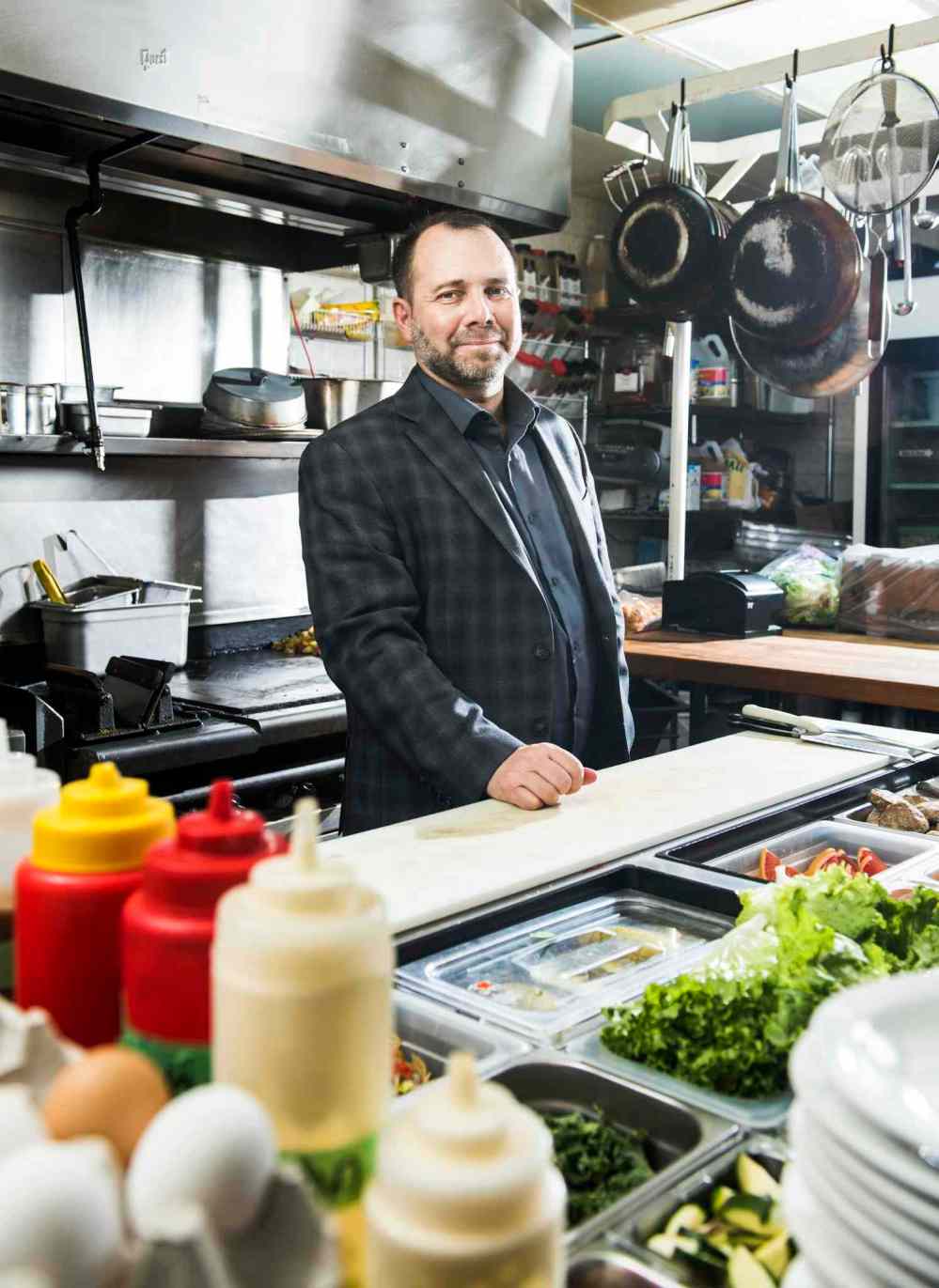
This is where the concept of the food geek arrives. I am here to proclaim myself not a critic, but a geek: a person who doesn’t just eat food, but obsesses about it.
Regular Free Press readers are likely aware, I’ve been writing food and culinary-travel stories for years. Now, I’m also reviewing restaurants, succeeding the inimitable Marion Warhaft, who influenced generations of Winnipeg restaurant-goers during an unprecedented career that spanned nearly four decades.
Unlike my predecessor, I have no training as a chef. The sum total of my experience in a working kitchen amounts to a couple of summers assembling grilled-cheese sandwiches for kids at a summer camp. This makes me qualified to work in a factory, not in a professional kitchen.
What I do possess is a lifelong obsession with food that dates back to my childhood, when the latchkey nature of my 1970s and early ‘80s upbringing — father at work, mother in university — meant more exposure to restaurant food than usual.
Intrigued by the Chinese-Canadian takeout that formed the basis for what seemed like every other Sunday-evening meal, I started making (supervised) forays to a Chinatown grocery at the age of eight, partly in an effort to cook “Chinese food’ at home, but also to sample foodstuffs I had never seen or eaten before.
Those initial samples of satay sauce, preserved ginger and canned baby squid served as a gateway to a lifetime of experimentation, driven by an impulse to always try something new.
I consumed my first raw cherrystone clam at the age of nine, reacting with a mix of horror and delight when it barely slid through my throat and felt as if it was going to asphyxiate me. Dim sum arrived like a revelation at the age of 12, when the notion of just pointing at food and then eating it seemed too good to be true.
By my 20s, earning a salary as a junior reporter, I started eating beyond my means, travelling primarily just to eat what new locales had to offer. To the detriment of my life savings, this practice continues.
I’ve blown stupid money in places like the French Laundry in Napa Valley and Alinea in Chicago, but my fondest food memories stem from experiences at street stalls, lunch counters and other places where nobody wears white anything.
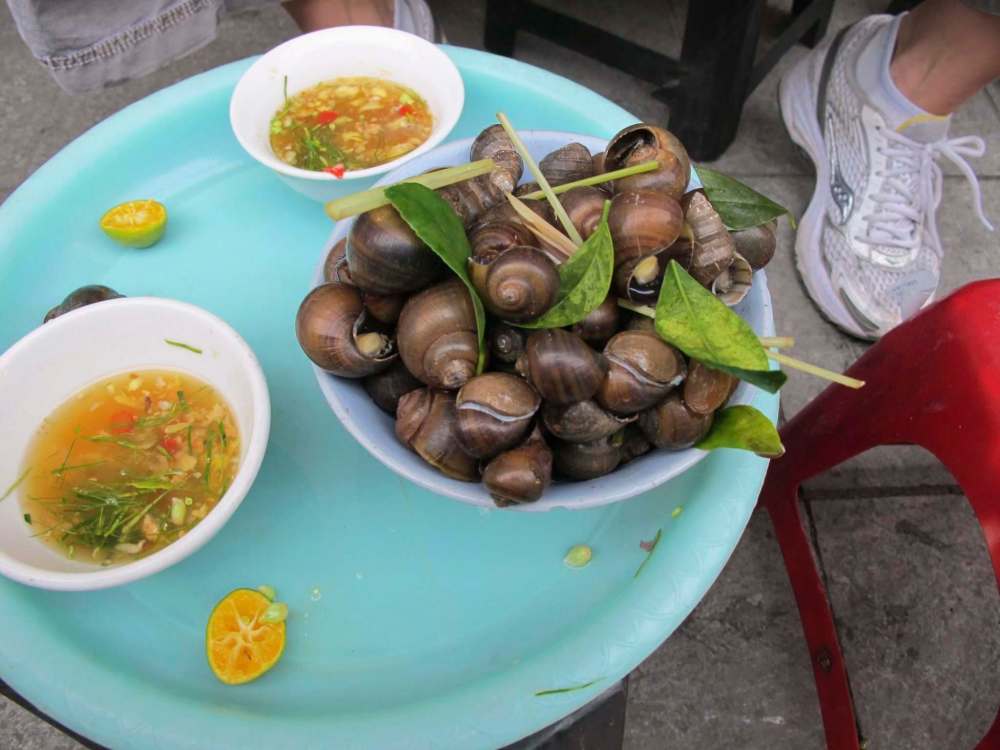
Those memories include ripe banana slices, grilled over charcoal and then placed in a plastic cup with sago pearls and coconut milk, purchased for about 50 cents from a mobile cart in the Vietnamese beach town of Nha Trang.
A plate of briny razor clams dressed with butter, garlic and flat-leaf parsley before going under a broiler in Bar Celta, a seafood bar that used to be in Barcelona’s Gothic quarter.
Squash blossoms and squeaky queso folded into a fresh-made quesadilla at the central market in Zihuatanejo, Mexico.
A crunchy deep-fried churro stuffed with dulce de leche, doled out of a glass-enclosed cart on the main pedestrian drag in San Jose, Costa Rica.
A sweet raw scallop plucked from below a wooden platform floating in the harbour at Cortes Island, B.C. A tangy salad of wood sorrel leaves that grow in the cracks between the patio stones in my back yard.
I could go on and on. My point is I live to eat, to the degree where my cholesterol levels are unhealthy and my friends would rather endure a migraine than hear another word from me extolling the pleasures of eating huitlacoche, the bluish-grey fungus that grows on corn, or the presence of incendiary bhut jolokia peppers at the St. Norbert Farmers’ Market, or the evils of consuming farmed shrimp from the coast of Thailand.
In other words, I know my food obsession can be annoying and my taste may come across as pretentious. I know my pursuit of novelty grates against the comfort many people demand from their food.
But this lifetime of experience will inform my work as a restaurant reviewer. I feel lucky to understand what makes Winnipeg tick and also have a basic knowledge of what’s going on in restaurants elsewhere.
When reviews commence next week, the biggest change you’ll notice is the star system has been deflated. From now on, a one-star restaurant is OK. Two stars is good. Anything above two stars is very good.

You’ll also see more of an emphasis on sustainability, particularly when it comes to fish and seafood, as well as a bit more coverage of cocktails and other beverages.
Otherwise, I will endeavour to continue to the staunch independence and rigorous professionalism displayed so consistently by Marion Warhaft. I cannot be her, but I will do my best to be me.
I’m well aware I won’t be able to be as anonymous as my predecessor; too many people know my face. This is not a fatal flaw, as even if a front-of-house manager attempts to curry favour with overly attentive service, the cooks in the kitchen can not suddenly improve the quality of their food.
That said, my goal is to focus more on telling stories about what’s happening with food in Winnipeg. As much as opinions matter, I’m still a reporter, first and foremost.
bartley.kives@freepress.mb.ca
History
Updated on Wednesday, February 10, 2016 12:50 PM CST: Adds images.