

Before the bottle, where wine is fermented has huge impact on its flavours
Advertisement
Read this article for free:
or
Already have an account? Log in here »
To continue reading, please subscribe:
Monthly Digital Subscription
$1 per week for 24 weeks*
- Enjoy unlimited reading on winnipegfreepress.com
- Read the E-Edition, our digital replica newspaper
- Access News Break, our award-winning app
- Play interactive puzzles
*Billed as $4.00 plus GST every four weeks. After 24 weeks, price increases to the regular rate of $19.95 plus GST every four weeks. Offer available to new and qualified returning subscribers only. Cancel any time.
Monthly Digital Subscription
$4.99/week*
- Enjoy unlimited reading on winnipegfreepress.com
- Read the E-Edition, our digital replica newspaper
- Access News Break, our award-winning app
- Play interactive puzzles
*Billed as $19.95 plus GST every four weeks. Cancel any time.
To continue reading, please subscribe:
Add Free Press access to your Brandon Sun subscription for only an additional
$1 for the first 4 weeks*
*Your next subscription payment will increase by $1.00 and you will be charged $16.99 plus GST for four weeks. After four weeks, your payment will increase to $23.99 plus GST every four weeks.
Read unlimited articles for free today:
or
Already have an account? Log in here »
Hey there, time traveller!
This article was published 05/03/2016 (3682 days ago), so information in it may no longer be current.
When you buy wine at your favourite shop, typically it comes in a bottle — although depending on your mood (and budget) it could come in a Tetra Pak package or a bladder tucked inside a cardboard box.
Regardless, before your wine got into that vessel, it passed through at least one or two other containers. And the decisions made by winemakers about where your wine goes are some of the most important when it comes to what your wine tastes like.
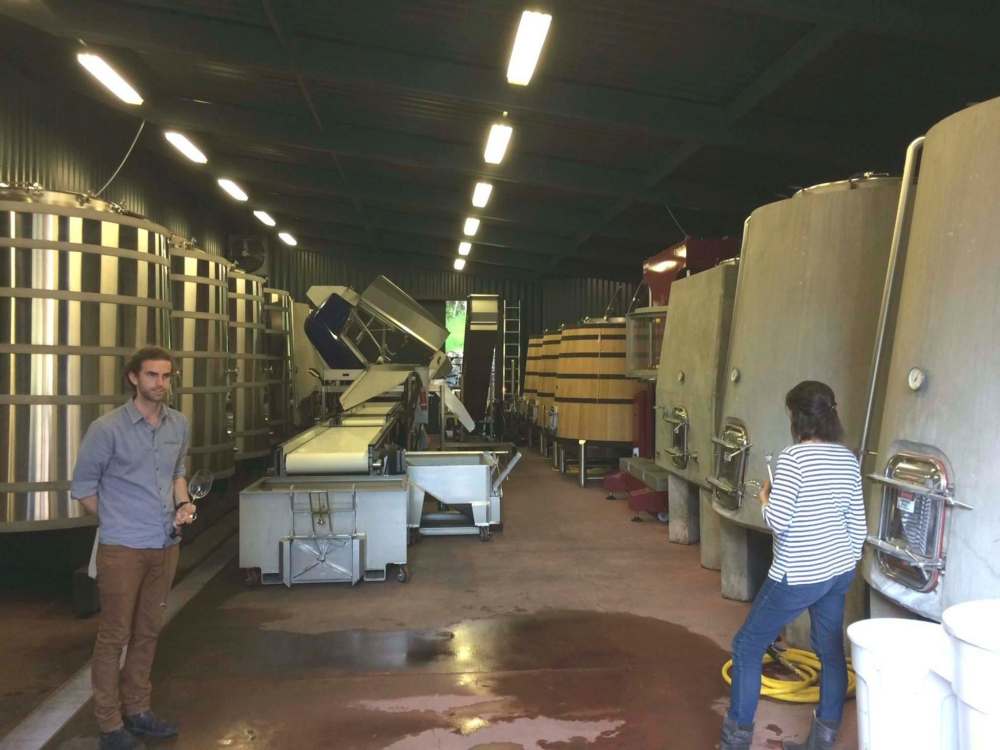
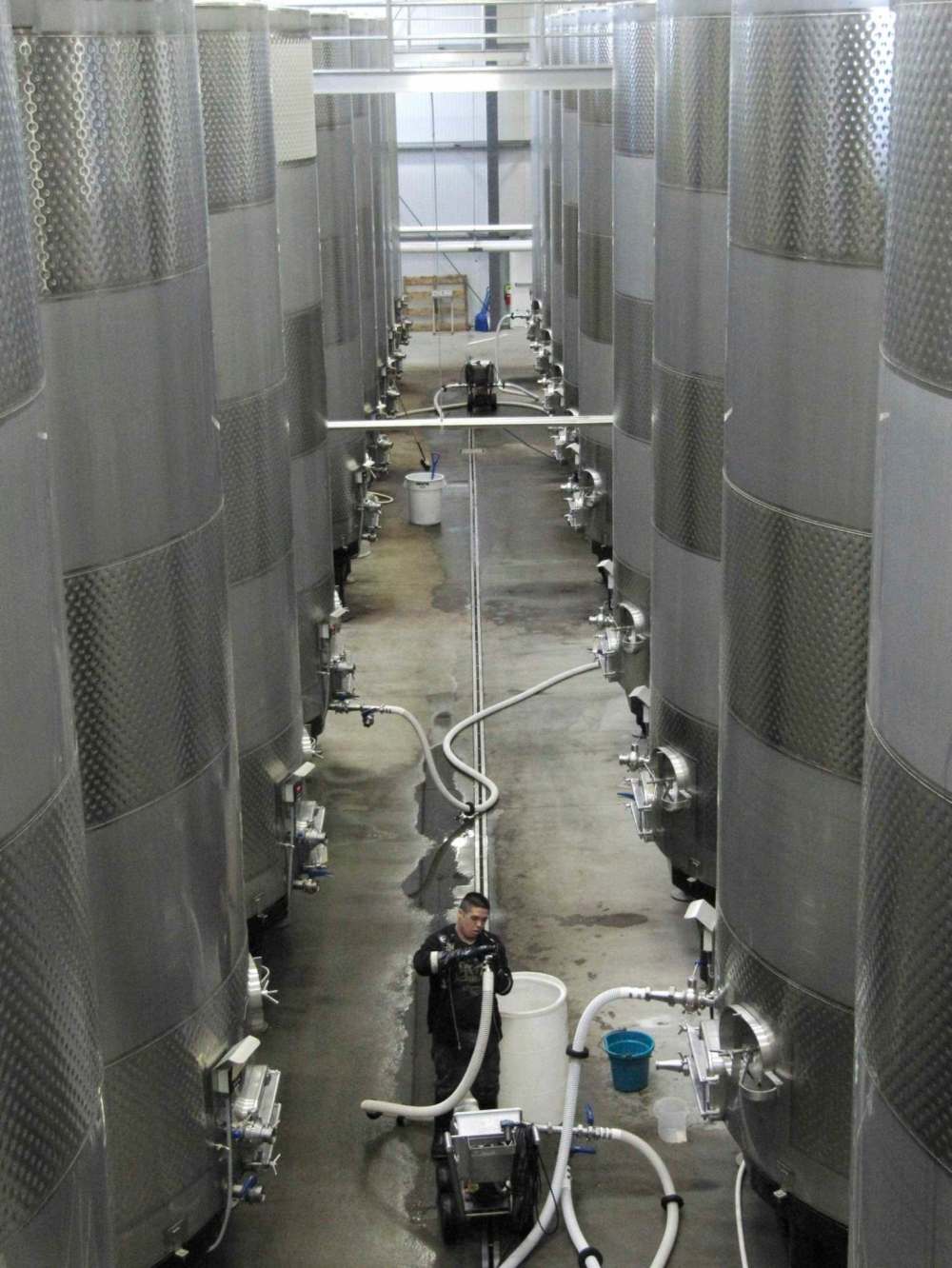
First of all, a winemaker needs to decide where the juice squished out from all those grapes is going to ferment, to let the yeast convert the fruit’s sugar into alcohol. Often, neutral vessels such as stainless-steel tanks are used during this process, although with some wines, such as Chardonnay and heavier reds, the juice is fermented in oak — this adds a richer texture and “softens up” the edges of a red.
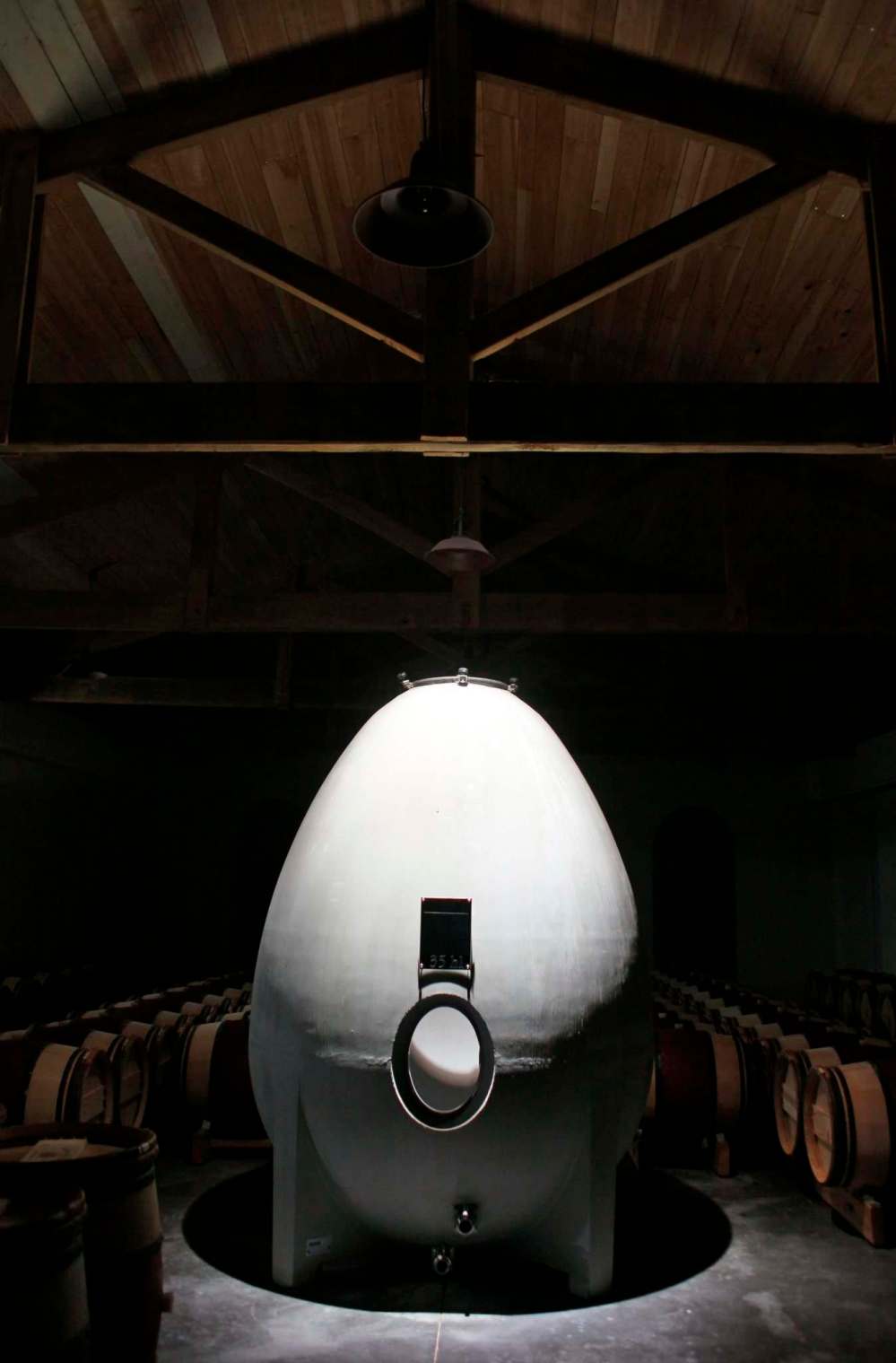
Another type of neutral vessel that’s again become popular for fermentation is a concrete tank — sometimes egg-shaped (think Mork’s ship in Mork and Mindy). Concrete fermenting vats were long favoured as cheaper and longer-lasting than oak or stainless-steel vats; today they’re embraced (not literally… they’re too big) by winemakers as a vessel whose porous surface allows the wine to “breathe” as it does in oak, but doesn’t impart woody flavours.
Once the juice has been fermented into wine — and I’ll quickly acknowledge I’ve skipped many steps here — the winemaker must decide whether or not to age it in oak barrels. At this point, most lighter, crisp whites would either go back into stainless-steel tanks or directly into the bottle.
The rest are placed in oak barrels. But not just any oak barrels — most producers favour either French or American oak; the former tends to impart more complex spice notes, while the latter is thought to deliver bigger woody and vanilla notes in a wine. Oak from Slovenia and Hungary are also used to some extent.
The most common size of barrel at a winery is a 225-litre barrique — that’s around 300 bottles — although there are larger barrels employed by winemakers as well. Other than barriques, puncheons (500-litre capacity) are popular, and much larger barrels, alternately called foudres, tonneaux (French), botti (Italian) or stück (German), have a capacity of many hundreds or even thousands of litres. These larger barrels tend to impart less intense oaky characteristics to a wine, and don’t have to be replaced as often as barriques.
There’s great variation in barriques beyond French versus American oak. New barriques impart the biggest difference in a wine; they’re typically used in a winery’s top-end products. After the first year of use, many producers take the one-year-old barrels and move them to the next line down from their premium stuff. Most barriques are used for no more than four or five years before they’re decommissioned.
Another key decision regarding barriques is the level of “toast” you want the barrel maker to produce. The insides of barriques are “toasted” at the cooperage, and the degree of toast — light, medium or heavy — impacts the intensity of flavour imparted from the barrel.
uncorked@mts.net Twitter: @bensigurdson
Mas Neuf 2012 Compostelle (Costières de Nîmes, France — $19.99, Liquor Marts and beyond)
Made in the southernmost region of the Rhône Valley, this 90-10 blend of Roussanne and Viognier was aged in barrels originally used to make Sauternes dessert wine in the Bordeaux region of France. Pale golden in colour, the aromatics here are intense: bruised red apple, honey, peach, apricot and modest spice and tangerine notes. It’s a rich, full-bodied and complex white, with a viscous texture and rich tropical and stone-fruit flavours and just a hint of sweetness. The barrels bring vanilla and honeycomb notes that are delicious.
4/5
Nugan 2013 Alfredo Second Pass Shiraz (Riverina, Australia — $16.99, Liquor Marts and beyond)

This Aussie Shiraz is made in the Italian ripasso method, meaning after fermentation the wine is fermented again over the pomace/skins. Deep garnet in colour, there are big black cherry, spice, licorice, earth, blackberry and white-pepper aromas. It’s a rich, soft and full-bodied red that spends 12 months in French and American oak barrels, showing mainly ripe dark fruit and spice notes on the palate — there’s a hint of residual sugar — but also featuring some Amarone-like raisin and dried-fruit notes. Not your typical Shiraz, but quite tasty.
3.5/5
Torres 2012 Altos Ibericos Crianza (Rioja, Spain — $16.95, Liquor Marts and beyond)
Made from the Tempranillo grape, spice, herbal, raspberry, cherry and licorice are front and centre on the nose of this Spanish red. It’s a surprisingly plush, medium-plus-bodied red, with lots of blackberry, tart raspberry, herbal, vanilla and mint notes on the palate. A Spanish Crianza must age for at least two years, and at least one of those years must be in barrel. A bit atypical, but a good entry into Spanish reds.
2.5/5