Be fearless with food
From cooking classes to kids in the kitchen, it's all about connecting with others
Advertisement
Read this article for free:
or
Already have an account? Log in here »
To continue reading, please subscribe:

Digital Subscription
One year of digital access for only $205*
- Enjoy unlimited reading on winnipegfreepress.com
- Read the E-Edition, our digital replica newspaper
- Access News Break, our award-winning app
- Play interactive puzzles
*First annual payment billed as $205.00 + GST for one year. This annual subscription will automatically renew at $233.00 + GST every 52 weeks (10% off the regular annual price of $259.35). Offer available to new and qualified returning subscribers only. Cancel any time.
To continue reading, please subscribe:
Add Free Press access to your Brandon Sun subscription for only an additional
$1 for the first 4 weeks*
- Enjoy unlimited reading on winnipegfreepress.com
- Read the E-Edition, our digital replica newspaper
- Access News Break, our award-winning app
- Play interactive puzzles
*Your next Brandon Sun subscription payment will increase by $1.00 and you will be charged $17.95 plus GST for four weeks. After four weeks, your payment will increase to $24.95 plus GST every four weeks.
Read unlimited articles for free today:
or
Already have an account? Log in here »
Hey there, time traveller!
This article was published 22/07/2017 (3319 days ago), so information in it may no longer be current.
In today’s fast-paced world, there appears to be less inclination to cook at home. How many times have you heard someone say, “I have no time to cook”?
Canada’s restaurant industry amasses $75 billion in sales every year, according to Restaurants Canada, a not-for-profit national association. This number clearly suggests that with the availability and convenience of eating out, interest in home cooking is probably on the decline.
The Food Network, on air since 1993, can be a helpful outlet to gain culinary skills. But one can easily be wary about home cooking since some of the food looks more like works of art than being dishes you would make.
So, why then should we be cooking at home?
According to chef and author Michael Smith, who lives in Prince Edward Island, home cooking nurtures both good health and a good quality of food. In his 2016 cookbook, Real Food, Real Good, he writes, “Society is struggling against a relentless hurricane of less and less home cooking, more and more nutritionally vacant processed food and the resulting health crisis… You can help choose your best life by choosing to cook real food.”
The well-known mantra to eat clean and healthy is all too familiar. Perhaps returning to the basics through home cooking is the answer.
Knowing about what you consume in its entirety — where your food comes from, what goes into it, and how it is prepared — is just as important as the actual food. So, home cooking can potentially create a reassurance about what you are eating.
Perhaps a change in our mindset is needed in order to ignite cooking at home. To this end, we first need to change how we experience food.
Home-cooked food in the South Asian culture is connected with the warmth of the abode. When you ask those who have roots from India, they will proudly say the best-tasting food is “ghar ka khanna,” translated from Hindi to mean home food. It symbolizes the pride, comfort and hospitality of the Indian home.
This sentiment about food conveys that it is more than a convenience, it is more than fuel for the body, it is more than being about the food itself.
Indeed, a change in how we approach food can encourage home cooking. It should not be seen as a chore, but approached with thoughtfulness so you’ll see the joy of cooking. One can easily say the universal ingredient to make any meal delicious and memorable is cooking with love.
Our mindset can also change upon a connection between food and culture.
Where food is typically an individual experience in North American culture, it tends to be more of a collective one among South Asians. Participating in food preparation, bringing family and friends, and connecting over a shared meal are all part of Indian culture. Instead of food being only seen as sustenance, when it is accompanied by the emotional elements of engaging and sharing, a sense of warmth and connectivity with others comes through.
Food enthusiast Anthony Bourdain travels to different corners of the world (mostly unheard of places, as the name of his show Parts Unknown conveys) and explores and experiences the respective cuisines. His culinary footprint is interwoven with learning about the culture and history of where he is and listening to personal stories. Indeed, food is greatly enriched and best appreciated by embracing the culture from which it hails.
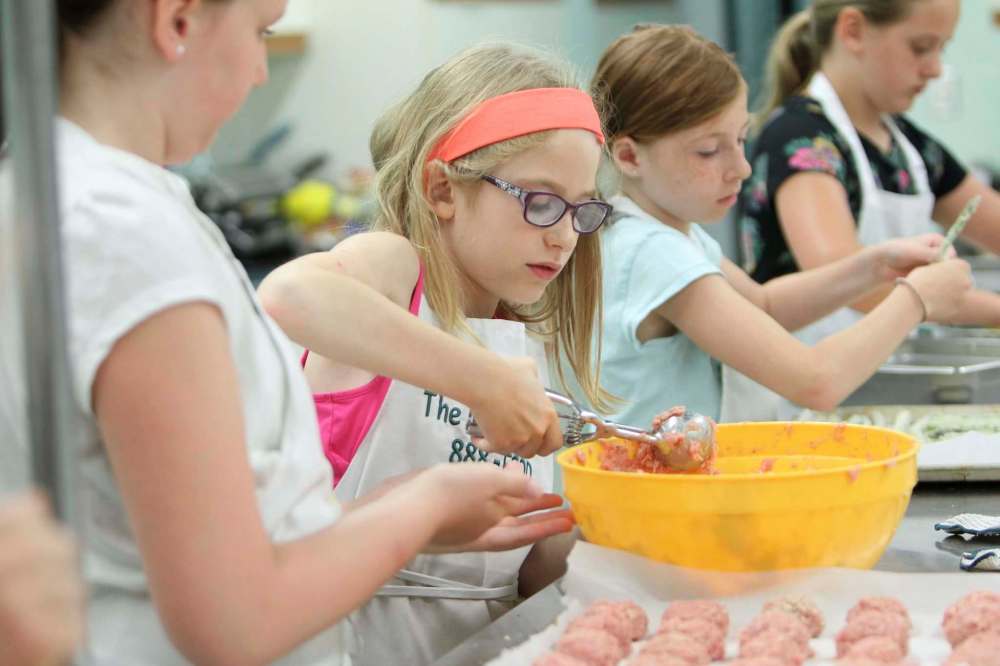
Home cooking can also encourage kids to be involved and can be a fun activity for the entire family.
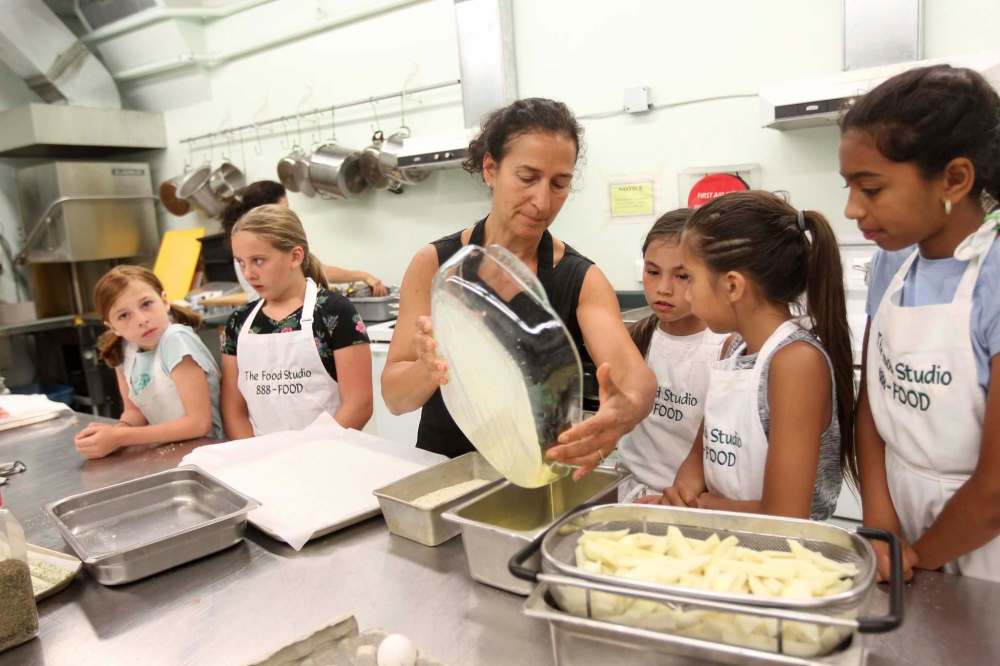
Maria Abiusi, owner and operator of The Food Studio in Winnipeg, started her business 11 years ago by offering cooking camps for kids.
Interestingly, she began cooking camps for eight to 12 year olds, followed by offering teens-only cooking camps, which in turn became the springboard for her concept and further programming. She was delightfully surprised kids were interested in taking cooking classes as opposed to parents making that decision for them.
Referring to the kids’ classes, Abiusi says she has “eager learners who really want to be there.” Also, she says, since more kids today are often staying at home alone, they have to prepare some food on their own, and taking classes helps them with “the skills and ideas about what they can pull together and in a healthy way.”
Today, The Food Studio has a broad range of clientele — from eight-year-olds to retirees — and caters to public classes and corporate groups, along with private and client appreciation events. Classes offered include: sushi, Thai, baking, bread-making, gluten-free dishes, soups and stocks, cheese-making, healthy eating, and knife skills, all led by chefs, dietitians or nutritionists.
Abiusi describes her studio as an interactive dining experience because people come to the classes to be hands-on, to some degree, and come to learn with a friend or as a couple. Plus, they often make friends through the classes. The connection between cooking and sharing transports the idea of food and “creates family around food.”
For Abiusi, cooking at home is an opportunity to bring the family together around the table.
Abiusi, who was born in Canada and is a daughter of immigrants from Italy, fondly remembers her parents’ backyard garden, where all of their vegetables came from. She learned how a carrot grew and picked tomatoes from the vines and ate them.
Knowing where food comes from — as well as knowing what is real versus processed — changes your mindset about what you are eating. Being connected to food from a young age can be a positive and engaging experience — and a way to learn culinary skills, which are useful your entire life.
Ultimately, what motivates Abiusi in her cooking classes is “helping people get comfortable in the kitchen, living a healthy lifestyle through food… and getting people excited about food.”
Around Winnipeg, cooking classes are offered in some unique spaces, such as the Kitchen Sync, which is a commercial kitchen rental space in the Exchange District, and through Kids Cook at Red River College, a camp for younger children to learn simple culinary skills.
Various East Indian restaurants have offered cooking classes as a way to educate the public about the cuisine, how to use Indian spices and also to engage individuals in a shared culinary experience. The East Indian restaurant Clay Oven at Shaw Park will be offering cooking classes this fall, which will be open to the public.
For the past 35 years in Winnipeg, cooking classes have been offered at De Luca’s, a food spot which includes a grocery store, bakery, prepared foods and deli, a wholesale division, cooking studio, as well as a restaurant and catering services. The classes have been led by chef Anna Paganelli, who recently retired, and by chef Mike Brown.
Carla De Luca, the business’s event and marketing manager, speaks passionately about the family business of almost 50 years and its classes, which are offered in the style of a live cooking show, where demonstrations are performed and four-course meals prepared and served.
There are also private cooking classes for corporate groups and as team-building events that offer hands-on sessions. As De Luca puts it, it’s all about helping people understand how to use food. The classes revolve around “an Italian origin with a modern twist and still have the core of the Italian dish that you might recognize… and still have those main ingredients, but use them in a slightly different way.”
For De Luca, it comes down to “educating people on the ingredients and teaching them how to cook.”
On the other side, she feels people who take the classes come for the entire experience and to interact with others. She compares the classes to going out for dinner or shopping for food, and that learning to cook presents something different because being involved and connecting with others creates a complete experience.
Clearly, food and family seem synonymous with each other. In this instance, the family atmosphere of De Luca’s “rubs off on our customers and our customers almost become part of the family.” Cooking brings forward sentiments of sharing in terms of enjoying food and learning alongside others and from others.
De Luca says “we love to share our knowledge with people… we want people to know how to use ingredients.”
Moving forward, De Luca envisions the cooking classes will incorporate different spices, new products from around the world and feature locally sourced products from Manitoba.
She says part of the classes often include seemingly simple tasks, such as how to plate items and how to present food. Home cooking does not have to be an elaborate and exotic meal, but rather it is an opportunity to elevate the food experience in a small way, she believes.
Food, in essence, is a total experience. Its process is a science, its presentation is an art. It ignites all the senses, and, at the end, it brings people together. So, food should interest us equally in terms of preparing and cooking.
While it may be new terrain, the idea is to turn cooking into an enjoyable and familiar activity to experiment and engage with thoroughly.
As popular TV chef and author Julia Child said, “learn how to cook — try new recipes, learn from your mistakes, be fearless and above all have fun.”
Romona Goomansingh teaches at University of Manitoba’s Faculty of Education and at McNally Robinson Booksellers. She is an active member of the city’s South Asian community and is involved with multicultural and community work. She is a member of the Manitoba Women’s Advisory Council.