Greece rallies to defend good name of its yogurt
Advertisement
Read this article for free:
or
Already have an account? Log in here »
To continue reading, please subscribe:

Digital Subscription
One year of digital access for only $205*
- Enjoy unlimited reading on winnipegfreepress.com
- Read the E-Edition, our digital replica newspaper
- Access News Break, our award-winning app
- Play interactive puzzles
*First annual payment billed as $205.00 + GST for one year. This annual subscription will automatically renew at $233.00 + GST every 52 weeks (10% off the regular annual price of $259.35). Offer available to new and qualified returning subscribers only. Cancel any time.
To continue reading, please subscribe:
Add Free Press access to your Brandon Sun subscription for only an additional
$1 for the first 4 weeks*
- Enjoy unlimited reading on winnipegfreepress.com
- Read the E-Edition, our digital replica newspaper
- Access News Break, our award-winning app
- Play interactive puzzles
*Your next Brandon Sun subscription payment will increase by $1.00 and you will be charged $17.95 plus GST for four weeks. After four weeks, your payment will increase to $24.95 plus GST every four weeks.
Read unlimited articles for free today:
or
Already have an account? Log in here »
Hey there, time traveller!
This article was published 19/08/2017 (3336 days ago), so information in it may no longer be current.
Democracy, the Olympic Games, and thick and creamy yogurt are among Greece’s greatest contributions to humanity. And when it comes to the latter, the Greek ministry of agriculture is sick of impostors. The country wants people to know true Greek yogurt is made in Greece and prevent anyone making it elsewhere — in Europe, at least — from calling it Greek.
The ministry of agriculture has assembled a group that plans to apply to register “Greek yogurt” in the European Union Register as a term with a protected geographical indication (PGI) or protected designation of origin (PDO), according to DairyReporter.com.
If accepted, it would prohibit companies in other countries from calling their yogurts Greek.
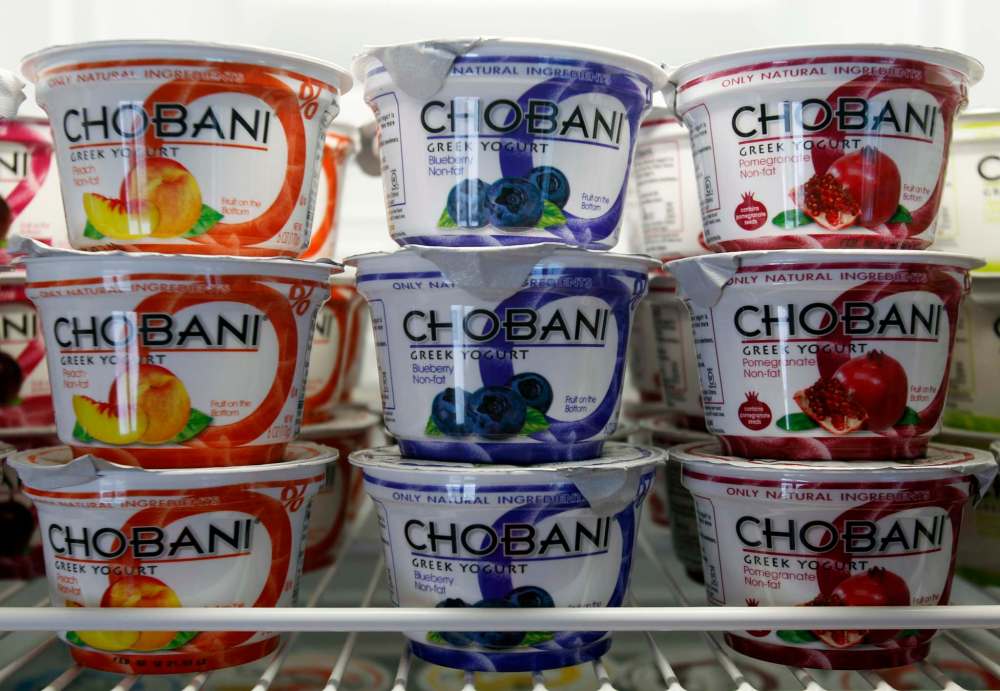
The initial process for making Greek yogurt and regular yogurt is the same, but the difference lies in the texture: Greek yogurt is strained to remove liquid, making it thicker and creamier and giving it more protein and fewer carbohydrates per serving. But some brands don’t follow this technique, and take shortcuts by adding thickeners and protein. Last year, a dispute between Greece and the Czech Republic over the latter’s “Greek-style yogurt” resulted in a scolding from the European Commission. “Using the term ‘Greek yoghurt’ for products produced outside Greece would deceive consumers and would create unfair competition in the EU market,” one EU official noted to Euractiv media group.
But those rules won’t apply in the United States, where makers are free to label their yogurt as Greek (and where the distance from Greece makes consumer confusion less likely). There are dozens of “Greek” yogurts in North American grocery stores, from popular brands such as Chobani, Yoplait, Dannon and Fage (a Greek company).
Greek yogurt became a huge hit in the United States 10 years ago, when consumers gravitated toward it for its protein, probiotics and “good” fat. Its rise to prominence in American grocery stores was meteoric: Chobani saw its sales go from more than US$3 million to more than US$1.1 billion in its first five years. The brand overtook Yoplait, which is owned by General Mills, last year to become the country’s biggest yogurt brand. The yogurt category is worth US$84 billion globally.
But the U.S. market for yogurt has been waning recently. General Mills reported a 20 per cent drop in yogurt sales in March. Millennials are gravitating toward convenience yogurt drinks, rather than spoonable yogurt, according to consumer research firm Mintel. And Greek yogurt is being challenged by other, more exotic yogurts.

Haven’t you heard that Icelandic yogurt (fun fact: technically, it’s cheese!) is the hot new thing? No, actually, we’re all about French yogurt now. What is French yogurt? It’s a yogurt that comes in a cute glass pot, with a cute brand name — Oui — made by Yoplait.
According to The Associated Press, “the company says there is no official definition for French yogurt,” though one thing that distinguishes Oui is it is cultured in its own glass pot rather than in large batches.
The story is enough to hook yogurt-weary consumers. Because that’s the key to winning the yogurt wars, as Charles Duhigg wrote in the New York Times: Yoplait “has finally figured out how to look beyond the data and embrace the narrative. Yoplait may have figured out how to fake authenticity as craftily as everyone else.”
And that narrative is why it’s important to Greece that everyone knows: Greek yogurt is made in Greece.
— Washington Post