The Caribbean roti with a catchy name
Advertisement
Read this article for free:
or
Already have an account? Log in here »
To continue reading, please subscribe:

Digital Subscription
One year of digital access for only $205*
- Enjoy unlimited reading on winnipegfreepress.com
- Read the E-Edition, our digital replica newspaper
- Access News Break, our award-winning app
- Play interactive puzzles
*First annual payment billed as $205.00 + GST for one year. This annual subscription will automatically renew at $233.00 + GST every 52 weeks (10% off the regular annual price of $259.35). Offer available to new and qualified returning subscribers only. Cancel any time.
To continue reading, please subscribe:
Add Free Press access to your Brandon Sun subscription for only an additional
$1 for the first 4 weeks*
- Enjoy unlimited reading on winnipegfreepress.com
- Read the E-Edition, our digital replica newspaper
- Access News Break, our award-winning app
- Play interactive puzzles
*Your next Brandon Sun subscription payment will increase by $1.00 and you will be charged $17.95 plus GST for four weeks. After four weeks, your payment will increase to $24.95 plus GST every four weeks.
Read unlimited articles for free today:
or
Already have an account? Log in here »
Hey there, time traveller!
This article was published 23/06/2018 (3006 days ago), so information in it may no longer be current.
There are many styles of roti — none of which should be confused with the fast-casual chain Roti Modern Mediterranean. In places serving the food of Trinidad and Tobago, you’re bound to find paratha, also called “buss up shut” (the vernacular for “busted-up shirt”), apropos of the bread’s remarkable resemblance to a torn shirt.
Roti — a generic term for flatbread, derived from the Sanskrit for “bread” — came to Trinidad and Tobago by way of indentured servants from the Indian subcontinent in the 1800s. After its arrival, David Nagar of Teddy’s Roti Shop in Washington explains, roti was revolutionized over the years, becoming a beloved and popular food on the islands. Buss up shut, in particular, is often found at parties, weddings and other celebrations. No matter the occasion, though, eat it with your hands: tear into the flaky bread and use it to scoop up every last bit of your chosen accompaniment.
Or just eat it plain — it practically melts in your mouth, requiring no ceremony.
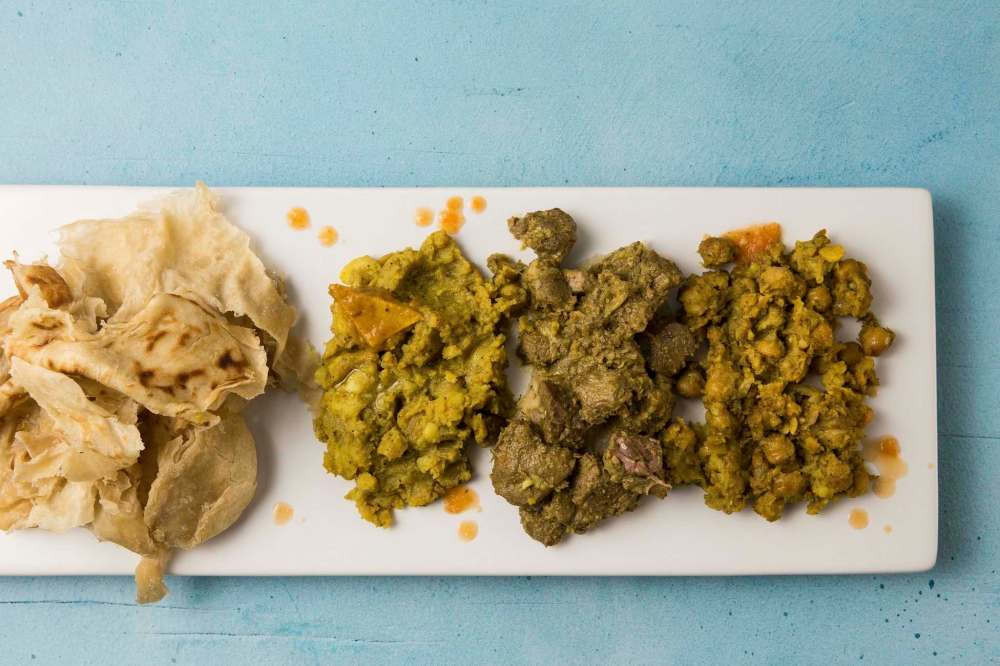
Bread: It’s the star of the show: cooked on a tawa, or a flat griddle, the bread is extra flaky, thanks to liberal application of fat (ghee, butter, oil, margarine or shortening — it depends on the cook) as well as the cooking method, in which two spatulas are used to fold and beat the bread, creating texture and that signature busted-up appearance.
Sides: Curried chana (chickpeas) and potatoes add yet another boost of protein and starch. You will not be hungry after eating this.
Main: Buss up shut goes with anything, but you’ll usually find curried goat, chicken, shrimp or a mix of vegetables.

Condiments: Fiery pepper sauce, chunky amchar (a condiment made of spiced green mango) or tangy tambran (tamarind) sauce can be added.
— Washington Post