Food insecurity worsened last year, more pronounced in racialized families: StatCan
Advertisement
Read this article for free:
or
Already have an account? Log in here »
To continue reading, please subscribe:

Digital Subscription
One year of digital access for only $205*
- Enjoy unlimited reading on winnipegfreepress.com
- Read the E-Edition, our digital replica newspaper
- Access News Break, our award-winning app
- Play interactive puzzles
*First annual payment billed as $205.00 + GST for one year. This annual subscription will automatically renew at $233.00 + GST every 52 weeks (10% off the regular annual price of $259.35). Offer available to new and qualified returning subscribers only. Cancel any time.
To continue reading, please subscribe:
Add Free Press access to your Brandon Sun subscription for only an additional
$1 for the first 4 weeks*
- Enjoy unlimited reading on winnipegfreepress.com
- Read the E-Edition, our digital replica newspaper
- Access News Break, our award-winning app
- Play interactive puzzles
*Your next Brandon Sun subscription payment will increase by $1.00 and you will be charged $17.95 plus GST for four weeks. After four weeks, your payment will increase to $24.95 plus GST every four weeks.
Read unlimited articles for free today:
or
Already have an account? Log in here »
Hey there, time traveller!
This article was published 14/11/2023 (1057 days ago), so information in it may no longer be current.
FREDERICTON – Nearly seven million Canadians struggled with hunger last year, with some going without food for days amid rising inflation, says a Statistics Canada study.
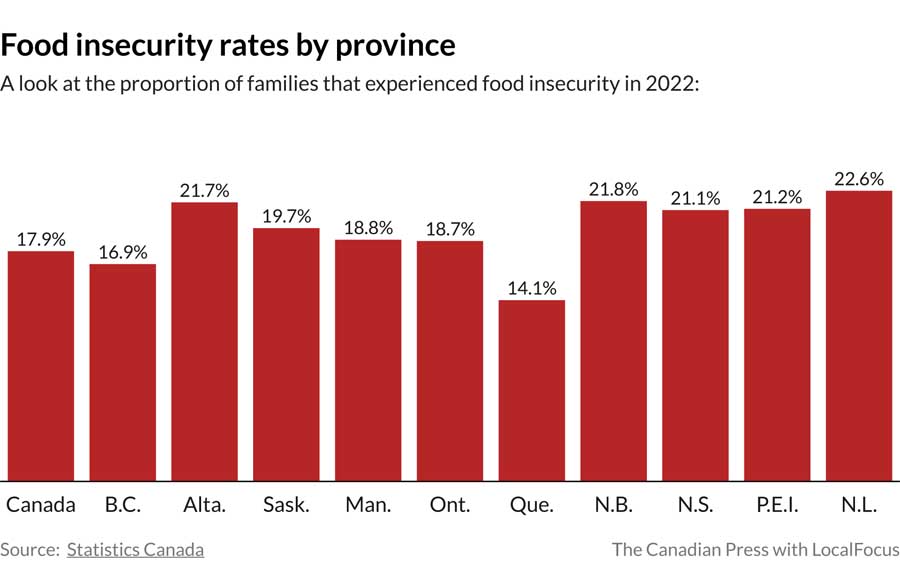
In 2022, 18 per cent of families in Canada reported experiencing food insecurity within the previous 12 months — up from 16 per cent in 2021, Statistics Canada says in its report, released Tuesday. The agency defines food insecurity as the lack of an adequate quality of diet or sufficient quantity of food.
“Food insecurity is a serious concern as it has been found to be associated with various chronic conditions, mental health problems, and other diseases and infections,” the study says. “It has also been found to increase the likelihood of hospitalization and has been linked to premature mortality, and as such, puts pressure on the health-care system.”
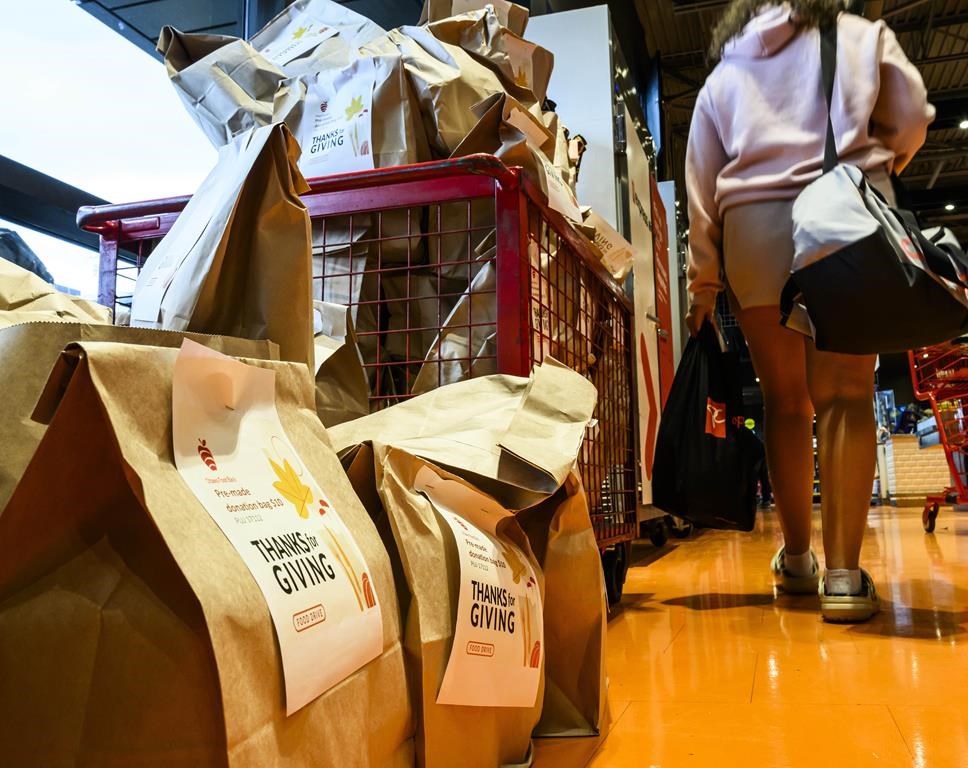
The study says that high inflation has increased the cost of food and reduced the purchasing power of consumers, “causing families to buy less.”
The year-over-year inflation rate jumped from one per cent in January 2021 to 4.8 per cent in December of that year; the annual rate of food inflation increased from one per cent to 5.2 per cent over the same period. By June 2022, the overall inflation rate was 8.1 per cent and food was 8.8 per cent — the largest yearly change in 40 years, the study says.
Last year, food insecurity was lowest in Quebec, with 14 per cent of families reporting “some level of food insecurity.” It was highest in Newfoundland and Labrador, at 23 per cent, followed by New Brunswick and Alberta, both at 22 per cent, the study says.
In the cities, Edmonton reported the highest level of food insecurity, at 21 per cent. Ottawa-Gatineau reported the lowest level, at 14 per cent.
About 15 per cent of rural families, meanwhile, reported some level of food insecurity, compared with 19 per cent of urban families.
Families in which a woman was the main breadwinner were more likely than others to face food insecurity, and the rate shot up to 41 per cent for homes in which women were single parents. Sixty per cent of families with Indigenous single mothers reported food insecurity compared with 41 per cent of families led by non-Indigenous mothers. The rate of food insecurity was particularly high among Black single mothers, at 62 per cent.
Meanwhile, 24 per cent of homes led by single male parents reported some level of food insecurity.
The study says that Chinese and South Asians were less likely to be food insecure than non-racialized, non-Indigenous people. Black Canadians, at 38 per cent, were notably more likely to report food insecurity.
One of the limitations of the study was the exclusion of families living in the three territories, on reserves and other Indigenous settlements in the provinces, the authors acknowledge.
“This is likely to lead to an underestimate of food insecurity among the Indigenous population.”
While steady employment was associated with a lower likelihood of going hungry, the study says there were differences in food security based on the class of worker. Self-employed people were less likely to report food insecurity, at 13 per cent, compared with paid employees, at 18 per cent. Renters were more likely to be food insecure, especially those in subsidized housing.
About one in four, or 26 per cent, of renters in non-subsidized housing, and more than four in 10, or 42 per cent, of those living in subsidized places reported food insecurity.
“Immigrant families were more likely to report food insecurity compared to the Canadian-born,” it said.
One in four families, 26 per cent, in which the main breadwinner immigrated between 2013 and 2022 reported being food insecure. That proportion was 20 per cent for those who began calling Canada home before 2013.
About five per cent of Canadian families were “marginally” food insecure — worried about running out of food or faced with a limited selection due to a lack of money, the study says. Another eight per cent were considered “moderately food insecure,” meaning the quality and quantity of their food was compromised.
“A further five per cent were severely food insecure, missing meals, reducing their food intake and, at the most extreme, going days without food.”
This report by The Canadian Press was first published Nov. 14, 2023.
Related Articles
Miracle on Mountain annual campaign seeks lofty goal

Advertisement Advertise With Us
Advertisement Advertise With Us