B.C. wineries again allowed to sell direct-to-consumer in Alberta

Advertisement

Advertise with us

VANCOUVER - British Columbia wineries can again sell their products directly to Alberta consumers this week, months after an interprovincial deal was announced between the two provinces last summer.

Read this article for free:


or

Already have an account? Log in here »

To continue reading, please subscribe:

Subscribe and receive a limited-edition Free Press branded hat or tote.

Digital Subscription

One year of digital access for only $205*

  • Enjoy unlimited reading on winnipegfreepress.com
  • Read the E-Edition, our digital replica newspaper
  • Access News Break, our award-winning app
  • Play interactive puzzles

*First annual payment billed as $205.00 + GST for one year. This annual subscription will automatically renew at $233.00 + GST every 52 weeks (10% off the regular annual price of $259.35). Offer available to new and qualified returning subscribers only. Cancel any time.

To continue reading, please subscribe:

Add Free Press access to your Brandon Sun subscription for only an additional

$1 for the first 4 weeks*

  • Enjoy unlimited reading on winnipegfreepress.com
  • Read the E-Edition, our digital replica newspaper
  • Access News Break, our award-winning app
  • Play interactive puzzles
Start now

*Your next Brandon Sun subscription payment will increase by $1.00 and you will be charged $17.95 plus GST for four weeks. After four weeks, your payment will increase to $24.95 plus GST every four weeks.

Hey there, time traveller!
This article was published 07/01/2025 (603 days ago), so information in it may no longer be current.

VANCOUVER – British Columbia wineries can again sell their products directly to Alberta consumers this week, months after an interprovincial deal was announced between the two provinces last summer.

The process allows Albertans to order wine from more than 300 B.C. wineries in exchange for the Alberta government getting its share of applicable taxes.

The agreement will run for one-year when it will be evaluated for its effectiveness.
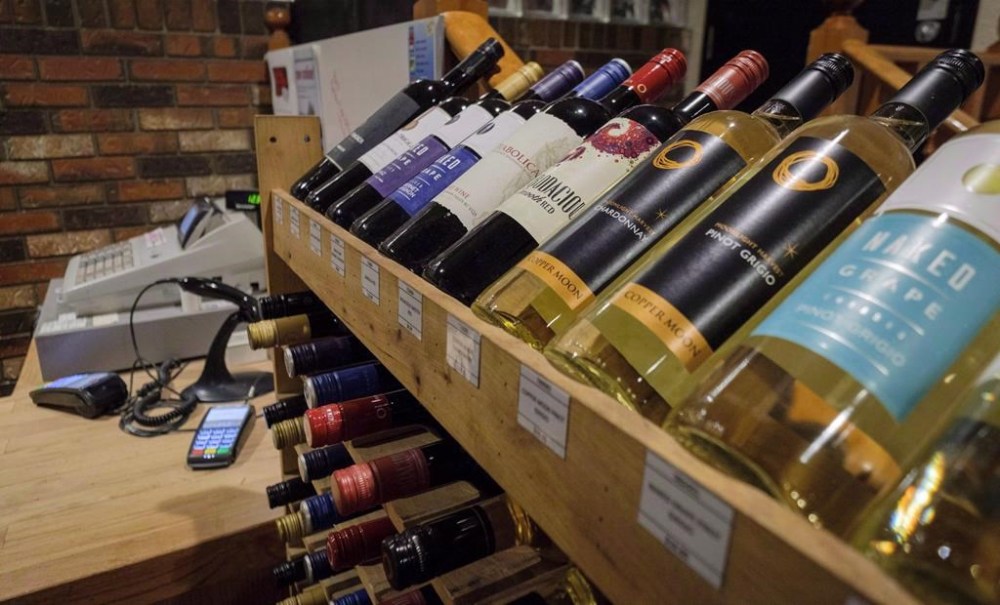
British Columbia wineries are now able to sell their products directly to Alberta consumers following an agreement between the two provinces. Bottles of British Columbia wine are displayed at a liquor store in Cremona, Alta., on February 7, 2018. THE CANADIAN PRESS/Jeff McIntosh

It followed an impasse that began last January when the Alberta Gaming, Liquor and Cannabis — the agency that regulates the sale of liquor in the province — announced it would no longer stock wine in Alberta stores from B.C. producers that were bypassing it to sell directly to Albertans.

At the time, the agency said those offering direct-to-consumer shipping were sidestepping Alberta laws and siphoning money from its general revenue fund.

Premier David Eby says in a statement that the new direct-to-consumer program is “a win” for wineries and for communities that rely on the industry.

“By working collaboratively with Alberta, we’re supporting economic growth and strengthening ties between our provinces,” Eby says in the release.

This report by The Canadian Press was first published Jan. 7, 2025.
Report Error Submit a Tip

More Stories

Rare and tough to notice, sarcomas may lurk in the body

Jen Zoratti 12 minute read Preview

Rare and tough to notice, sarcomas may lurk in the body

Jen Zoratti 12 minute read Monday, Aug. 31, 2026

Last summer, Michelle Finley was going about a normal day.

She had just dropped her car off at a garage and was walking back to her office building downtown when, suddenly, she was stopped in her tracks by a searing cramp on the bottom of her right foot.

“It was so painful it took my breath away,” says Finley, now 52. “I stopped and held on to the side of a building for a second — like, it was bringing tears to my eyes.”

Finley thought she had a really bad case of plantar fasciitis. Nine months later she would lose her foot to sarcoma.

Read
Monday, Aug. 31, 2026

Filtering the worst of our behaviour

Gwynne Dyer 5 minute read 2:00 AM CDT

On Sunday, Aug. 30, a Falcon Heavy rocket delivered the Nancy Grace Roman space telescope onto a direct transfer trajectory to its permanent home at the Lagrange Two Point (L2), 1.5-million km from Earth. In 100 days it will reach its station, power up, and start observing the universe.

Astronomers will use it to try to understand the nature of dark matter, which makes up most of the mass in the universe (but some say may not even exist).

It is expected to find up to 100,000 new exoplanets circling other stars, and may be able to spot ones even smaller than Mars. Current methods can only see much bigger ones.

It will test a new technology called a coronagraph, which may one day be able to detect life on some of those planets by analyzing the light reflected from them. It would be nice to have a better answer to scientist Enrico Fermi’s famous question: “Where is everybody?”

Red River Polytechnic looks to expand after MITT takeover

Maggie Macintosh and Morgan Modjeski 4 minute read Preview

Red River Polytechnic looks to expand after MITT takeover

Maggie Macintosh and Morgan Modjeski 4 minute read Yesterday at 7:18 PM CDT

Red River College Polytechnic is celebrating an enrolment bump and eyeing new high school partnerships as part of its merger with a longtime competitor.

For the first time, nearly 400 students attended their first day of RRC Polytech in Winnipeg’s south end on Tuesday.

The new campus is outfitted with two school logos — a new red one and a blue design belonging to the Manitoba Institute of Trades and Technology.

“It feels great to be a part of history,” said Dom McLaren, an 18-year-old who is enrolled in RRC Polytech’s network and systems administration program. “I’m definitely going to enjoy my time.”

Read
Yesterday at 7:18 PM CDT

Indigenous enrolment up 12.5% at Brandon U

Abiola Odutola 3 minute read 2:00 AM CDT

BRANDON — Brandon University has recorded a 12.5 per cent increase in enrolment by Indigenous students from last year.

The latest numbers bring the total count to 570 and follow the trend in which Indigenous students have become one of the fastest-growing demographics at BU.

The students are primarily from Brandon, followed by Winnipeg, The Pas, Dauphin and Thompson, and the university has received more applications from high schools in communities with larger Indigenous populations.

Meanwhile, domestic, non-Indigenous enrolment had modest gains overall while international student numbers fell.

Winnipeg teacher disciplined for ‘liking’ student’s post

Maggie Macintosh 5 minute read Preview

Winnipeg teacher disciplined for ‘liking’ student’s post

Maggie Macintosh 5 minute read Monday, Aug. 31, 2026

A Winnipeg teacher has been reprimanded for accidentally clicking ‘like’ on a student’s year-old social media post during a late-night scroll.

A recent investigation by Manitoba’s independent teacher commissioner found Jordan Nelson, a hockey coach in the Pembina Trails School Division, engaged in professional misconduct by viewing online profiles of students who were following a team account he was managing on behalf of his school.

“Using information associated with the school’s hockey team account to access and review a student’s social media account, without any legitimate educational or workplace purpose, was inappropriate and inconsistent with the professional boundaries expected of a teacher,” commissioner Noni Classen wrote.

A five-page report, better known as a consent resolution agreement, details agreed-upon facts about an October 2025 incident and subsequent disciplinary action.

Read
Monday, Aug. 31, 2026

Reimagining education in Manitoba

Jim Silver 4 minute read 2:00 AM CDT

There has been much talk lately about how Manitoba can strengthen its economy and improve its general well-being. Adding a third component to our education system, one that would be equal in funding and recognition to K-12 and post-secondary education, would do just that.

That third component, adult basic education, already exists, but with inadequate funding and little recognition.

Adult basic education includes adult learning centres that offer mature high school diplomas to those who have not previously completed high school, and adult literacy programs that bring adults up to high school entry level.

Adult basic education works well. Since 2003, some 25,000 Manitobans have earned their mature high school diplomas. Enough graduates move off employment and income assistance, saving the provincial government money, and into full-time employment, increasing the government’s tax revenue, so that over a 10-year period the government makes more than it spends on adult basic education. The system pays for itself.