Manitoba premier plans to target ‘differential pricing’ for groceries in new year

WINNIPEG - The Manitoba government is looking at cracking down on so-called "differential pricing" on groceries and implementing further controls on milk as part of its ongoing attempts to contain the rising cost of living.

Read this article for free:


or

Already have an account? Log in here »

To continue reading, please subscribe:

Subscribe and receive a limited-edition Free Press branded hat or tote.

Digital Subscription

One year of digital access for only $205*

  • Enjoy unlimited reading on winnipegfreepress.com
  • Read the E-Edition, our digital replica newspaper
  • Access News Break, our award-winning app
  • Play interactive puzzles

*First annual payment billed as $205.00 + GST for one year. This annual subscription will automatically renew at $233.00 + GST every 52 weeks (10% off the regular annual price of $259.35). Offer available to new and qualified returning subscribers only. Cancel any time.

To continue reading, please subscribe:

Add Free Press access to your Brandon Sun subscription for only an additional

$1 for the first 4 weeks*

  • Enjoy unlimited reading on winnipegfreepress.com
  • Read the E-Edition, our digital replica newspaper
  • Access News Break, our award-winning app
  • Play interactive puzzles
Start now

*Your next Brandon Sun subscription payment will increase by $1.00 and you will be charged $17.95 plus GST for four weeks. After four weeks, your payment will increase to $24.95 plus GST every four weeks.

Hey there, time traveller!
This article was published 22/12/2025 (285 days ago), so information in it may no longer be current.

WINNIPEG – The Manitoba government is looking at cracking down on so-called “differential pricing” on groceries and implementing further controls on milk as part of its ongoing attempts to contain the rising cost of living.

Differential pricing refers to a practice where people can be charged different prices for the same grocery product from the same store.

“An online grocery seller might charge people different prices based on their demographic information that have been tracked online,” Premier Wab Kinew said in a year-end interview with The Canadian Press.

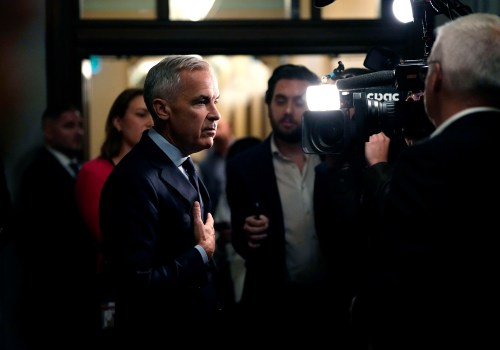
Manitoba Premier Wab Kinew said the province is looking at cracking down on differential pricing used by third-party apps for online grocery sales. (Liam Richards / The Canadian Press files)

“Third-party apps are definitely one example that we’ve seen. Third-party delivery apps can charge people different prices based on what they know about you as an online consumer. And we just want to see fairness, and we want to see better prices.”

Kinew didn’t provide local examples.

The issue has emerged in the United States, where a recent report by Consumer Reports and two advocacy groups said the online platform Instacart charged different prices for the same grocery items for online customers shopping at the same store.

Instacart ends a program where users could see different prices for the same item at the same store
FILE - An instacart logo and an instacart webpage are seen in New York, Sept. 6, 2023. (AP Photo/Richard Drew, File)

Instacart, in a blog post this month, said it’s not a retailer and doesn’t control base prices listed on its website. It said retailers often test different prices in order to judge consumer sensitivity.

The Retail Council of Canada, which represents major grocers and others, said its members apply standard pricing.

“While prices can vary based on membership programs or the quantities purchased, they are consistently available to all customers at the same time,” John Graham, the council’s regional director for the Prairies, wrote in an email.

Manitoba’s government is also looking at expanding its control over the price of milk, although Kinew didn’t provide details.

Currently, the province sets a wholesale price for milk and a maximum retail price. But the maximum retail price only applies to one-litre containers.

“It is an area that we’re looking at,” the premier said. “The balance, of course, is we’ve got dairy producers in Manitoba (and) we want to make sure those producers can keep their head above water.”

“We just want to see fairness, and we want to see better prices.”

Other measures are expected following a study on grocery prices that was promised in the government’s throne speech in November.

Kinew’s NDP made affordability a key part of its 2023 election campaign and the government has already tried to tackle grocery prices. Kinew said in 2024 he expected prices to be controlled when the province temporarily suspended its fuel tax. But food inflation in Manitoba was, for a time, higher than the national average due to factors such as high beef prices on the Prairies.

The government also recently enacted a law aimed at opening up competition in the grocery sector. The law bans property deals that might prevent new grocery stores from opening close to existing ones.

But inflation has continued. The latest monthly data from Statistics Canada says Manitoba’s inflation rate in November was the highest among the provinces when compared to November 2024, driven partly by transportation costs and property taxes.

Now more than halfway into his first mandate, Kinew recently mused about calling the next election before the scheduled date of Oct. 5, 2027.

In the year-end interview, he said he’s not considering an early vote at this time.

“I can say 2026 is not going to be an election year,” Kinew said.

“We’ve got a full docket of bills, and we’ve got a lot of heavy lifting with the budget, and there’s a lot to do on health care.”

Kinew also said he has no plans to lift a ban on alcohol products from the U.S. at government-run liquor stores.

The ban was implemented in March in response to tariffs imposed by the U.S. on Canadian goods, and the province recently decided to sell off stock that had been sitting in warehouses.
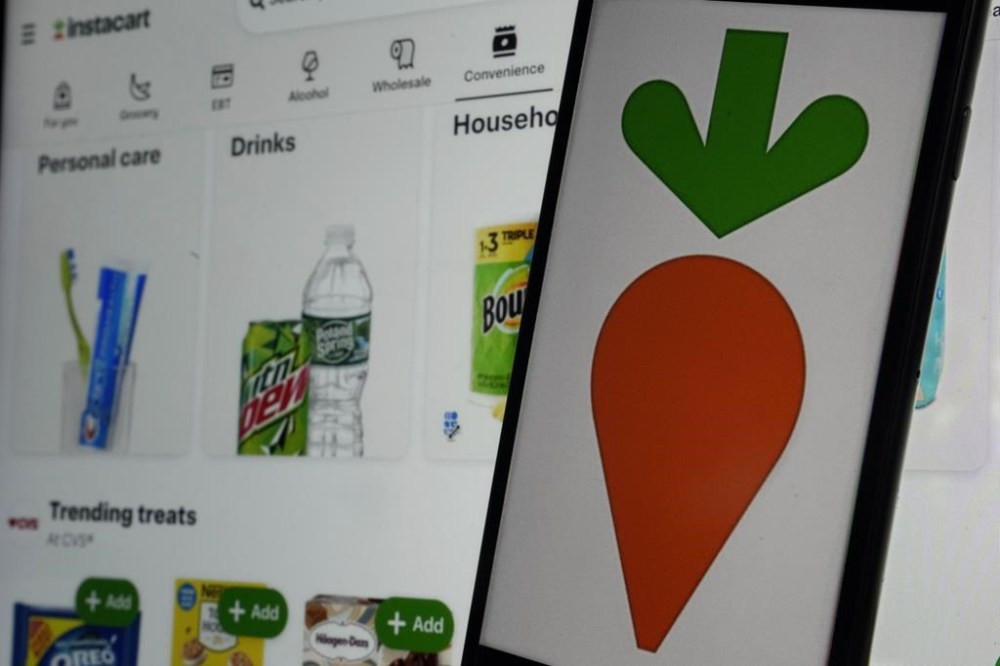
Instacart has said it doesn’t control base prices listed on its website. It said retailers often test different prices in order to judge consumer sensitivity. (Richard Drew / The Associated Press files)

U.S. trade representative Jamieson Greer recently said lifting provincial bans on American liquor is necessary for upcoming negotiations on extending the Canada-U.S.-Mexico agreement, known as CUSMA.

Kinew said Americans need to show compromise.

“We plan to maintain this, of course, until the Trump tariffs get removed,” Kinew said.

“Canada has stood down from a number of things so far over the course of 2025, and I don’t see what we’ve got in return for that.

“I would want us to get something in return.”

This report by The Canadian Press was first published Dec. 22, 2025.

— With files from The Associated Press

Report Error Submit a Tip

More Stories

Volunteer pop-up library axed from Manitoba Youth Centre

Matthew Frank 4 minute read Preview

Volunteer pop-up library axed from Manitoba Youth Centre

Matthew Frank 4 minute read 2:01 AM CDT

Manitoba Corrections has cancelled a pop-up library program at the Manitoba Youth Centre, leaving inmates without librarian services and fewer options to borrow certain books.

The Prison Libraries Committee, part of the non-profit Manitoba Library Association, operated and funded the volunteer program since 2024 before it was shut down by the province last month. The group previously partnered with the province to offer the service because the facility has no dedicated library of its own.

“It is concerning that community members who are incarcerated, especially youth, are losing out on meaningful programming, access to information and rehabilitation efforts, which are offered at no cost to (Manitoba) Corrections. We urge Manitoba Justice to promote more library services and programming, not less,” said a Sept. 24 letter from the non-profit addressed to the justice minister.

Ashley Huot, chair of the Prison Libraries Committee, said she was puzzled when she received an email last month from Manitoba Corrections stating that the pop-up library was no longer needed.

Read
2:01 AM CDT

Gillingham talks trash, pledges big bin boost

Joyanne Pursaga 4 minute read Preview

Gillingham talks trash, pledges big bin boost

Joyanne Pursaga 4 minute read Yesterday at 2:01 AM CDT

Scott Gillingham says he would add hundreds of locked garbage bins downtown to prevent unsightly trash piles if re-elected as mayor.

Read
Yesterday at 2:01 AM CDT

Letters, Oct. 3

7 minute read 2:01 AM CDT

A morning in the life …

My very first lesson does not start when I walk into that lecture hall, oh no — it starts long before. It begins when I walk to my car, check the estimated arrival time to the University of Manitoba and hope that Winnipeg traffic agrees with it.

A drive that appears completely manageable changes almost immediately when I’m greeted by a tsunami of orange pylons and a line of cars that appears to go on forever. Traffic moves by the inch, lanes magically disappear and the detour I took yesterday now has a detour of its own. These factors make me do a calculation that I have become all too familiar with. How late can I arrive and still find parking, run to my class across campus and get to class with enough time left to make it worth it?

I have grown used to people saying, “Why not just leave earlier?” I do. But when I’m already leaving for my 8:30 a.m. class at 7 a.m., there’s only so much I can do. This drive that some would think is relaxing is one that feels like an assignment that I didn’t know I had to complete and is due at 8:30 a.m.

Clock ticks down on destruction of records documenting residential school abuses

Marsha McLeod 13 minute read Preview

Clock ticks down on destruction of records documenting residential school abuses

Marsha McLeod 13 minute read Yesterday at 12:49 PM CDT

In less than a year, a private company is set to destroy the largest cache of records detailing the widespread abuse of Indigenous children at residential schools in Canada.

The destruction, which was ordered by an Ontario court in 2014 and later upheld by the Supreme Court, is set to take place on Sept. 19, 2027.

This countdown is igniting emotional conversations that seek to balance the immense historical value of the records alongside the confidentiality survivors were promised as part of the process of providing detailed testimony about abuses they’d suffered.

The records were created as part of the Indian Residential Schools Settlement Agreement, a class-action settlement stemming from survivors who began suing the federal government in the late 1990s over the harm they’d been subjected to at residential schools.

Read
Yesterday at 12:49 PM CDT

Retired guidance counsellor defends explicit 2025 sex-ed presentation to high school football team in disciplinary hearing

Maggie Macintosh 7 minute read Preview

Retired guidance counsellor defends explicit 2025 sex-ed presentation to high school football team in disciplinary hearing

Maggie Macintosh 7 minute read Updated: Yesterday at 12:26 PM CDT

Gus Watanabe, a former employee of Oak Park High School in Winnipeg, was the subject of a public disciplinary hearing on Thursday.

Read
Updated: Yesterday at 12:26 PM CDT

A spiritual vision will help anchor a health civic outlook

John Longhurst 5 minute read 2:01 AM CDT

We have an election coming up. With that in mind, the Free Press asked some of their columnists to write about the challenges ahead and how the city can become better.

For Tom Brodbeck, the main challenge is finances — and how candidates will pay for their many promises for fixing roads, improving public safety and making transit better.

Rebecca Chambers said that the concerns of inner-city residents need to be taken seriously by those who aspire to work at city hall.

Niigaan Sinclair said the most pressing issue in Winnipeg isn’t construction projects, light-rail transit, public safety, taxes or social services. For him, it’s the city’s relationship with Indigenous people.