It’s easy to turn bones into nutritious, delicious eating
Advertisement
Read this article for free:
or
Already have an account? Log in here »
To continue reading, please subscribe:

Digital Subscription
One year of digital access for only $205*
- Enjoy unlimited reading on winnipegfreepress.com
- Read the E-Edition, our digital replica newspaper
- Access News Break, our award-winning app
- Play interactive puzzles
*First annual payment billed as $205.00 + GST for one year. This annual subscription will automatically renew at $233.00 + GST every 52 weeks (10% off the regular annual price of $259.35). Offer available to new and qualified returning subscribers only. Cancel any time.
To continue reading, please subscribe:
Add Free Press access to your Brandon Sun subscription for only an additional
$1 for the first 4 weeks*
- Enjoy unlimited reading on winnipegfreepress.com
- Read the E-Edition, our digital replica newspaper
- Access News Break, our award-winning app
- Play interactive puzzles
*Your next Brandon Sun subscription payment will increase by $1.00 and you will be charged $17.95 plus GST for four weeks. After four weeks, your payment will increase to $24.95 plus GST every four weeks.
Read unlimited articles for free today:
or
Already have an account? Log in here »
Hey there, time traveller!
This article was published 12/11/2014 (4337 days ago), so information in it may no longer be current.
At the base of every truly delicious soup is a really, really good broth. And it isn’t just about the flavour a good broth imparts, there is science out there that says homemade bone broth can have a profound nutritional impact on what we are putting on our tables.
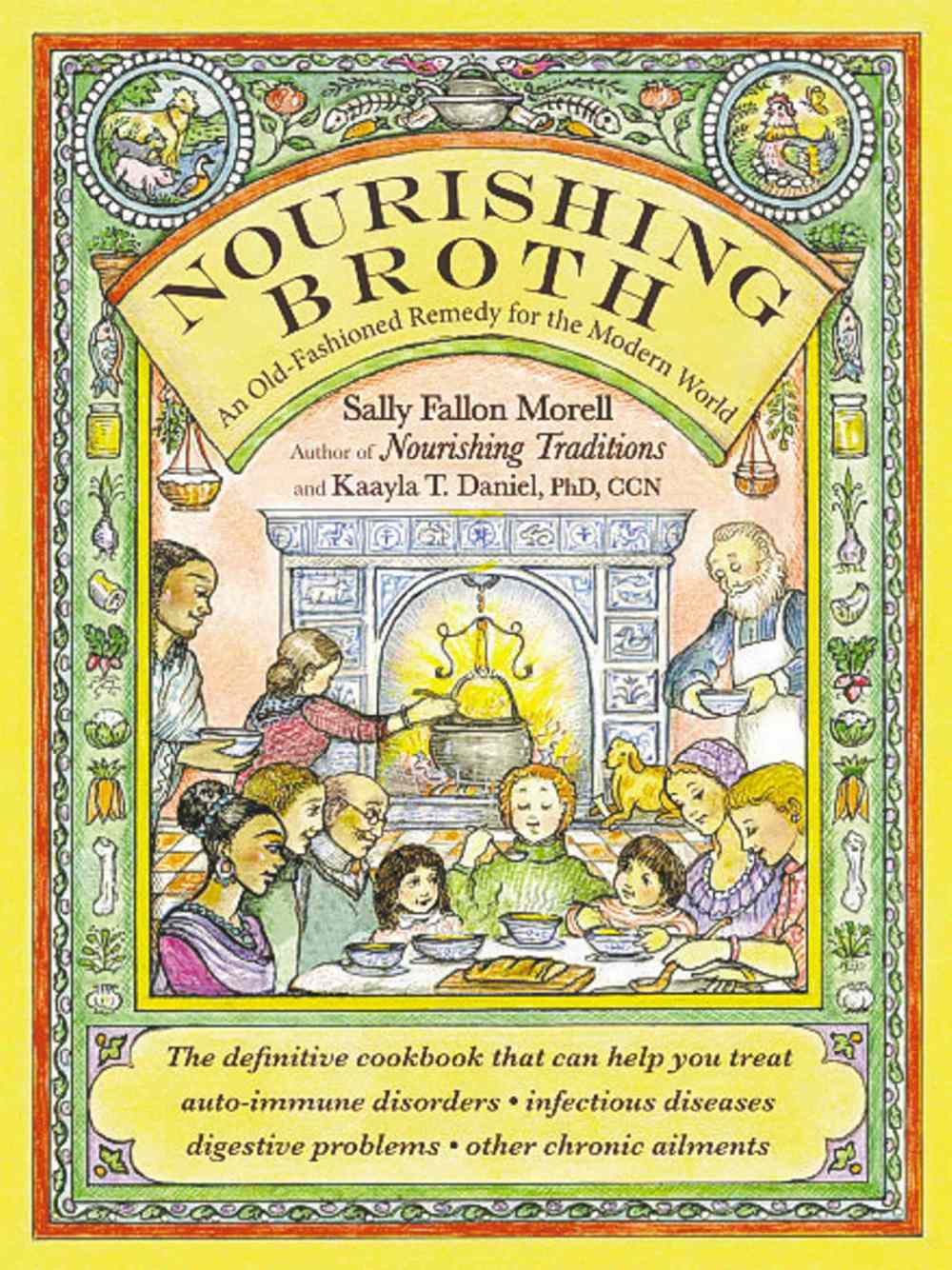
That’s where Nourishing Broth (Grand Central Publishing, $25) by Sally Fallon Morell and Kaayla T. Daniel, PhD, CCN comes into the culinary picture. Nourishing Broth looks at the nutritional science around bone broth and its many health benefits. The authors also look at the history and folklore of broth and why it is still made by wise cooks all over the world.
Morell’s interest in food began with her mom regularly making chicken broth when she was growing up. Her interest deepened after reading Nutrition and Physical Degeneration by Weston A. Price, an inspiration which led her to write her cookbook Nourishing Traditions, and to found the Weston A. Price Foundation (westonaprice.org ).
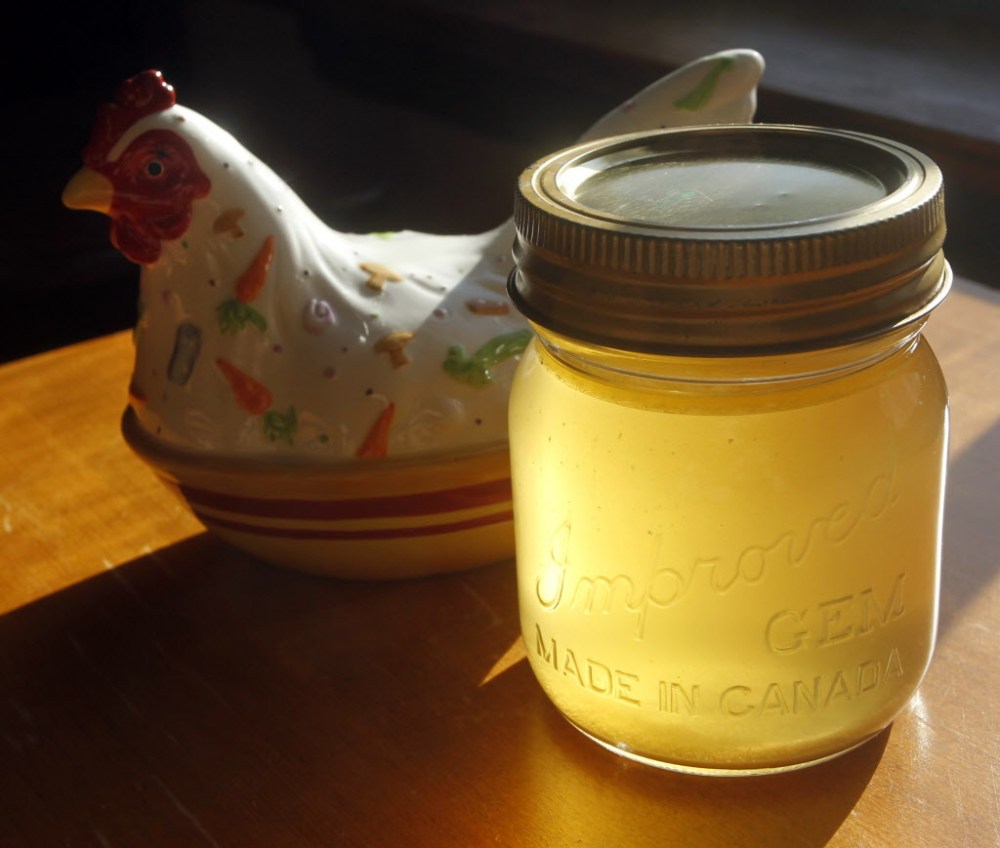
“The foundation teaches the principles of healthy traditional diets, and one of those traditions, found all over the world, is the making of bone broth,” she says.
For Kaayla T. Daniel (who counts as one of her mentors the late Mary G. Enig, the scientist who first exposed the dangers of trans fats in the 1970s), her interest in food grew as she found herself struggling with her health. She says she tried a number of diets, including veganism, macrobiotics, food combining, juicing and even Ayurveda.
“I finally turned my health around when I began eating a nutrient-rich diet that included a variety of animal foods, including bone broth,” she says.
“That led me to study nutrition, earn a PhD and become a certified clinical nutritionist (CCN).”
Broth was a nourishing and economic staple in her household when Morell was raising her four children. She says the work of Francis Pottenger provided a scientific explanation for why consuming broth in soups, stews and sauces is so satisfying at the family table.
“He explains that broth supports good digestion by attracting digestive juices to the food.”
Both women are engaged by what is new in the science, and about how it shows your grandmother was right.
Morell says she is most intrigued by glycine, an amino acid that is abundant in broth.
“Glycine helps digestion, supports detoxification and even helps regulate our moods and emotional outlook,” she says.
Daniel says that scientific studies support chicken soup’s reputation as “Jewish penicillin” and healers have known for thousands of years that it can help with recovery from colds, flus and other acute illnesses.
“Less well known is that cartilage and other components found in genuine homemade bone broth can help prevent and even reverse chronic illnesses such as osteoarthritis, rheumatoid arthritis and other auto-immune disorders, digestive distress, mental illness and cancer,” she says.
“Furthermore, broth belongs in state-of-the-art athletic programs and anti-aging therapies.”
Fortunately, making this powerhouse food does not require a degree, just some solid basics.
“The secret is using lots of bones, and the right kinds of bones,” says Morell.
“If you are making chicken broth in a slow cooker, fill the cooker right up to the brim with chicken bones — for me, these are usually bones I have saved in the freezer from a couple of chicken dinners.”
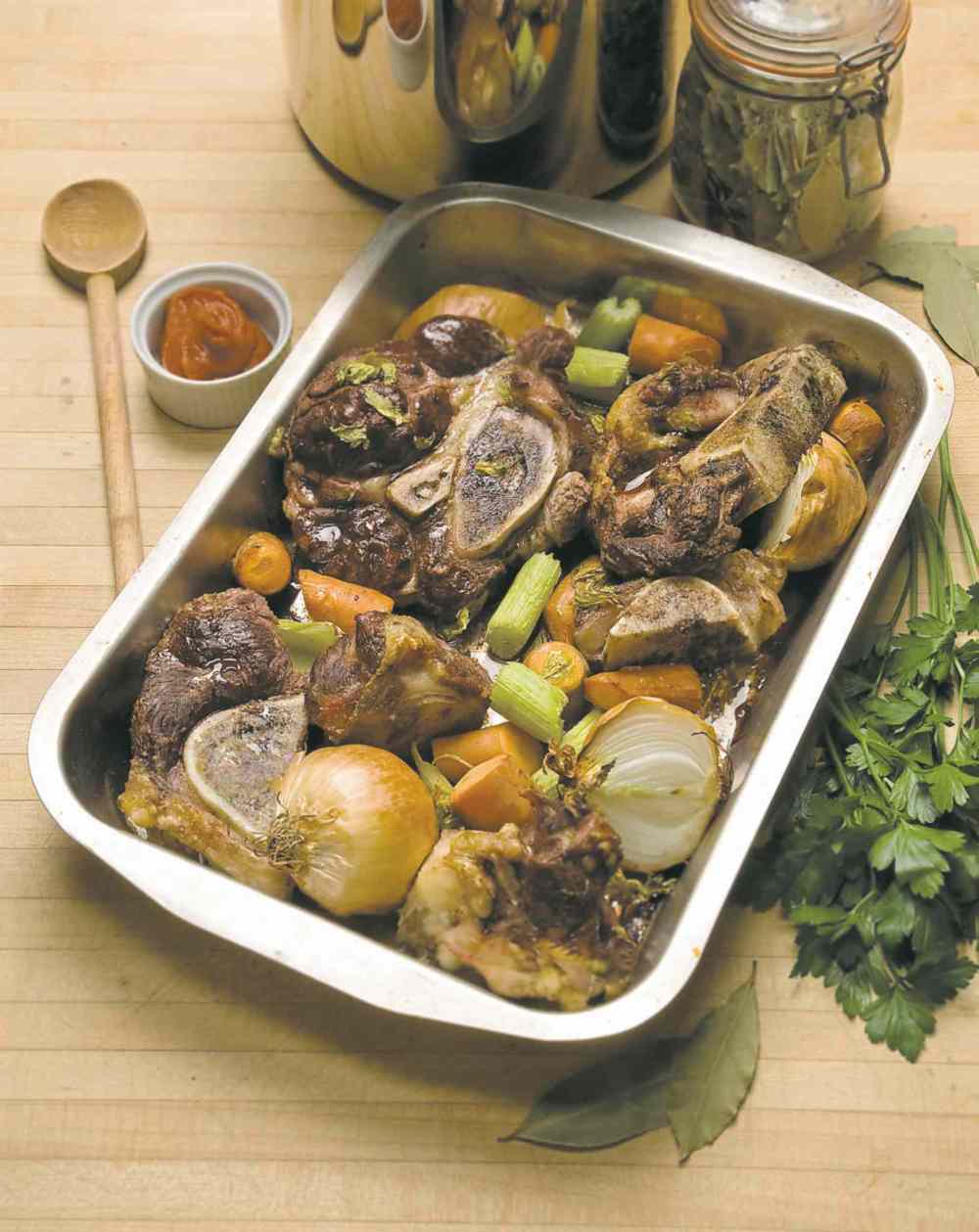
She says that to make sure you get that all important gel, add gelatin-rich chicken feet or a split pig’s foot. Then add water to just cover the bones. For beef broth, use bones that have a lot of cartilage, such as oxtails or knuckle bones.
“Many people worry too much about making the perfect broth,” says Daniel.
“My advice is learn the basics and just do it.”
“Then you have the magic essential ingredient for gravy, reduction sauces, stews and delicious soups,” says Morell.
Even though the science behind broth is fairly new, the history is long.
“Through the ages, many renowned healers have played starring roles in the history of broth: think Hippocrates, Galen, Moses Maimonides, Hildegard von Bingen and Florence Nightingale, among many others,” says Daniel.
“Nightingale even talked Alexis Soyer, the world’s first celebrity chef, into going to Crimean War to cook top-quality broth for the wounded soldiers.”
— — —
Since reading Nourishing Broth, I have adapted the recommendations for making broth in my own kitchen. Some kind of broth is bubbling in the slow cooker almost every single day, cooked for a minimum of 24 hours with one to two tablespoons of vinegar added for a full extraction of nutrients. I find pork broth is best made with a split pig’s foot and a meaty pork hock. For beef broth, I prefer to brown the bones first.
Here are three recipes from Nourishing Broth. These are good basic starters for chicken broth and how to use it, so feel free to adapt.
Slow Cooker Chicken Broth
This recipe makes a nice, light-tasting broth and is a good primer for making broth out of any kind of bones.
Makes about 4 litres (4 quarts)
2 to 2.5 kg (4 to 5 lbs) leftover chicken bones, or 1 whole stewing chicken
2 to 6 chicken feet (Young’s Food Market carries them)
30 to 45 ml (2 to 3 tbsp) apple cider vinegar
About 4 litres (16 cups) cold filtered water
2 to 3 celery sticks
1 large yellow or red onion, root end cut off and quartered, with skin left on
Sea salt
Place the bones and feet in a slow cooker, add the vinegar, then add enough cold filtered water to cover the bones. Let stand for 30 to 60 minutes. Add the celery and onion, cover, and cook on low for 1 to 2 days, checking occasionally to ensure that the feet remain covered with water and adding more water as needed. If your slow cooker won’t maintain a simmer, leave the lid slightly ajar to prevent boiling.
Remove the bones and feet with tongs, then strain the broth through a fine-mesh strainer into 2-litre (2-quart) measuring containers or a large heatproof bowl and it’s ready to use in your recipes. If not using right away, cool to room temperature, then refrigerate uncovered for several hours, until the fat rises to the top and congeals. If desired, skim off this fat (you can use it in your cooking) and transfer the broth to containers, cover, and store in the refrigerator for up to 5 days or in the freezer for many months.
Use the broth as base for any soup, sauce or gravy, or sip as you would tea or coffee. Season individual servings with salt.
Chicken Noodle Soup
A small pasta, such as stars or orzo, sits in the spoon better if you dice your vegetables. Use longer noodles with julienned or shredded vegetables.
Serves 4
250 ml (1 cup) cooked rice noodles (or your favourite)
About 500 ml (2 cup) shredded vegetables such as carrots, cabbage, and spring onions
About 250 ml (1 cup) diced vegetables such as broccoli or snow peas
1 litre (4 cup) homemade chicken broth, brought to a simmer
Naturally fermented soy sauce or sea salt
Divide the noodles and shredded and diced vegetables among 4 bowls. Pour the simmering broth on top. Have your diners season their bowls with soy sauce to taste.
Curry Soup with Squash
If you want to cut this recipe in half, a can of coconut milk and a tablespoon of brown sugar are nice additions to change things up. Olive oil also works. You can cook the squash the day before and let it cool so it is easier to handle.
Serves 12
50 ml (1/4 cup) coconut oil
2 onions, peeled and chopped
30 ml (2 tbsp) peeled and grated fresh ginger
5 cloves garlic, minced
7 ml (11/2 tsp) ground coriander
7 (1 1/2 tsp) ground cumin
5 ml (1 tsp) ground turmeric
2 ml (1/2 tsp) ground allspice
3 litres (12 cup) homemade chicken stock
1 medium butternut squash, baked, seeds removed and flesh scooped out
750 g (11/2 lbs) spinach or other greens, chopped
500 ml (2 cups) chopped chicken meat

Sea salt
Heat the coconut oil in a large saucepan over medium heat. Add the onions and ginger and sauté until softened, about 5 minutes. Add the garlic, coriander, cumin, turmeric and allspice and sauté for 1 minute. Add the stock and butternut squash, increase the heat to high, bring to a boil and blend well with a whisk or handheld blender. Add the greens, return to a simmer, and simmer for about 3 to 5 minutes, until the spinach is wilted. Add the chicken and cook to heat it through. Season with salt, ladle into bowls, and serve.
(Recipes excerpted from the book Nourishing Broth by Sally Fallon Morell and Kaayla T. Daniel, PhD, CCN. Grand Central Publishing.)
History
Updated on Wednesday, November 12, 2014 9:16 AM CST: Changes headline, replaces photo