Near-death experiences led to new life
Former reporter, politician to share perspective
Advertisement
Read this article for free:
or
Already have an account? Log in here »
To continue reading, please subscribe:

Digital Subscription
One year of digital access for only $205*
- Enjoy unlimited reading on winnipegfreepress.com
- Read the E-Edition, our digital replica newspaper
- Access News Break, our award-winning app
- Play interactive puzzles
*First annual payment billed as $205.00 + GST for one year. This annual subscription will automatically renew at $233.00 + GST every 52 weeks (10% off the regular annual price of $259.35). Offer available to new and qualified returning subscribers only. Cancel any time.
To continue reading, please subscribe:
Add Free Press access to your Brandon Sun subscription for only an additional
$1 for the first 4 weeks*
- Enjoy unlimited reading on winnipegfreepress.com
- Read the E-Edition, our digital replica newspaper
- Access News Break, our award-winning app
- Play interactive puzzles
*Your next Brandon Sun subscription payment will increase by $1.00 and you will be charged $17.95 plus GST for four weeks. After four weeks, your payment will increase to $24.95 plus GST every four weeks.
Read unlimited articles for free today:
or
Already have an account? Log in here »
Hey there, time traveller!
This article was published 27/10/2009 (6158 days ago), so information in it may no longer be current.
PAUL Elder was serving his second term on Swift Current city council in 1990 when he woke abruptly one night and found himself floating near the ceiling of his bedroom.
Staring into the face of one’s own abandoned body may sound like the stuff of weird dreams, but with two near-death experiences under his belt — a drowning at age 12 and a car accident at 17 — Elder knew he had entered an altogether different level of consciousness.
It took a third close call at age 41 — a heart attack while he was playing hockey — to push him through a psychic doorway and into the spirit world.
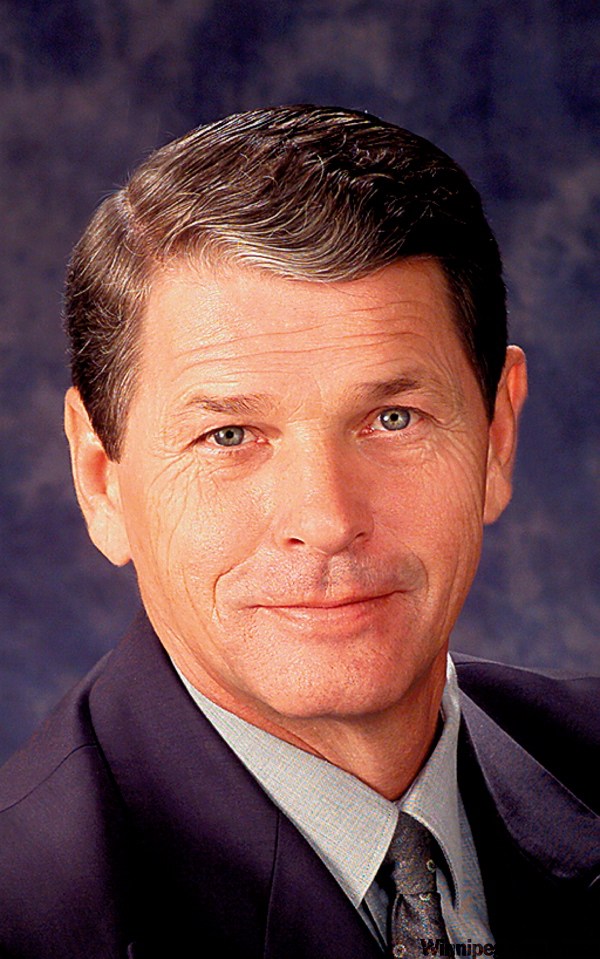
By the time he was elected mayor in 1994, the Saskatchewan farm boy and former CTV news reporter was a frequent astral traveller and a regular visiting student at the Monroe Institute, a Virginia-based research organization "dedicated to the exploration of human consciousness."
Today, Elder, 58, is one of its teachers. After leaving politics in 2003, he moved to Vancouver and currently spends most of his time writing and lecturing across North America on the phenomena of near-death and out-of-body experiences, as well as our purpose in the universe. He also works with American authorities to locate missing children.
Elder will be in Winnipeg on Nov. 3 to give a lecture at the Glenwood Community Centre (27 Overton St.).
Not surprisingly, given his Bible Belt upbringing and education at the hands of Catholic nuns, Elder wasn’t always so eager to share what he’s learned on the other side.
He acknowledges that his 2005 memoir, Eyes of an Angel (Hampton Roads Publishing) in which he relates his encounters with spirit guides (one of his told him he’d write the book) departed souls, past lives and soul mates, is easy fodder for skeptics.
"I’m not concerned with trying to prove anything to anybody," Elder said during a recent phone interview. "I was just an ordinary guy with a left-brain, type A personality whose world was cut and dried and pretty clean when these things started happening to me.
"I wouldn’t have believed any of it myself if they hadn’t happened to me."
Despite his youthful brushes with death, it wasn’t until he nearly departed the physical world for good, following his heart attack, that Elder gave any serious thought to his previous notion of God as a "stern-faced old guy with a grey beard who was going to fry my butt."
When CTV featured him in a documentary on near-death experiences in the mid-90s, Elder, then mayor, received more than one letter from a constituent warning him that the devil had moved in.
The most important lesson he has learned on his spiritual adventure thus far, Elder says, is that we are not our bodies nor our brains, but conscious living energy.
"We are all one consciousness; there is no separation," he says. "After thousands of out-of-body experiences, I have come to believe that we are all individuated aspects of the creator. Collectively, we make up what is God."
So, from the perspective of consciousness, there is no such thing as death; we merely transition to another level of vibration and awareness.
But while we’re in our physical form, we all apparently possess the innate ability to do what Elder does.
"We astral travel every night when we go to sleep," he says. "As you lose consciousness, your energy body moves away from your physical body. You’re probably just not aware of it, or you don’t remember."
It happens when we’re in that blissful (hypnagogic) state between asleep and awake. You know those little jerking sensations or spasms you sometimes feel when you’re drifting off? Ever woken up with a jolt? That’s your energy body moving in and out of your physical form, Elder says.
"In that space between awake and asleep, there are hundreds of levels of consciousness you can explore."
An Evening Chat with Paul Elder takes place Nov. 3 at 7 p.m. at Glenwood Community Centre (27 Overton St.). Tickets are $10 each and are only available at the door, beginning at 6 p.m.
carolin.vesely@freepress.mb.ca
Remote viewing
While studying consciousness exploration at the Monroe Institute in Virginia, Paul Elder was trained in remote viewing by former members of Project Star Gate, the U.S. government’s military intelligence "psyching spying program."
Project Star Gate was developed in the mid-1970s in response to a perceived threat from the Soviet Union and its purported league of psychics who had been trained to spy on America by tuning into the collective unconscious.
Remote viewing is described as the "innate human ability to perceive and accurately describe any person, place, thing or event, remote through space and time."
As a result of Star Gate’s declassification in 1995, remote viewing training is now available to the general public.
Elder, who currently teaches it at the Monroe Institute, will offer a three-day Star Gate Remote Viewing Intensive in Winnipeg from Nov. 20 to 22.
The workshop runs 9:30 a.m. to 5:30 p.m. each day at Glenwood Community Centre (27 Overton St.). Tuition is $245.
For information and to register, go to www.paul-elder.com, email afterthegathering@yahoo.com or phone 261-8787.
History
Updated on Friday, October 30, 2009 11:45 AM CDT: Tickets for the Evening Chat with Paul Elder on Nov. 3 at 7 p.m. at Glenwood Community Centre, 27 Overton St., are only available at the door, beginning at 6 p.m. The Star Gate Remote Viewing Intensive starts Nov. 20 at 7 p.m. (same location) and continues Saturday and Sunday, 9:30 a.m. to 5:30 p.m. each day. Incorrect information appeared in the Oct. 27 Free Press.