If you get around to reading this…
...You might find out why you always put things off
Advertisement
Read this article for free:
or
Already have an account? Log in here »
To continue reading, please subscribe:

Digital Subscription
One year of digital access for only $205*
- Enjoy unlimited reading on winnipegfreepress.com
- Read the E-Edition, our digital replica newspaper
- Access News Break, our award-winning app
- Play interactive puzzles
*First annual payment billed as $205.00 + GST for one year. This annual subscription will automatically renew at $233.00 + GST every 52 weeks (10% off the regular annual price of $259.35). Offer available to new and qualified returning subscribers only. Cancel any time.
To continue reading, please subscribe:
Add Free Press access to your Brandon Sun subscription for only an additional
$1 for the first 4 weeks*
- Enjoy unlimited reading on winnipegfreepress.com
- Read the E-Edition, our digital replica newspaper
- Access News Break, our award-winning app
- Play interactive puzzles
*Your next Brandon Sun subscription payment will increase by $1.00 and you will be charged $17.95 plus GST for four weeks. After four weeks, your payment will increase to $24.95 plus GST every four weeks.
Read unlimited articles for free today:
or
Already have an account? Log in here »
Hey there, time traveller!
This article was published 04/01/2011 (5677 days ago), so information in it may no longer be current.
This article contains important information that can greatly improve your life.
Some of you will read it later. Others will never get around to it.
That’s OK, I totally understand. You’ve got places to go, people to see, things to do — and a genetically hard-wired tendency to put off doing them.

To delay is human. A whopping 95 per cent of us admit to procrastinating to some extent, and apparently the real reasons we do so can be traced to the structure of our brains, which explains why the so-called “thief of time” is seen in every culture and throughout history.
But we can’t pin it all on neurobiology. The environment may not be responsible for procrastination’s existence, but you can bet your Blackberry that it’s partly to blame for its current level of intensity.
According to one of the world’s leading experts on why and how we waste time, modern life has unleashed a Pandora’s Box of tempting distractions, all offering attractive alternatives to the daily grind.
Consequently, “Western societies are in the midst of an escalating procrastination epidemic,” says Piers Steel, a professor of human resources and organizational dynamics at the University of Calgary and author of The Procrastination Equation (How to Stop Putting Things Off and Start Getting Things Done).
Chronic procrastination has increased five-fold since the 1970s, he notes, from about five per cent of the population to nearly 25 per cent.
“Our genetic profile hasn’t changed in the last 30 years, it’s our environment that has changed,” Steel said during a recent phone interview.
“Now we have the Internet and PDAs (personal digital assistants). We have so many temptations today that are so much more powerful and instantly available.”
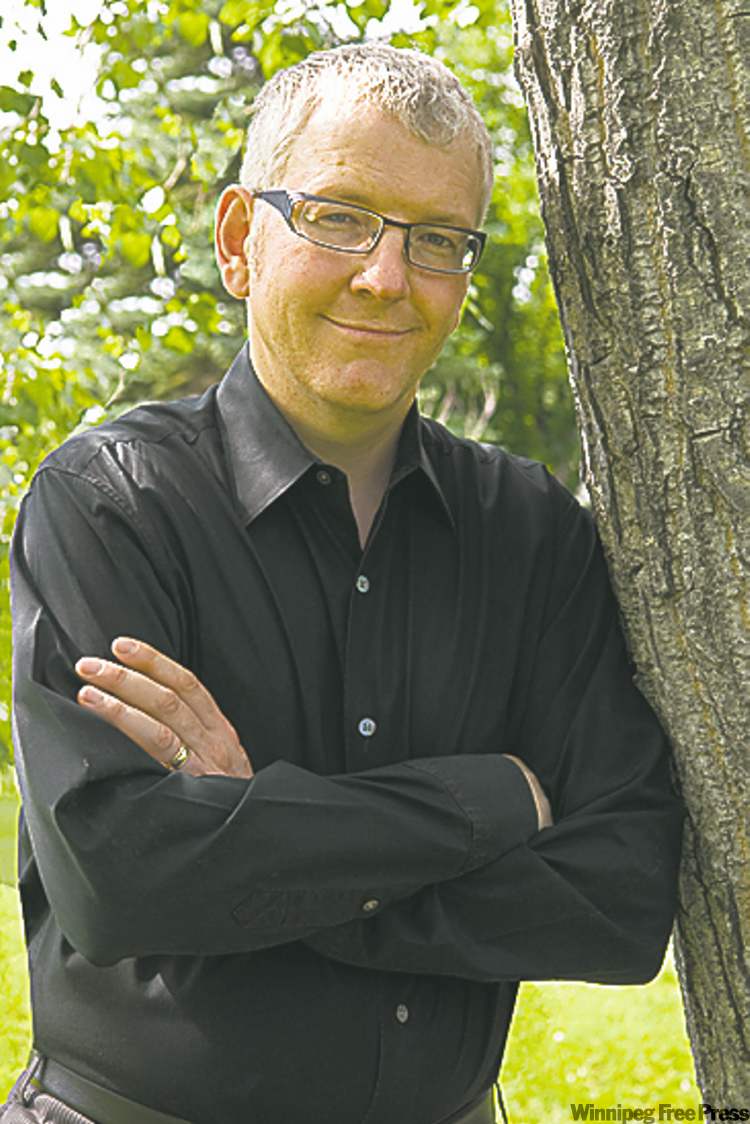
Procrastination is basically “an evolutionary mismatch” between who we needed to be in the past and who we need to be now, Steel says.
“The linchpin is that we value the now incredibly more than the later, so we value immediate rewards more than long-term rewards. It’s hard-wired into all species, pretty much. And it makes sense if you’re in a hunting-and-gathering society where food rots in a day or two.”
The author, himself a reformed time-waster, says his book aims to bust the myths and misunderstanding behind procrastination — namely the common claim of self-help books that people delay because they’re perfectionists, anxious about living up to impossibly high standards.
“Procrastination has to do with how impulsive we are, not our level of perfectionism. That’s where we’ve been making a huge mistake,” says Steel.
Based on tens of thousands of participants — it’s actually the best-researched topic in the field — perfectionism produces a negligible amount of procrastination, according to the book. Perfectionists, in fact, were less likely to procrastinate.
They are, however, more likely to feel bad about whatever they’re putting off, says Steel, and so they’re more motivated to seek clinical help.
“Individuals who are perfectionists and who feel anxious over a deadline may think it’s their anxiety causing them to put it off, but what they don’t realize is that there are even more perfectionists out there who, when they feel anxious, take it as their cue to get going.”
The failure to get going that’s present in procrastination isn’t to be confused with the feet-dragging of laziness, however. Unlike the truly slothful, Steel says, procrastinators want to complete the tasks they’re putting off — and they usually do, but not without a lot of struggle.
And it’s not just any delay, but an irrational one that qualifies as procrastination. “You’re knowingly and willingly putting off a course of action while fully expecting to be worse off for doing so,” Steel explains.
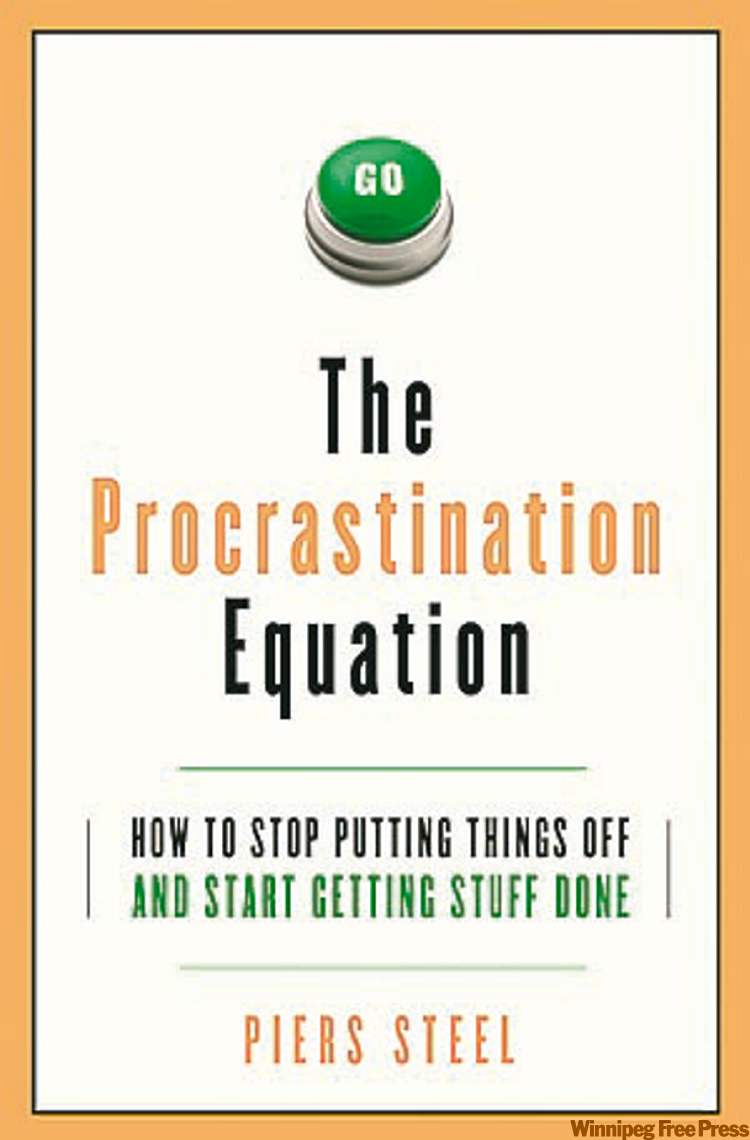

But you produce your best work when you’re under the gun, you say?
Steel isn’t buying it. “Procrastinators do better under pressure, in the final hour,” he says, “but they still do worse overall.
“It’s a little bit like smoking a pack of cigarettes every day. There are plenty of people who will live to age 90, but it’s not going to be good for your health.”
(For more information at Steel’s research and his new book, or to find out where you rate in the ranks of procrastination, check out www.procrastinus.com.)
carolin.vesely@freepress.mb.ca