

Portable pools just as risky, study finds
Advertisement
Read this article for free:
or
Already have an account? Log in here »
To continue reading, please subscribe:
Monthly Digital Subscription
$0 for the first 4 weeks*
- Enjoy unlimited reading on winnipegfreepress.com
- Read the E-Edition, our digital replica newspaper
- Access News Break, our award-winning app
- Play interactive puzzles
*No charge for 4 weeks then price increases to the regular rate of $19.95 plus GST every four weeks. Offer available to new and qualified returning subscribers only. Cancel any time.
Monthly Digital Subscription
$4.99/week*
- Enjoy unlimited reading on winnipegfreepress.com
- Read the E-Edition, our digital replica newspaper
- Access News Break, our award-winning app
- Play interactive puzzles
*Billed as $19.95 plus GST every four weeks. Cancel any time.
To continue reading, please subscribe:
Add Free Press access to your Brandon Sun subscription for only an additional
$1 for the first 4 weeks*
*Your next subscription payment will increase by $1.00 and you will be charged $16.99 plus GST for four weeks. After four weeks, your payment will increase to $23.99 plus GST every four weeks.
Read unlimited articles for free today:
or
Already have an account? Log in here »
Hey there, time traveller!
This article was published 21/06/2011 (5317 days ago), so information in it may no longer be current.
COLUMBUS, Ohio — The first U.S. study on child drownings in portable pools finds that a child dies every five days in such a pool during warm-weather months, demonstrating a considerable risk and the need for consumer education and affordable protection devices, the study’s senior author says.
The research published Monday in the journal Pediatrics shows 209 deaths and 35 near-drownings of children under 12 from 2001 through 2009. Most of the children, 94 per cent, were under five, and 81 per cent of the incidents happened during summer months.
“The anecdotal evidence was suggesting that because portable pools are readily available in many convenience stores and malls, and they’re relatively cheap, parents would pick them up, take them home, quickly assemble them, and all this would be done without a lot of forethought about the safety aspects,” said senior author, Dr. Gary A. Smith, director of the Center for Injury Research and Policy at Nationwide Children’s Hospital in Columbus.
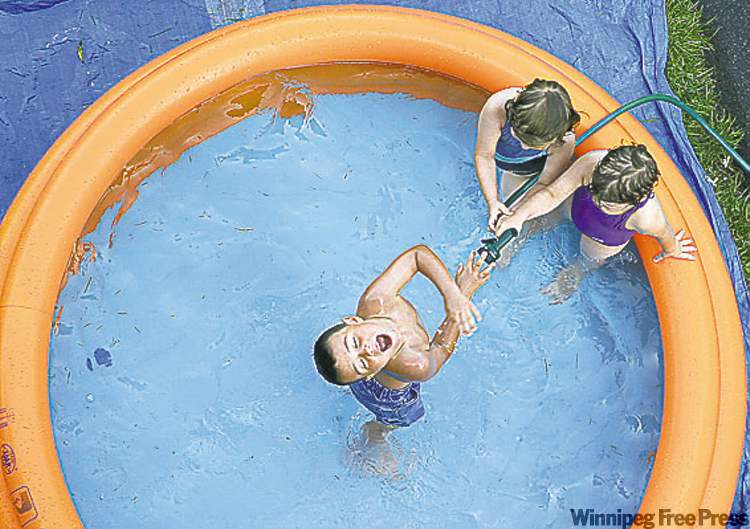
The study focused on portable pools, from small wading pools less than 46 centimetres (18 inches) deep to inflatable pools and other soft-sided pools that can reach depths of 1.2 metres (four feet). It was conducted by researchers at Nationwide hospital and Independent Safety Consulting in Rockville, Md. They say the findings are comparable to drownings related to in-ground pools.
Many safety methods used for permanent pools, such as fencing, pool alarms, safety covers and removable or lockable ladders, are too expensive or not available for families who purchase portable pools, said Smith, who also is a pediatrics professor at the Ohio State University College of Medicine.
The Association of Pool & Spa Professionals supports “layers of protection,” and the study underscores the importance of active, undistracted adult supervision, said Carvin DiGiovanni a senior director at the Alexandria, Va.-based association.

“The primary layer of protection is constant adult supervision supplemented by barriers, alarms and other related devices,” he said.
— The Associated Press