Rock and a hard place
Band camp lets kids with mood disorders kick out the jams and kick back with supportive peers
Advertisement
Read this article for free:
or
Already have an account? Log in here »
To continue reading, please subscribe:
Digital Subscription
One year of digital access for only $1.44 a week*
- Enjoy unlimited reading on winnipegfreepress.com
- Read the E-Edition, our digital replica newspaper
- Access News Break, our award-winning app
- Play interactive puzzles
*Billed as $5.77 plus GST every four weeks. After 52 weeks, price increases to the regular rate of $19.95 plus GST every four weeks. Offer available to new and qualified returning subscribers only. Cancel any time.
To continue reading, please subscribe:
Add Free Press access to your Brandon Sun subscription for only an additional
$1 for the first 4 weeks*
- Enjoy unlimited reading on winnipegfreepress.com
- Read the E-Edition, our digital replica newspaper
- Access News Break, our award-winning app
- Play interactive puzzles
*Your next Brandon Sun subscription payment will increase by $1.00 and you will be charged $17.95 plus GST for four weeks. After four weeks, your payment will increase to $24.95 plus GST every four weeks.
Read unlimited articles for free today:
or
Already have an account? Log in here »
Hey there, time traveller!
This article was published 02/08/2011 (5557 days ago), so information in it may no longer be current.
Music, it has been famously said, “has charms to soothe a savage breast.”
It has also been said, albeit less famously, “beating on the skins” is “a super great outlet when you’re having an angry day.”
Taylor Demetrioff can also attest that singing has particular charms to soothe a savage mood, especially if you really let it out.
“When I sing, I belt notes and it’s almost like yelling, but in a protected way,” says the 20-year-old Winnipeg musician, who knows too well the pain and isolation of holding it all in.
Although he has struggled with emotional and behavioural issues — uncontrollable rages, depression, impulsivity, self-harm — since childhood, until recently, he mostly kept his suffering to himself.
“I had to hide it really well because my family didn’t understand,” recalls Demetrioff, who was diagnosed with Borderline Personality Disorder about 18 months ago. It’s not that they weren’t supportive, he says, but somewhere along the way he adopted the belief that “anything less than normal wasn’t acceptable,” especially mental illness.
“Meanwhile, inside I was just rotting.”
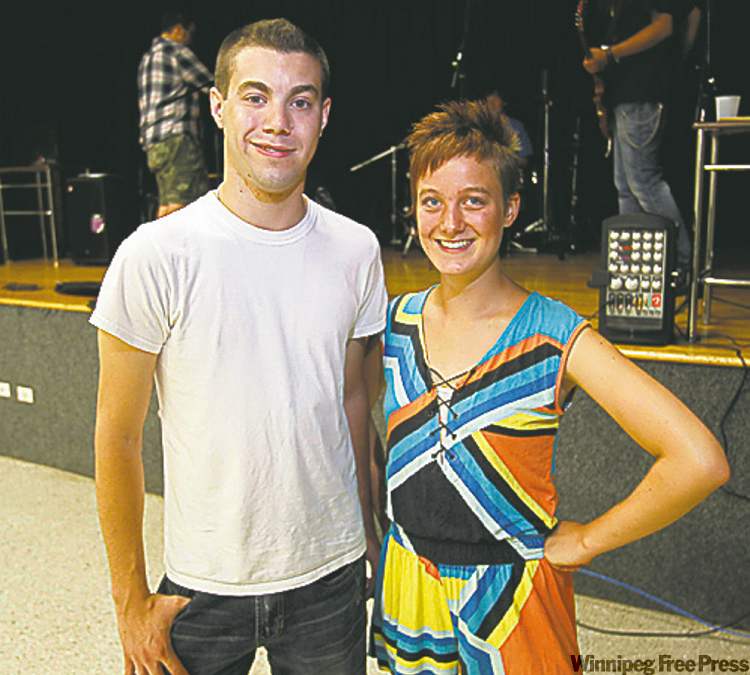
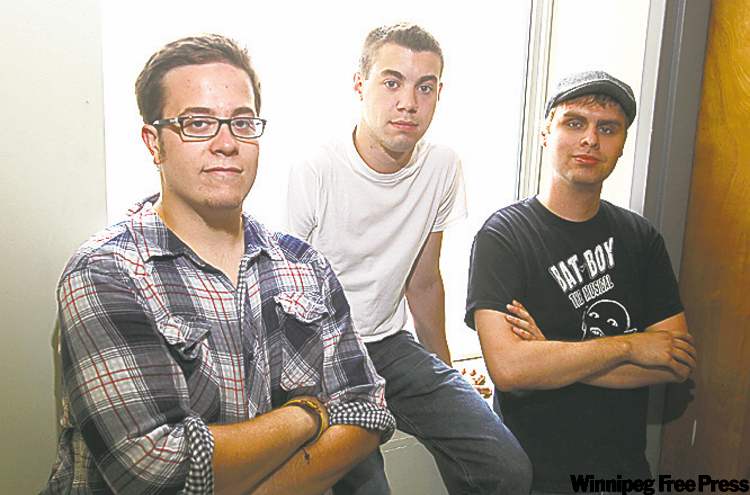
Today, Demetrioff not only wants to talk about mental illness, the frontman of the indie rock band Waterfront Drive wants to help other young people dealing with mood disorders discover the healing power of music and the sense of camaraderie that can come from co-creating it with people who “get” you.
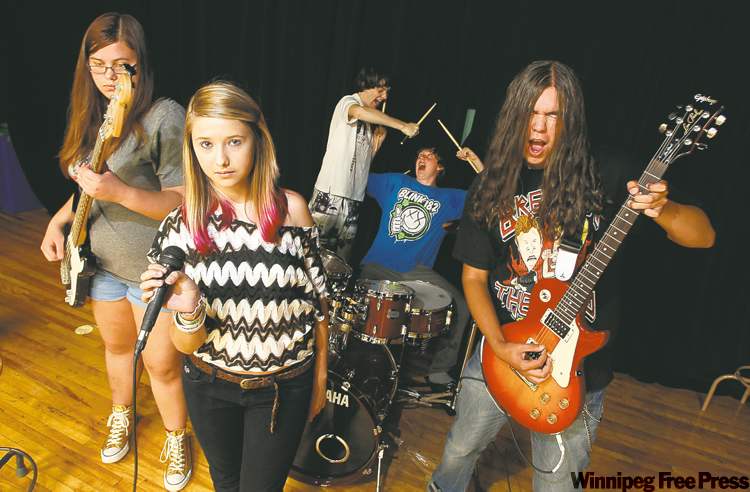
Which bring us to St. Boniface College, where Demetrioff, along with bandmates Paul DeGurse and Andrew Olver, is leading the Let It Out Summer Rock Camp in collaboration with the Mood Disorders Association of Manitoba (MDAM).
“I think we’re just going to jam a lot today,” Demetrioff tells the 10 participants (five girls, five guys), who range in age from 13 to 17. They’ve split themselves into two bands: an alt-rock group by the name of One Night in Vegas and a posse of metal rockers called Last Night’s Line.
For the next two weeks or so, the teens will spend their days, from 9:30 a.m. to 4 p.m., forging their identity as a band, learning cover tunes — ONIV is working on Push by Marianas Trench, while LNL is covering Flyleaf’s I’m So Sick — and writing and performing their own song for the finale concert on Aug. 8.
In between laying down beats and polishing vocals, the budding rockers will learn about mood disorders — what they are and how to cope with them. They’ll also have ample opportunity, at designated times throughout the day, to share their experiences, insights and whatever else might be on their minds.
That alone is something new for many in attendance.
Dakota Bertholet, 17, says music has always been his “complete outlet” for coping with depression. Although he’s been in other bands, this is the first time the two themes have merged.
“It’s been so much fun just jamming with like-minded people, people who understand mental disorders and who use music as an outlet,” says the guitar player with long, rock-star locks. “It’s weird and different, but at the same time really good just to have that support.”
Singer Tedra Batson, 13, says camp is really helping with her social anxiety, although, like Bertholet, she was initially a little reluctant about the daily group meetings.
“The first day I thought it was a little bit weird because I thought it was like a rock-band group and just about having fun,” she says, “but we get to talk about our feelings, too, and get what’s on our chest off of it.
“I was afraid people would judge me for my problems, but I found that everyone has their own problems and no one will talk behind your back.”
That’s exactly the safe, open and accepting environment the Mood Disorders Association of Manitoba set out to create last December when it started a support group specifically for youth (in this case, anyone under the age of 25).
While the association, founded in 1983, already offers several groups (including diagnosis-specific ones for depression, bipolar and borderline personality disorder) the average age of the members is easily late 30s or early 40s, says Adam Milne, MDAM’s director of administration. Any young people who did come to the groups weren’t staying.
“They’re coming to group because they don’t want to or can’t talk to their parents,” says Milne, 30, whose mother is bipolar and who has had his own struggles with depression. “So they don’t want to be in a group with people the same age and with the same generational mindset as their parents.”
There’s a level of understanding and support that can only come from peers who have shared similar struggles, says Corinna Voth, 20, one of the youth group’s co-facilitators. She’s been dealing with depression and anxiety since age 15, but Voth says it took her a long time to figure out that it wasn’t just teenage angst. And while medication and counselling helped her cope, she still didn’t feel understood.
“(The therapist) did her job and she listened, but I didn’t feel a connection,” says Voth, a second-year opera student who is lending her vocal expertise to band camp.
Bertholet can relate. When he did seek professional help for his depression, he says, he often felt belittled or talked down to.
Demetrioff concurs. He recalls how, when he was having “huge issues” with cutting, a therapist recommended a simplistic technique with a rubber band worn around the wrist to stop the self-injury impulses.
“No one in group would ever suggest that,” says the third-year psychology major, who is also working as MDAM’s youth outreach program co-ordinator for the summer.
He approached the association about starting a band camp, he says, because he wanted to use his love of music to help promote the Monday night meetings that have changed his life.
“I can honestly say the moment I started getting better was when I went to youth group,” Demetrioff says.
“I want to help other kids in the way that I wasn’t helped.”
Youth group meetings are held at the Mood Disorders Association of Manitoba office (4 Fort St.) every Monday from 6 p.m. to 7:30 p.m. For more information, go to www.depression.mb.ca or phone 786-0987.
carolin.vesely@freepress.mb.ca